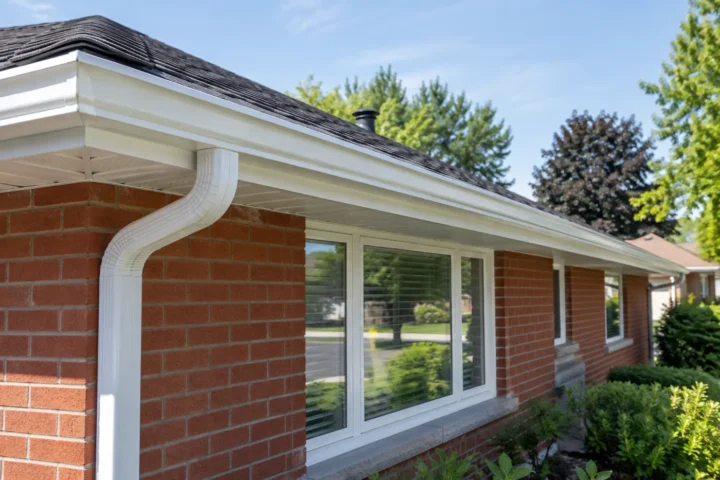
Installation & Replacement
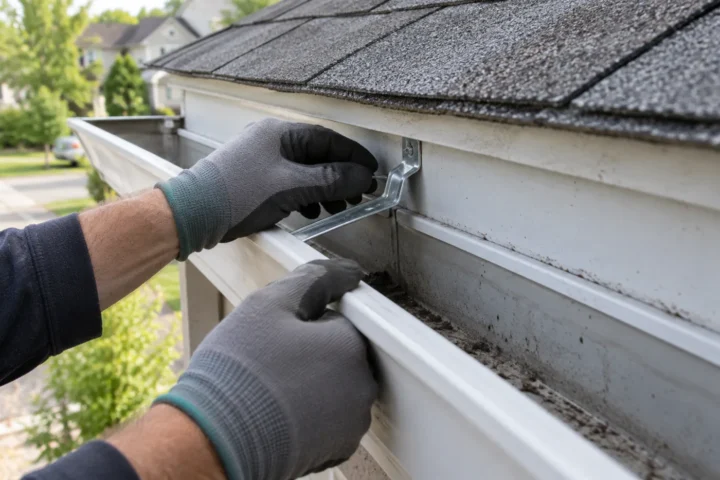
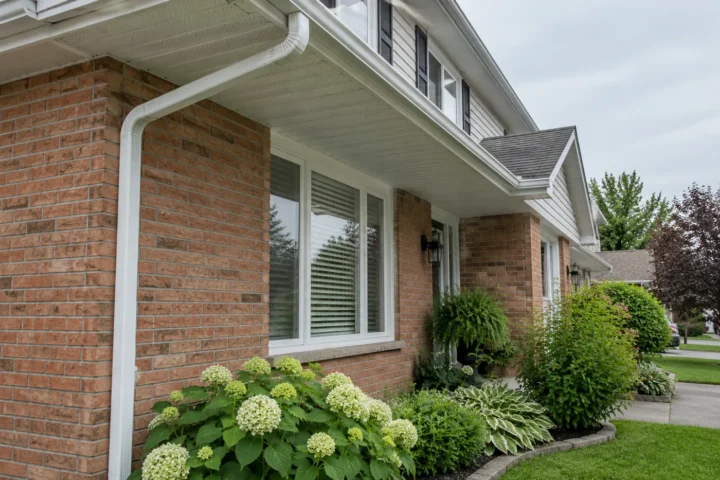
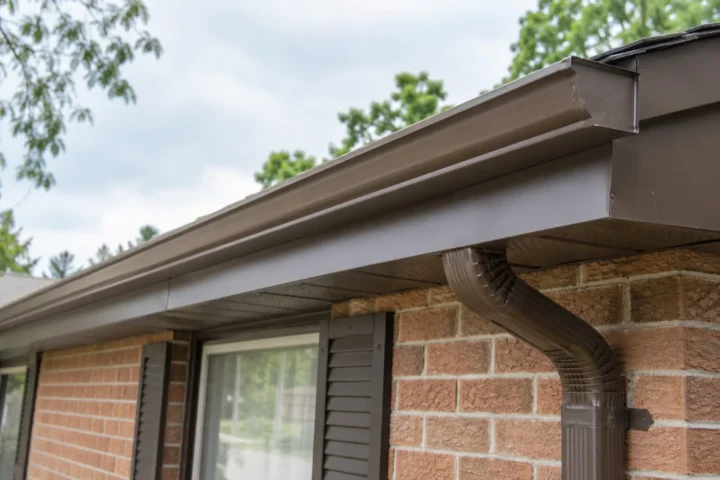
New eavestroughs should capture roof runoff, move it to correctly placed outlets and guide it to a suitable discharge area.
View details
Choose the specific roof-edge or drainage service that fits what is happening at your Milton home and surrounding property.
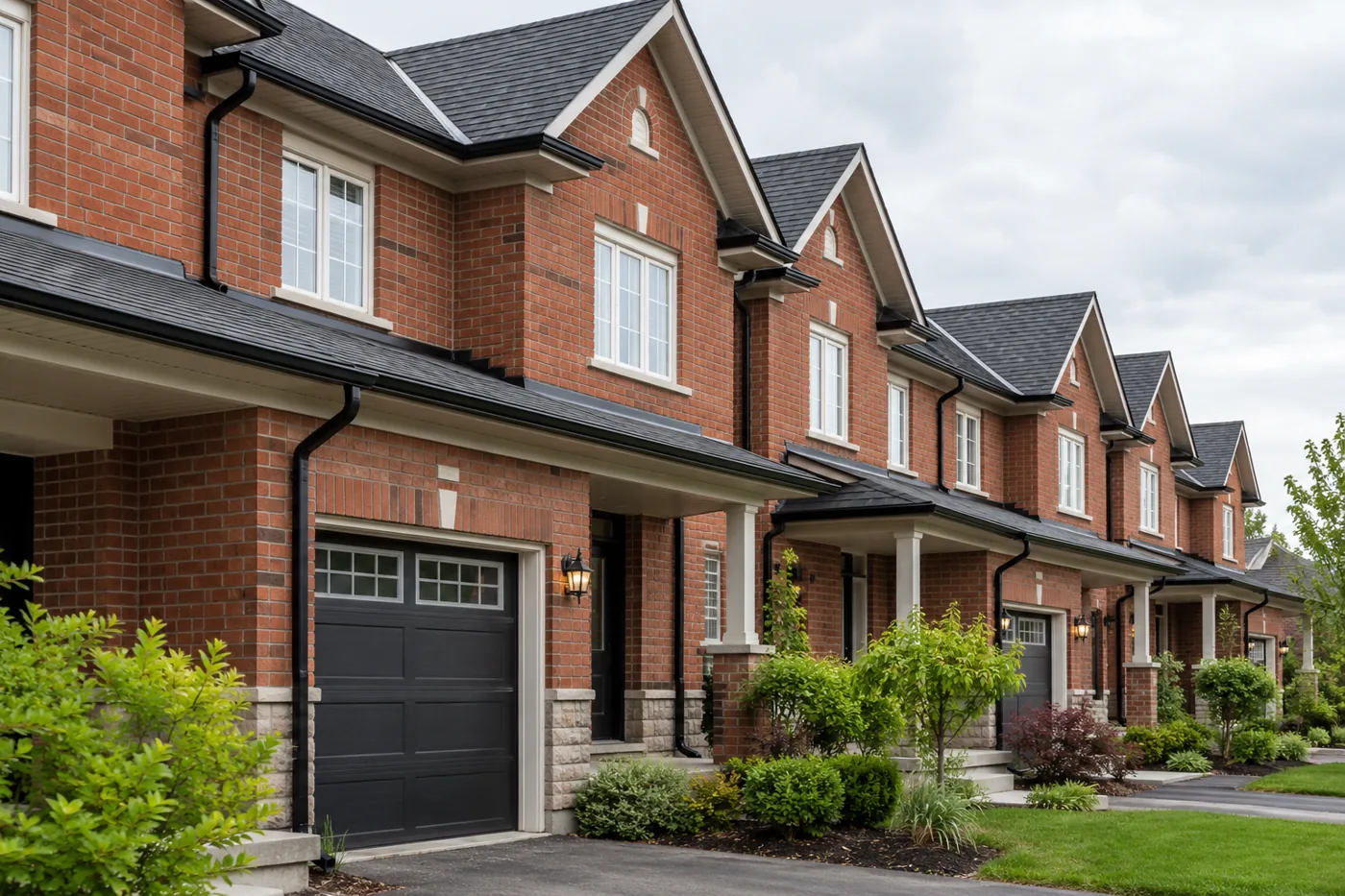
The roof edge, gutter, outlet, downspout and final discharge work together.
New eavestroughs should capture roof runoff, move it to correctly placed outlets and guide it to a suitable discharge area.
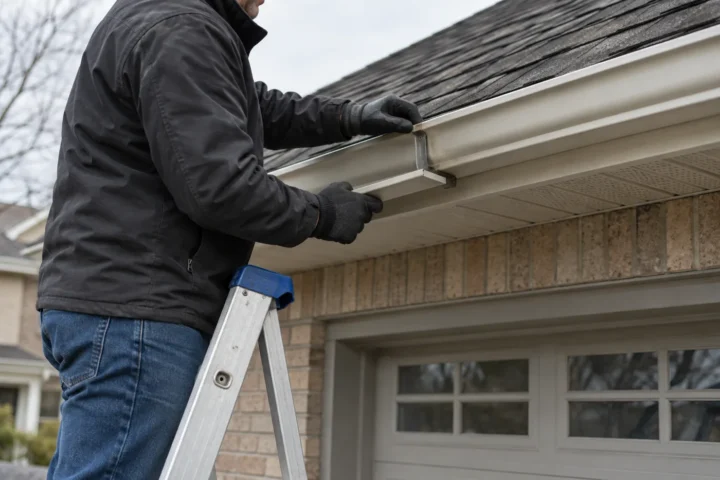
View detailsOne failed gutter component does not automatically mean that the entire system needs replacement.
View detailsContinuous aluminum runs reduce intermediate seams while preserving the connection details that a working drainage system needs.
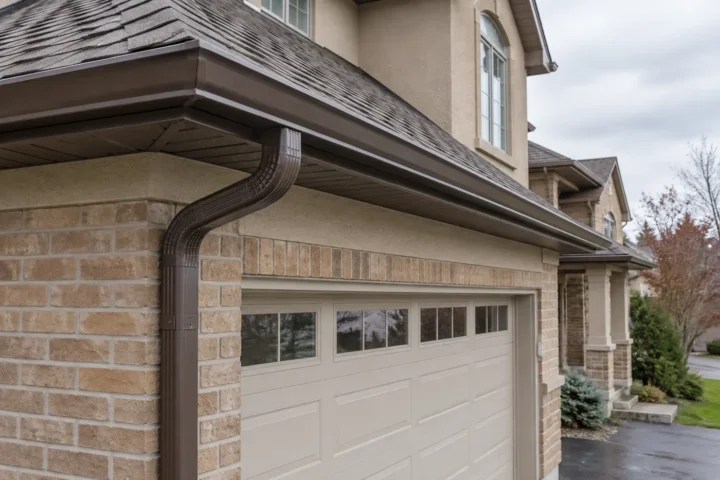
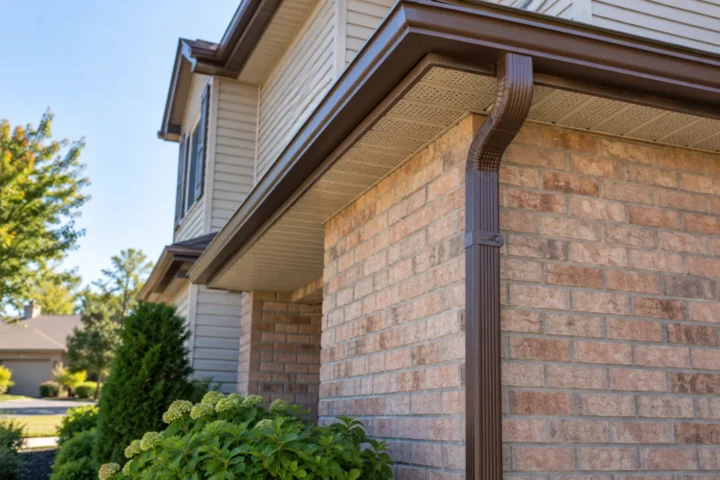
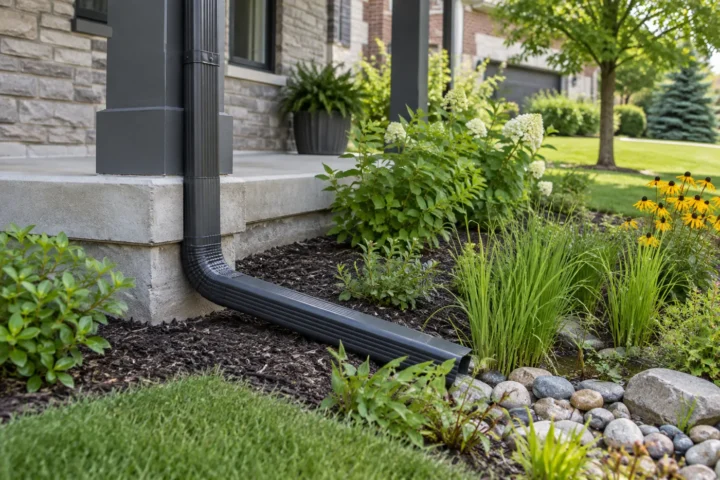
View detailsA downspout is the bridge between a roof-edge gutter and the ground-level drainage area.
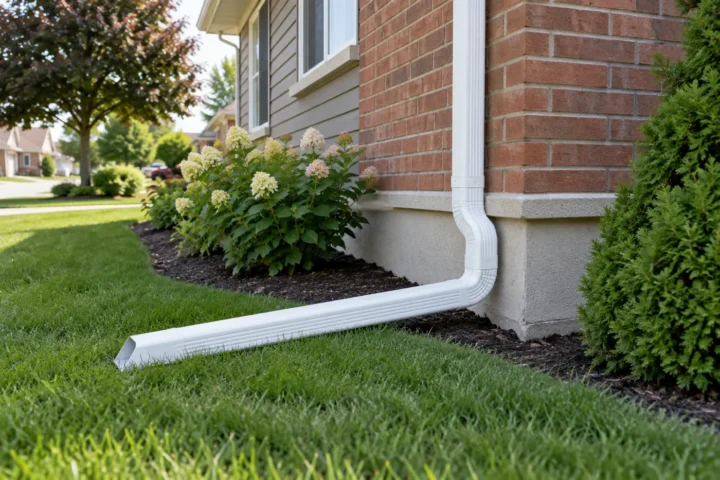
View detailsThe goal of rerouting is to take roof runoff from an inconvenient exit point to a suitable final discharge area.
View detailsA clean gutter can still overflow when another link in the roof-water route is restricted or poorly arranged.
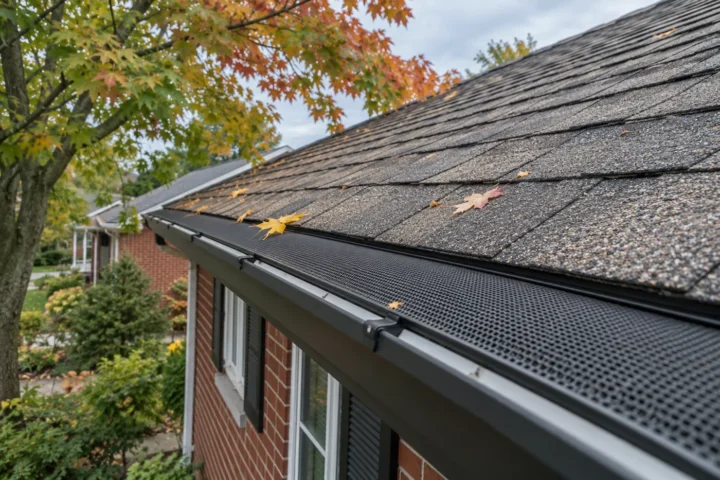
View detailsGutter guards can reduce debris entering a channel; they do not make an eavestrough system maintenance-free.
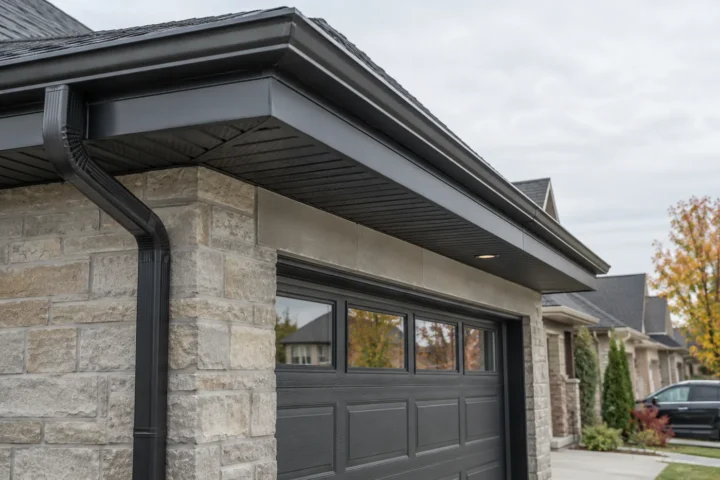
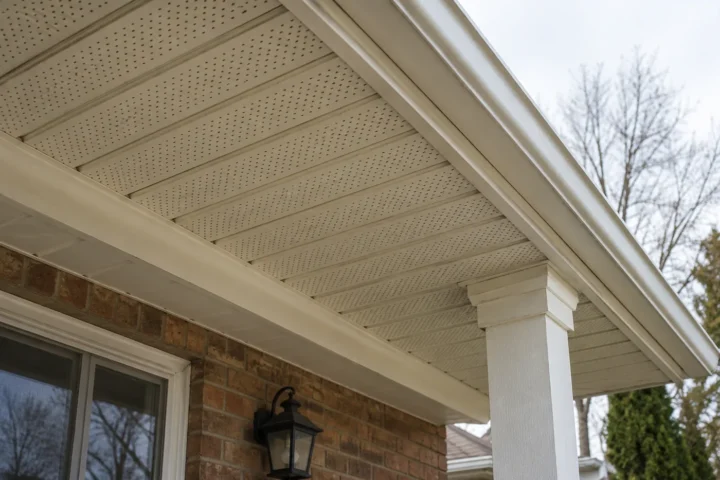
View detailsSoffit finishes the underside of a roof overhang while contributing to the roof-edge assembly.
View detailsFascia creates the finished outer edge of the roof overhang and often forms the visible gutter attachment area.
View detailsAluminum capping finishes exposed exterior trim while keeping the condition of the underlying material in view.
View detailsA localized roofline defect deserves a cause-based repair rather than an automatic full replacement.
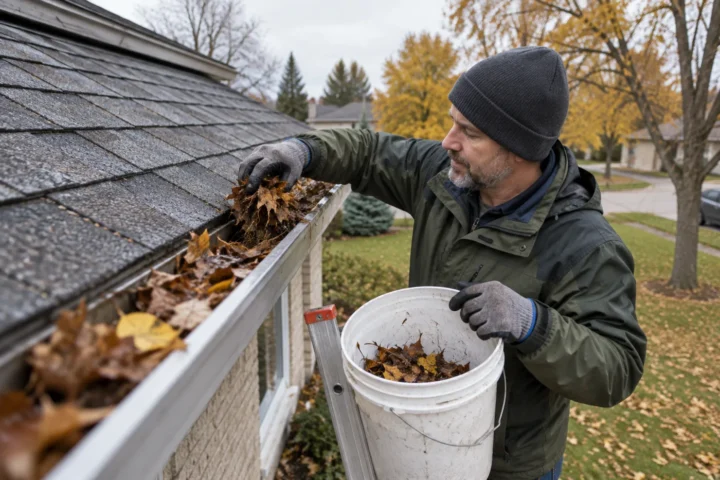
View detailsCleaning removes material that blocks the gutter, outlet or downspout, then checks whether water has a path to leave.
View detailsMaintenance looks beyond debris to catch changes in attachment, drainage and roof-edge condition.
View detailsA gutter captures water at the roof edge, but the result depends equally on outlet placement, the downspout and where runoff reaches the ground. A channel overflowing below a valley might need a debris removal, a slope repair, a new outlet or a different run layout. Water pooling beside a wall could mean the gutter is doing its job but the discharge route needs attention. These are different decisions, so the service pages below separate installation, local repair, overflow diagnosis, downspout routing and maintenance.
New eavestrough work should begin with roof area, valleys, attachment and the route beyond the last elbow. A localized leak can often be evaluated independently of a full replacement. Seamless aluminum reduces intermediate joints along straight runs, while corners, end caps and outlets still require care. Downspout installation deals with the vertical connection; rerouting deals with where that connection ultimately sends water. Overflow troubleshooting follows the symptom before assuming the gutter should be enlarged.
Gutter guards can help control debris entry, but they cannot correct a sagging run and they do not end cleaning. Soffit forms the underside of an overhang; fascia finishes the outside edge and can relate to gutter support. Exterior aluminum capping belongs on suitable trim and does not strengthen deteriorated wood beneath it. These scopes can be coordinated when adjacent work is necessary, but each has a distinct purpose and should be described separately in an estimate.
Cleaning removes accumulated leaves, seeds and grit from channels and outlets. Maintenance and inspection also consider joints, hangers, slope symptoms, guards, downspouts, adjacent soffit and fascia, and final discharge. A repair might address one loose panel or leaking corner without treating the entire roofline. The best next step depends on the cause, condition and how often the issue returns.
A detached home with a garage and porch presents several roof edges and possible downspout routes. Townhouses may have narrow side yards and neighbouring drainage considerations. Mature trees change the debris pattern; large open roof planes change how water concentrates. Walkways and driveways matter in winter because runoff can freeze where people travel. Give the visible symptom and property layout when requesting an estimate, so the proposed scope addresses the site rather than a generic product.
If water escapes through one corner in ordinary rain, begin with the repair service and note whether that corner moves or sits in standing water. If a run pours over only during a strong storm, overflow troubleshooting looks at debris, valley flow, slope and outlet capacity in sequence. A downspout that empties beside a wall calls for rerouting even when the gutter above is clear. A fallen soffit panel or loose fascia has its own repair page because the damaged finish and the cause of movement need separate attention. These routes make it easier to request an assessment that starts at the observed condition.
Replacement can expose weak fascia backing, and a new outlet can require a different downspout location. Cleaning can restore flow only to reveal that the extension empties into a low area. Gutter guards can reduce debris entry only after the underlying channel drains properly. The service categories keep each decision visible, while an estimate can combine related work into one defined scope. Ask which existing parts remain, which will be removed, and how the revised assembly will handle the next substantial rain. This is particularly helpful for additions and garages whose roof planes feed a lower run or a shared discharge area.
A wide view of the affected elevation places a close-up in context. Show the roof shape, gutter, outlet, whole downspout and where water reaches the ground if possible. Note when the problem occurs, including light rain, heavy rain or thaw, and whether it changed after a previous cleaning or repair. Describe the number of storeys and any access constraints without climbing to obtain a photograph. If water enters indoors, state the entry location separately; exterior gutter work may improve one roof-runoff contribution but cannot determine every cause of basement water. These details help establish an accurate scope before materials or a replacement profile are chosen.
A single failed joint, damaged short section or loose attachment may be repairable when adjacent material and support are sound. Repeated leaks, deformation or a poor layout can justify a broader scope. Diagnose the condition before deciding.
The outlet or downspout may be restricted, the run may sag or slope poorly, or a valley may concentrate roof flow at one spot. Cleaning is a useful baseline, but the complete route needs inspection.
No. A guard can reduce some debris entering the channel, but material can gather on its surface, at corners and around outlets. The needed checks depend on trees, roof shape and past clogging.
A better discharge route can reduce roof runoff near a foundation when that is contributing to the problem. Basement water can also involve grading, foundation or other drainage conditions, so one extension is not a guaranteed cure.
Describe the property, the visible condition and how roof water is moving now. We can help define a sensible service scope.