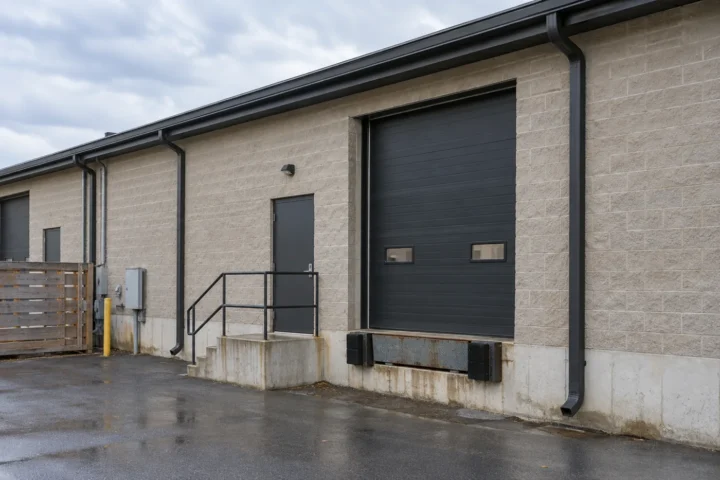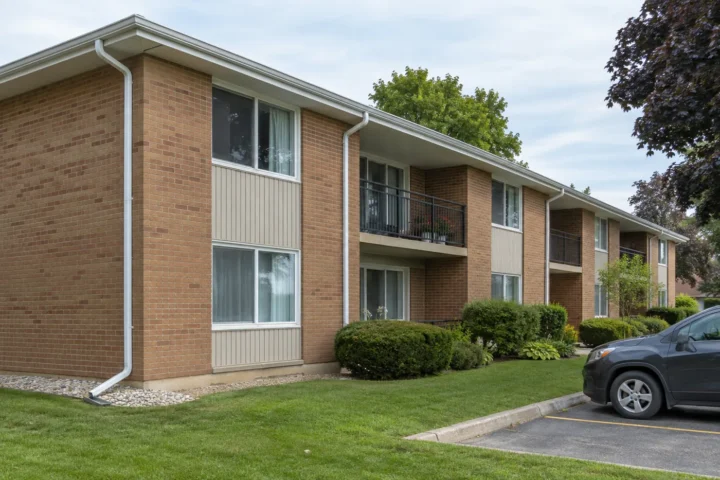
Commercial gutter maintenance deals with repeated rooflines, larger drainage areas and operational access. Leaves and grit can collect at outlets hidden from ground view, while a loose hanger, leaking joint or impact-damaged downspout may go unnoticed until a tenant reports water. Cleaning removes restrictions; inspection identifies defects requiring separate repair. The frequency and extent should reflect trees, roof geometry, past blockages, guards and building use rather than a blanket promise of a fixed program.
Define which buildings and elevations need service
A plaza frontage, rear service elevation and separate outbuilding may have different drainage and access. Name them individually. On a multi-building site, an asset list can help prevent one short run or downspout from being missed. Note recurring overflow locations and whether reports came during rainfall or thaw.
The work area can include gutter channels, outlets, elbows, guard surfaces and accessible downspout restrictions as defined in the agreed scope. Internal roof drains and roof-membrane maintenance are separate disciplines. A clear boundary helps a manager understand what was inspected.
Remove debris without moving the blockage
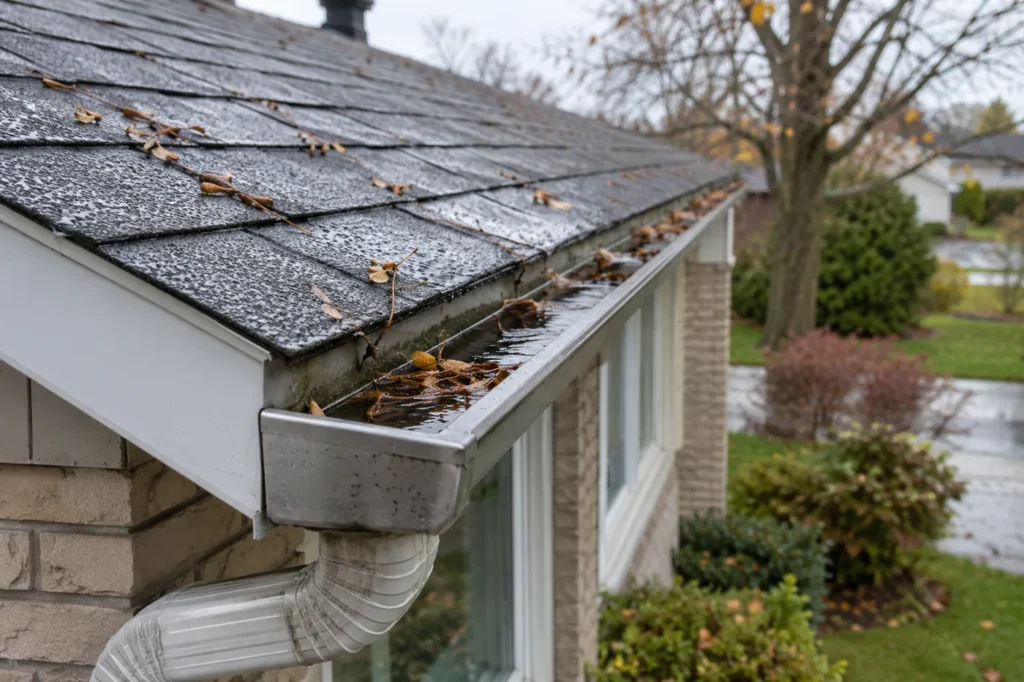
Loose leaves at a gutter edge can hide compacted material at the outlet. Pushing it into a downspout simply relocates the problem. Check the vertical route and lower exit where practical, especially at sections that have overflowed despite previous cleaning.
Guards change debris patterns rather than ending maintenance. Material can accumulate on top or around a valley, and fine grit can pass through. The cleaning approach should account for the guard’s attachment and future access without damaging the channel or adjacent roof edge.
Watch for developing defects
Once debris is removed, inspect joints, corners, end caps, hangers and visible slope symptoms. A run retaining water after clearing may have sagged. A loose gutter can reveal weak fascia or another supporting issue. Downspout straps and lower pipe deserve attention where vehicles or equipment operate nearby.
Record specific location and visible condition when a separate repair is recommended. A useful observation is “rear loading elevation, east outlet retains water” rather than a vague statement that the building needs new gutters. Do not promise a formal report or photo system unless it is part of the actual agreed workflow.
Schedule around the property, not a universal calendar
Tree cover, nearby vegetation, roof geometry and prior clogging determine the practical interval. Spring seeds, summer storms and autumn leaves can affect different buildings in different ways. A condition-based plan can be adjusted after experience rather than locking every property into the same schedule.
Access may involve parked cars, customer entries and delivery hours. A manager can coordinate gates and notify tenants as needed. After cleaning, check where restored flow discharges; it may expose ponding or icing at a path that was previously masked by an upstream blockage.
Create an elevation-specific scope
A manager can identify each building and the front, rear or side runs to be included. Some gutters are hidden behind signs or trees and may not be apparent from the main parking area. An agreed map or list reduces the chance of overlooking a short canopy run and clarifies access needs.
The scope should specify whether guard surfaces, outlets, elbows and downspouts are checked. A quoted cleaning of open channels is different from clearing an inaccessible vertical restriction. These boundaries matter when comparing a recurring maintenance need.
Different rooflines collect different material
A plaza beside deciduous trees may experience a burst of leaf buildup, while another elevation receives seeds, roofing grit or windblown litter. Long runs can carry this material to a single outlet. Inspect the actual pattern instead of assuming that all buildings need the same seasonal frequency.
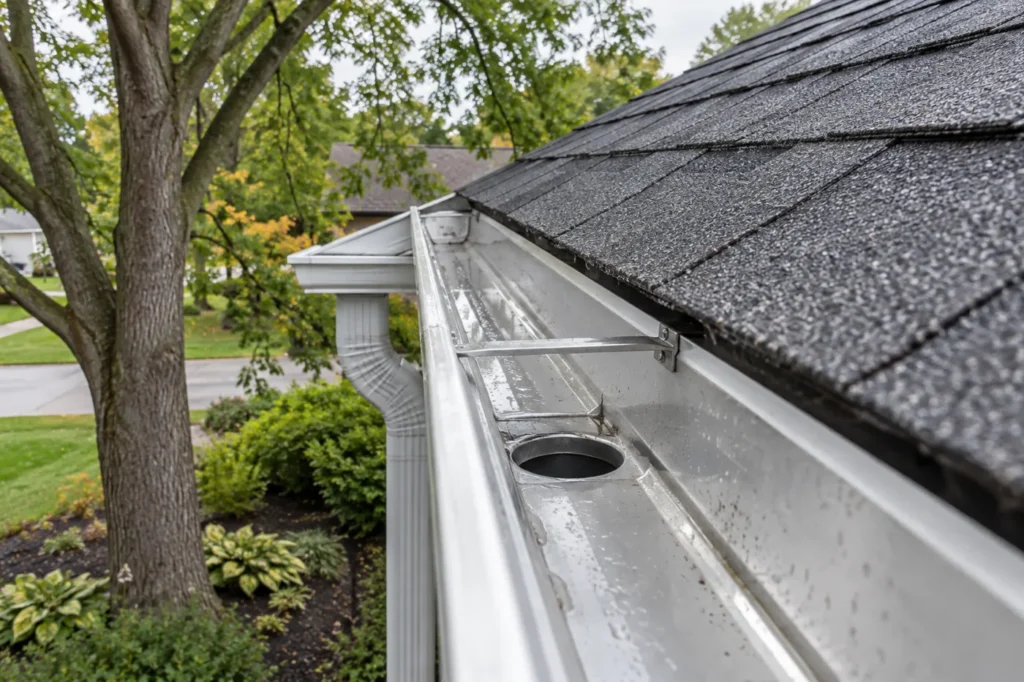
Guards can redirect or retain debris at corners and valleys. Their presence changes how the channel is reached and cleaned, but does not prove the lower outlet remains clear. The maintenance approach should be adapted to the product and roofline.

Separate observed defects from cleaning work
A loose hanger, leaking end cap or displaced downspout can be visible once debris is removed. Record the exact elevation and component. Cleaning does not automatically include repair, and a clean channel can still overflow if slope or outlet placement is wrong.
If a recurring issue is identified across several visits, compare the observations before repeating the same cleaning. The underlying condition may be a low run, constrained outlet or concentrated valley flow that calls for a different scope.
Plan access and follow-up
Entrances, loading, parking and tenant schedules affect where work can occur. Site contacts can arrange necessary clearance; a proposal should state likely constraints. A high or obstructed roofline may require different access from a simple rear eave, affecting both price and timing.
After a blockage is cleared, check the final downspout exit. More water may now reach a pedestrian path or paved low spot. The observation should be conveyed as a separate drainage concern if it is outside cleaning scope.
Look beyond debris removal
The maintenance route is continuous: remove debris from gutter and outlet, verify downspout flow and assess the receiving surface. Separately note fascia condition and roof-edge staining. A clean channel with a blocked lower elbow or a discharge onto a walkway has not resolved the property’s water-management concern.
Define cleaning and inspection separately
Scope depends on number of buildings and elevations, height, access, guard type, debris, length of runs, outlet count and downspout restrictions. Cleaning, inspection and repairs are different tasks; estimates should identify each. Recurring scheduling can be discussed where useful but should never imply an unverified existing maintenance program.
Details to include in your request
Supply building list and site contact, known issue locations, photos, parking or loading access rules and previous cleaning records if available. Indicate whether gutters are guarded and which tenants have reported overflow. This helps identify the right elevations before access is arranged.
List outlets as well as gutter runs
A scope based only on visible linear footage can miss a short canopy run, hidden outlet or rear downspout that receives material from a larger roof. Number the buildings and elevations, then identify outlets and lower exits. This inventory lets a site contact check what was included and helps return to the same point when a tenant later reports water. It is also useful where one roof plane discharges onto another; the receiving lower outlet may require closer attention than its gutter length suggests.

Classify findings by what they require
Debris removal, a loose hanger, leaking end cap and unsuitable discharge are different findings. Cleaning can expose them, but it does not automatically include the related repairs. A useful handoff locates the condition, states what was observed and separates completed cleaning from additional work that may need approval. Where a hidden area could not be reached or assessed, that limitation should be clear. This prevents a cleaned run from being mistaken for an assurance that every drainage and roof-edge issue has been resolved.
Inspect guards without assuming they are clear
A guard can collect windblown litter, leaves or seed clusters on its upper face while fine material settles underneath. At a commercial frontage, a guard may divert concentrated runoff from an upper roof even when the channel itself contains little debris. The cleaning scope should identify guard type and access method, then check the outlet below where practical. A guard is a maintenance variable, not a reason to exclude a gutter from the property inventory.
Use weather and site history to time checks
A plaza bordered by deciduous trees may face a different debris period from an exposed industrial unit with windblown litter and roofing grit. Review prior clogs, valley locations and storm reports rather than assigning one universal interval to every address. After a severe storm, a visual check may identify displaced material or a blocked outlet. Repeated problems at the same short run should prompt a slope or outlet assessment, not just more frequent clearing.
Keep the scope compatible with site use
Even routine cleaning can affect a customer entrance, parked vehicles or deliveries beneath the work. Identify the areas that need temporary clearance and the building contact who can coordinate access. On a multiple-building property, a clear order of elevations reduces missed locations. Photo notes or a written condition list may be useful if specifically agreed in the work scope, but a reporting programme should not be assumed as an automatic service promise.
Continue planning the right work
A defect found during debris removal may require a separate repair rather than another cleaning visit. Downspout planning matters when restored flow reaches an entrance or paved low point. Managers coordinating several addresses can use property-specific scopes to keep observations tied to the right building. The broader inspection approach distinguishes joints, attachment and discharge from debris alone.