Watch the route, not only the wet wall
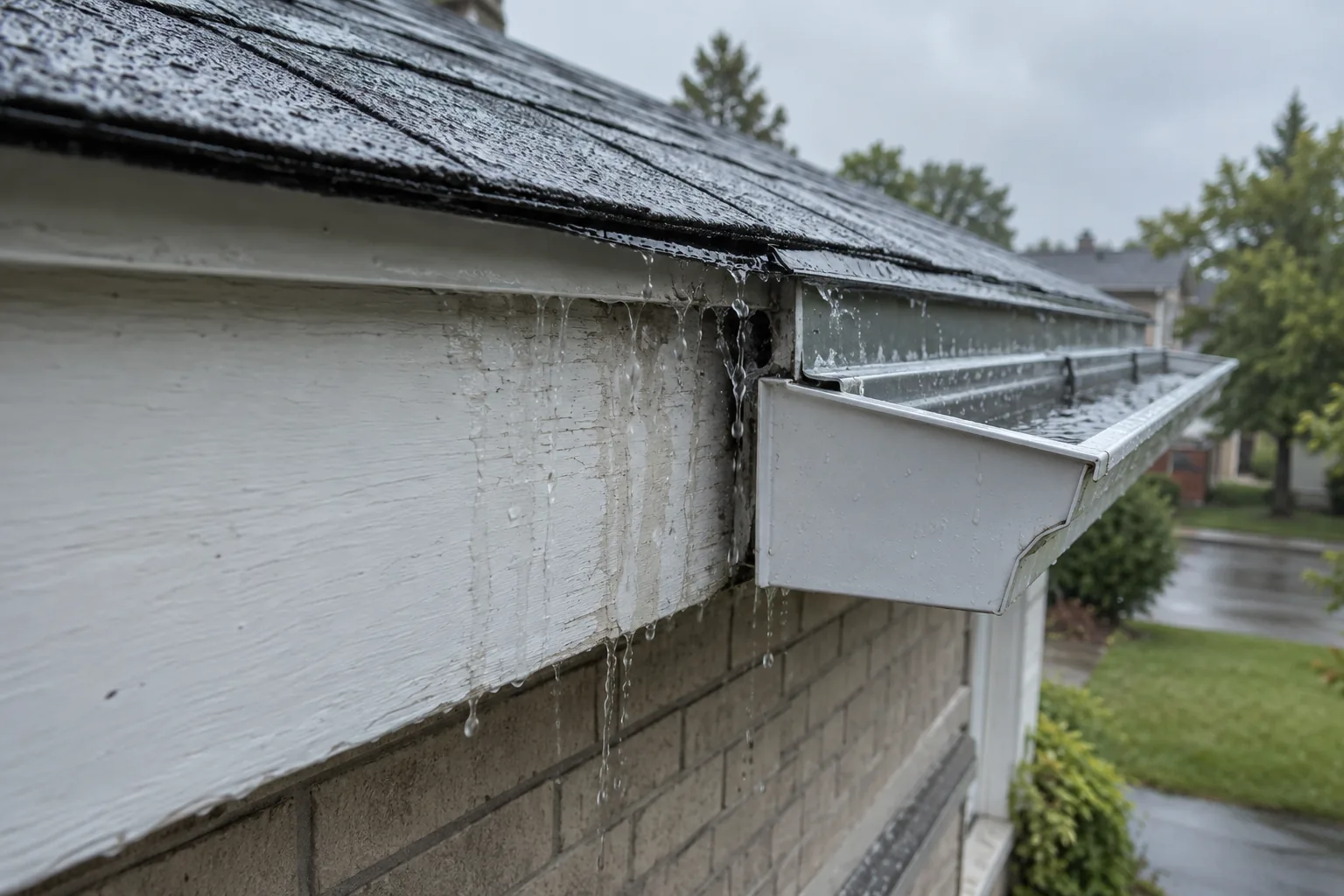
A stain on fascia or siding reveals where water travelled, not necessarily where it began. In rain, note whether runoff crosses the back of the gutter directly from the roof edge, spills from a full channel and curls behind, or leaks through a corner before following the fascia. Observe safely from below, with a video that includes the shingles or roof covering, the full gutter edge and the area receiving water.
The timing matters. Water appearing immediately as roof runoff begins can suggest an entry or alignment relationship. Water behind the gutter only after the channel fills may point toward outlet or downspout restrictions, sagging or overflow. Wind can change the visible path, so multiple observations may be needed. Do not stand beneath a loose gutter or use a ladder in rain.
Alignment and attachment at the roof edge
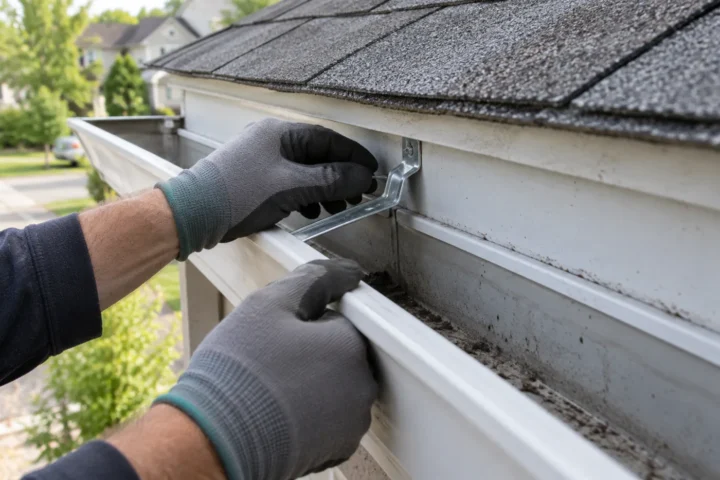
A gutter set too far from the roof runoff line can miss water. If its back edge has pulled away from the fascia, water can enter the gap and wet the support. The channel may also have shifted after hangers loosened or after a section was reattached without checking where water leaves the roof. Position and slope both matter; a gutter that catches water at one end but not another may have more than one defect.
Inspect the full run for gaps, outward tilt and loose support. Attachment should be made to suitable substrate. Aluminum fascia covering cannot be treated as proof of sound underlying material. If the gutter is physically separating, the pulling-away guide focuses on fasteners and support. If the channel bows, the sagging guide covers its slope and load.
Drip edge, flashing and roof-related possibilities
The junction between roof covering, roof edge and gutter can determine whether runoff enters the channel cleanly. A drip-edge or flashing detail may direct water beyond the back edge, or water may be moving under roof material before it reaches the visible edge. These are roof assembly questions, not automatically gutter defects. An eavestrough adjustment may be useful for a placement problem but cannot be represented as a guaranteed repair for defective roofing or flashing.
Roof geometry, valleys, additions and different edge profiles complicate the diagnosis. A porch roof might discharge onto a lower roof or gutter in a way that produces a different path from the main elevation. Assess where water first becomes visible. If it appears to originate above or behind the roof-edge detail, a qualified roofing evaluation may be required alongside any gutter work.
Overflow can wrap around the back
A full gutter can spill over its front, side or back depending on its shape and installation. A blocked outlet, downspout elbow or lower extension can cause water to rise, while a low section can overtop before water reaches the outlet. An observer may see water down the fascia and call it a “back leak” even when the first failure is a drainage restriction.
Check whether water exits the downspout at grade during the event. Note debris on guards or in the channel. If the gutter itself is full, start with overflow diagnosis and outlet and downspout restrictions. A new strip of sealant at the back cannot make a blocked route drain.

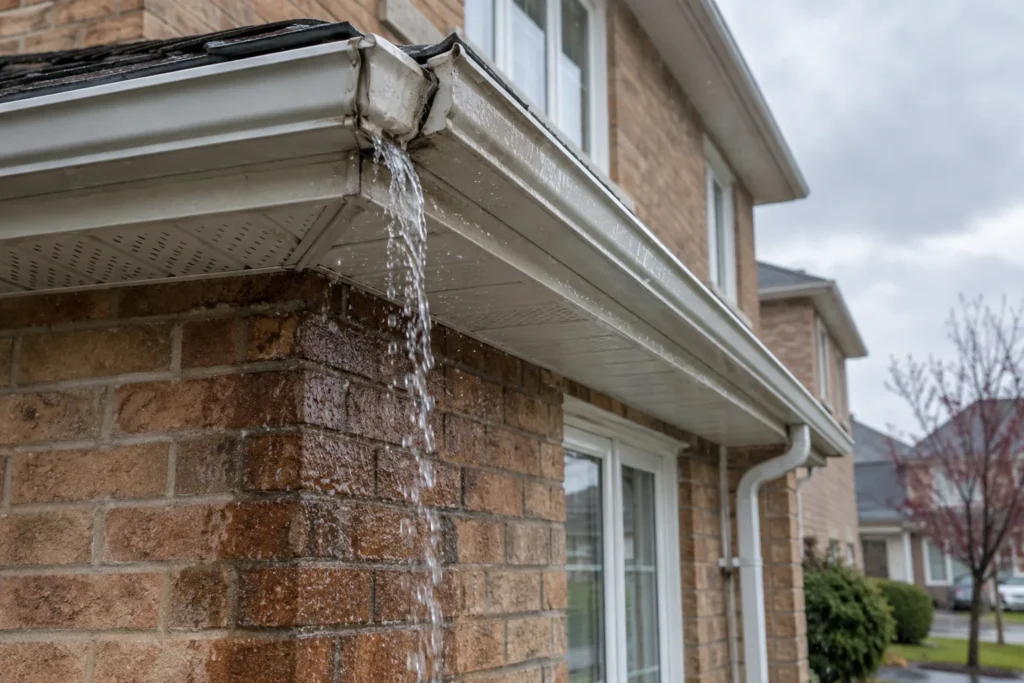
What fascia and soffit stains can tell you
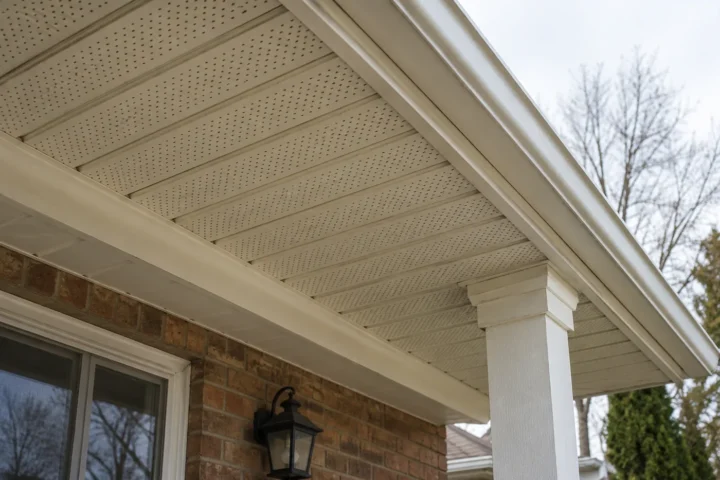
Repeated wetting may stain or loosen fascia finish and could affect supporting material over time. A soffit stain may be related to overflow, roof leakage, a separate exterior opening or a previous event. Its colour or location alone does not establish the source. An inspection should trace active water and evaluate any loose material or deteriorated substrate before new aluminum capping covers it.
A gutter may need reattachment, while fascia repair could be a distinct scope. If the supporting material is not suitable for fasteners, placing a new channel over the same condition is poor planning. The soffit and fascia symptom page describes how visible damage can relate to several causes.
Repair choices after the source is known
A misplaced but sound gutter might be repositioned if the roof edge and support permit, while loose hangers or a short distorted section may be repaired or replaced. A blockage calls for clearing the whole route. A defective roof detail calls for work appropriate to that roof assembly. Sometimes more than one scope is needed because water entry, attachment and outlet restriction coexist.
Do not select a repair simply because the interior of the channel looks clean on a dry day. A sensible estimate states what was observed, which component is believed to cause the problem, and what remains uncertain until access is available. It should distinguish gutter repair from roof work and from fascia restoration.
Why the ground-level destination also matters
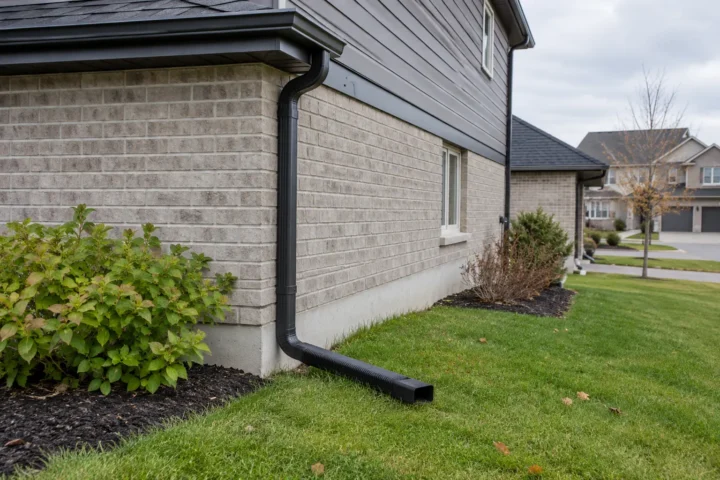
Water running behind a gutter may be landing directly beside the home, splashing onto an entrance or finding a low point. Once the roof-edge route is corrected, ensure the captured water goes through the outlet, downspout and extension to an appropriate discharge location. Redirecting roof runoff should account for grade, paving, winter icing and nearby property.
Milton’s flood advice recommends extending downspouts away from basement walls, and Halton describes suitable discharge onto away-sloping ground. Those recommendations address a roof-water route; they do not establish the cause of every basement leak. See the Milton eavestrough and drainage resource for the local context.
Useful photos and observations
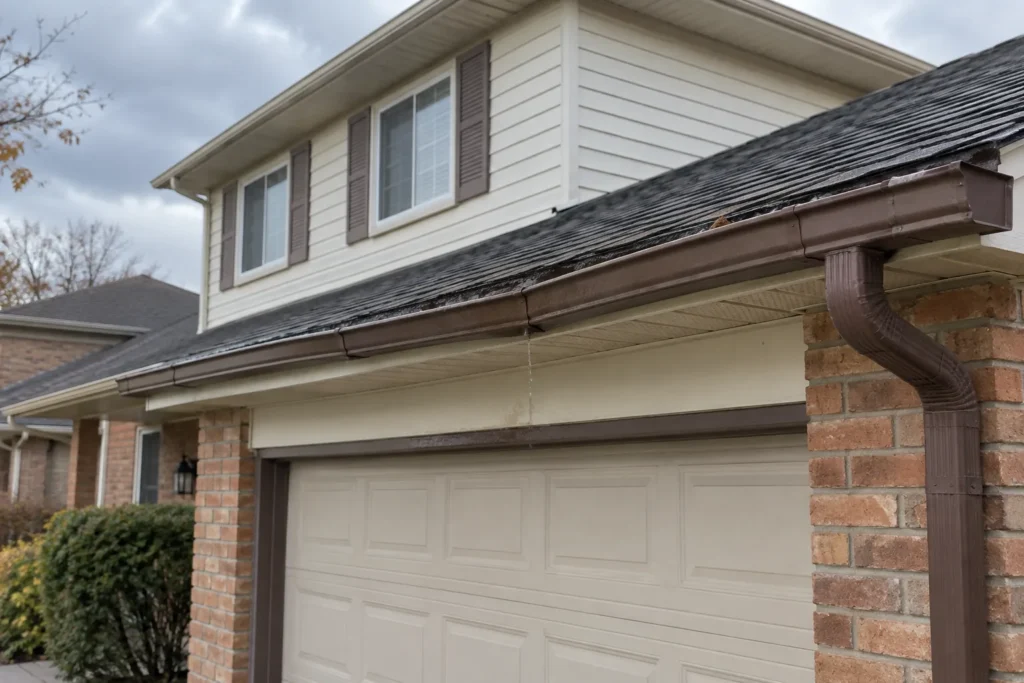
Share whether the channel fills before water runs behind it, which roof plane feeds the area, and whether the gutter has a visible gap. Photograph the entire elevation, any staining, the outlet and the final discharge from a safe location. Note if the symptom began after a storm, gutter repair, guard installation or roof work.
Where staining is old and the roof edge is dry during current rain, avoid assuming it proves a present leak. Conversely, a wet soffit away from the visible gutter line may deserve separate investigation. The aim is to identify the first point at which water leaves its intended route and to repair that point with the appropriate scope.
A useful distinction at a roof valley
At a valley, a concentrated stream can arrive with enough momentum to pass a gutter lip or run under an unusual edge detail. The visible result may resemble a back-edge leak on the wall below. Record the direction of the stream and whether the channel fills before the water appears. Placement, entry geometry and capacity deserve review, but no one photograph establishes which component is at fault.
A lower roof below an upper downspout can create another concentrated entry point. Confirm where the upper discharge lands and how the lower gutter receives it. A seal along the back of the lower channel will not change the direction of runoff delivered from above.
Do not conceal the route prematurely
Installing new fascia capping or applying sealant over a wet area before tracing the source can hide staining while the water path remains. The first objective is to see whether runoff enters from the roof edge, backs up in the gutter, or arrives through another assembly. Dry-weather marks help locate the area, but observation during an active event or a careful inspection of the edge details is more informative.
Once the source is identified, define the boundaries of the work. A gutter repositioning should be evaluated against roof runoff and outlet flow. A fascia repair should include suitable support. A roof flashing issue belongs to the roof scope. If more than one condition contributes, each needs its own stated correction rather than a vague promise to stop all water at the roofline.