Observe when and where the overflow begins
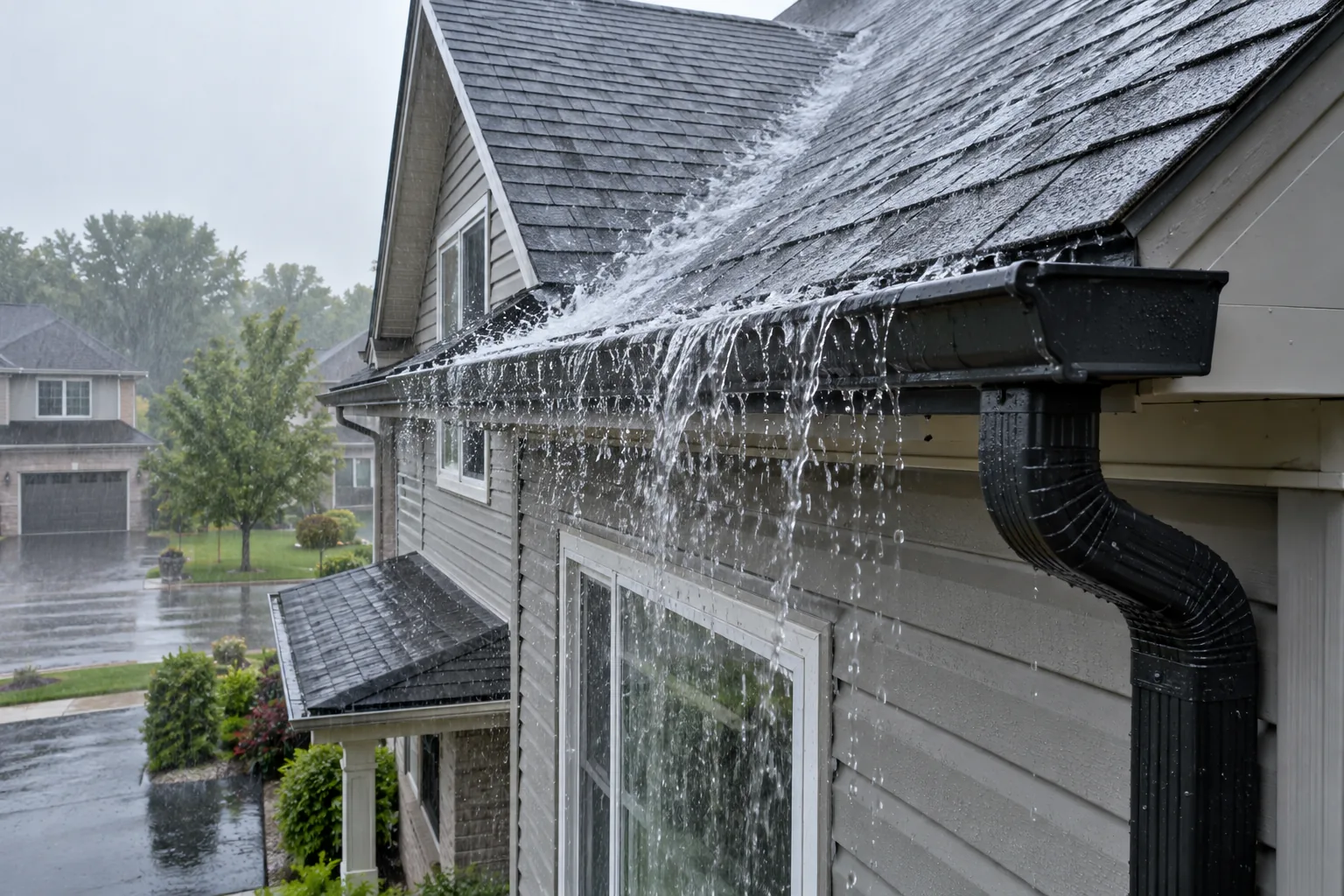
During rain, note whether water runs over the front along an entire elevation or spills from one point. A sheet over the length of a gutter suggests a different diagnosis from a jet at the mouth of a roof valley. Water falling near a downspout can be arriving faster than a restricted outlet can pass it. A video taken safely from ground level, with the roof edge and downspout visible together, is often more useful than an isolated close-up.
Compare ordinary rain with short, intense storms. A system that overflows whenever it rains may contain debris or have a persistent route problem. A section that spills only when runoff is concentrated at a valley needs assessment of roof area, entry point and receiving gutter. Wind-driven rain and rain running behind the channel can complicate the picture; do not assume all water visible beside a gutter crossed the front lip.
Debris in the channel and outlet
Leaves, seed clusters, needles, roofing grit and organic material can form a mat that narrows the channel. Water then rises behind the debris and escapes at a low point. The most important blockage may be hidden at the outlet rather than obvious across the top. A clean-looking gutter surface does not prove that its outlet is clear.
Gutter guards can reduce entry of some debris but can collect material on top or allow smaller particles through. Guard shape, installation and condition affect how water enters the channel. Removing a visible pile without checking beneath a guard and at the outlet may leave the overflow intact. The cleaning service and guard guide explain these separate considerations.
Downspout and elbow restrictions
A downspout may be narrowed by compacted leaves, grit or debris at an elbow. Water backs up through the outlet and fills the gutter even if the horizontal channel is clean. One clue is overflow that starts near the outlet during steady rain. Another is little or no flow at the downspout discharge while the roof edge is spilling water. Observe from a safe location; probing an elevated outlet or pulling apart a downspout on a ladder is not a necessary first step for a homeowner.
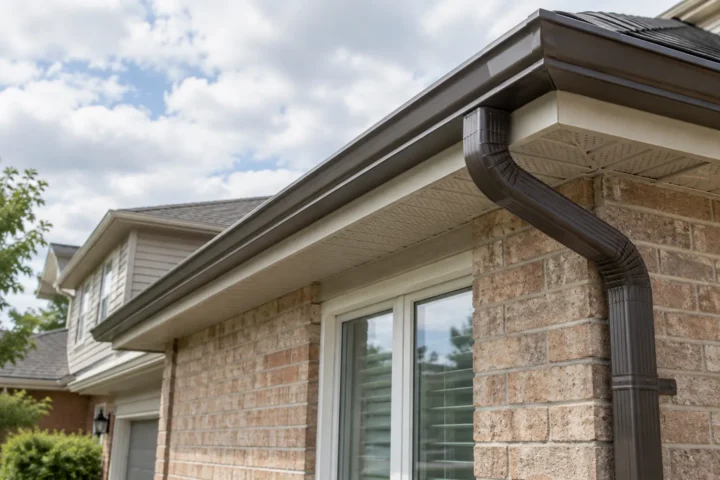
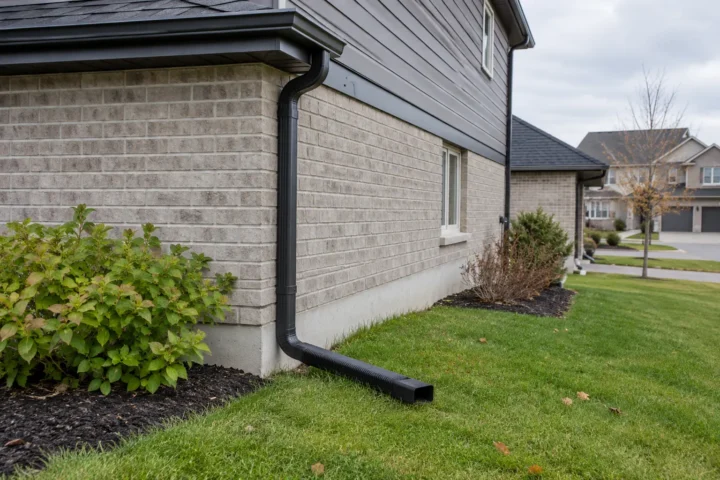
The vertical route and final discharge should be considered together. An extension buried in debris, a crushed elbow or a closed-off outlet at ground level can back up the route. Clearing the gutter while leaving a downstream restriction will not solve the complaint. The clogged gutter and downspout guide helps identify where debris tends to gather.
Slope, sagging and outlet position
A gutter needs a route toward an outlet. A low pocket away from that outlet can retain water until the pocket spills, even when the outlet itself is clear. Loose hangers, a distorted channel, settling attachment or an outlet positioned too high relative to the low point can contribute. Look for water remaining well after rain and for one part of the run visibly bowing.
Cleaning can reveal the real channel shape, but it cannot correct a permanently deformed run. A sound localized section may be reset or reattached; widespread distortion may call for replacement. The sagging and standing-water pages explain those symptoms in greater detail.
Concentrated valley and roof-area flow
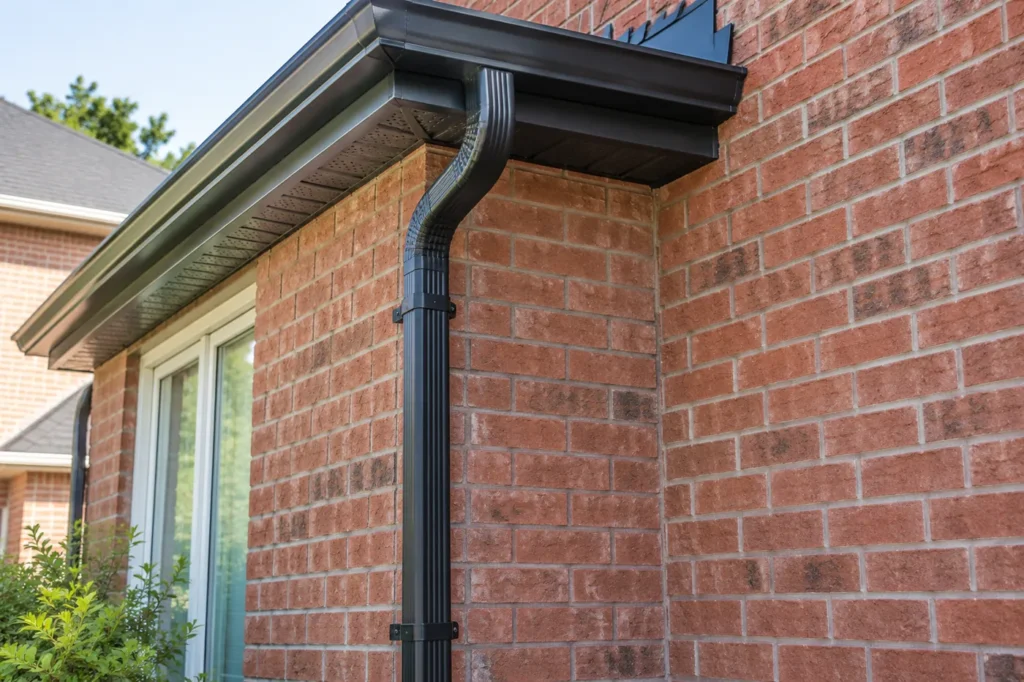
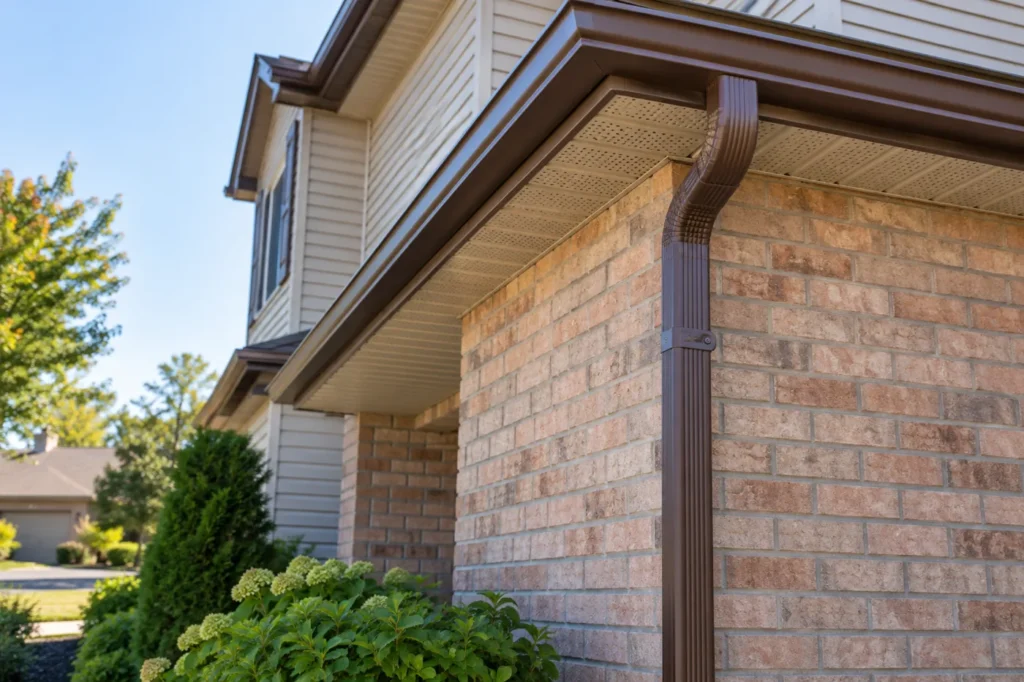
A roof valley gathers water from two roof planes and sends it toward a comparatively small part of the gutter. Additions, dormers, garages and porches can alter how much roof area drains into each run. Water that overshoots the receiving channel in a heavy storm may need attention at the entry geometry, gutter placement, profile, outlet and downspout together. A wider gutter alone is not automatically the correct answer.
The condition of any guards also matters at a valley. A layer of leaves on a guard can redirect incoming water across its top; a guard unsuitable for concentrated flow may shed water even while the gutter below remains partly empty. An assessment should distinguish that from a full channel backing up. The 5-inch versus 6-inch guide explains why sizing depends on the full roof-water route.
Water after it leaves the gutter
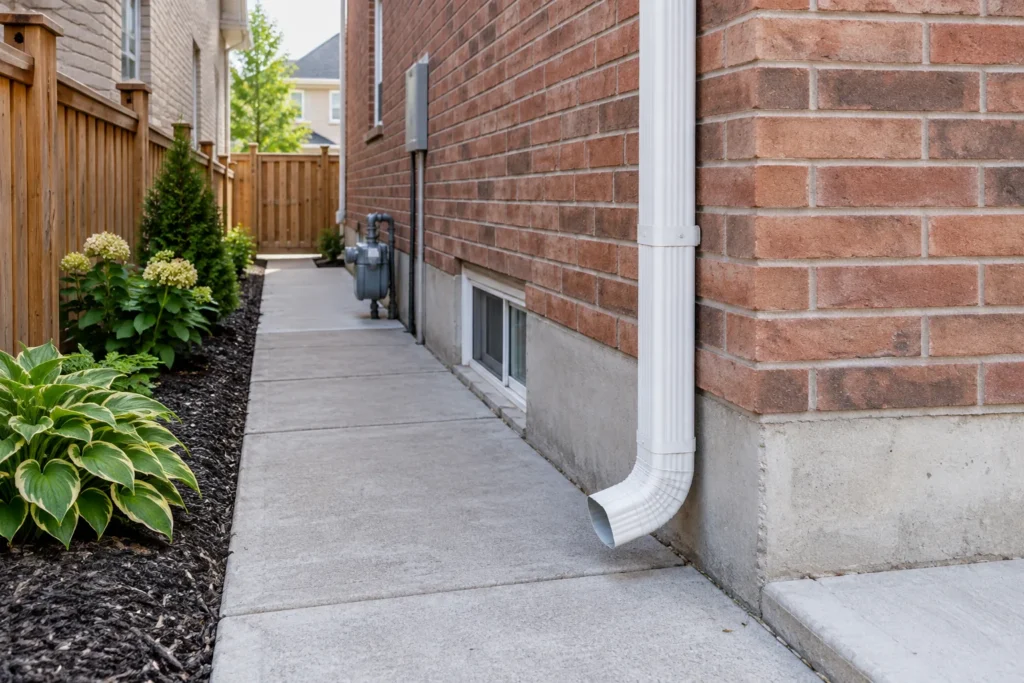
Overflow near a basement wall, entrance or walkway has consequences beyond the gutter itself. Follow the outlet through the downspout and extension to its discharge point. A downspout that empties beside the wall may send roof runoff back toward the same area even after a clog is cleared. Lot grading, nearby paving and winter icing shape which above-ground discharge locations are suitable.
The Town of Milton’s flood information recommends downspouts extend at least 2 m from basement walls; Halton’s guidance describes 3 m as ideal, onto ground that slopes away. These are guidance in their own contexts, not a promise that any one extension cures basement water. The actual discharge must respect paths, adjacent lots and site conditions.
Choose the work after identifying the bottleneck
A debris restriction suggests clearing the channel, outlet and downspout, then reviewing why it formed and whether guards or maintenance would help. A sagging but sound section may call for attachment and slope correction. A damaged or poorly positioned outlet may need adjustment or replacement. Repeated overflow at a valley may require a broader layout assessment, including downspout capacity and final route.
A quote for overflow and drainage troubleshooting should describe the observed flow pattern and the proposed correction. When metal is damaged over several runs or the layout cannot route water to suitable outlets, replacement planning may make more sense. No one observation proves that every gutter on the home is undersized.
Information that makes a Milton assessment useful
Share which elevation overflows, whether it is near a valley, how intense the rain is, whether a guard is installed and whether water exits the downspout. Include photographs that show the roof plane, full gutter run and discharge area. Describe any recent cleaning, guard installation or alterations to the roofline. Mention if the same location freezes over a walkway in winter.
If water also reaches a basement wall, observe whether the surrounding ground slopes toward the home. Roof runoff is one potential source among surface drainage, foundation and plumbing causes. The Milton drainage guide explains how to assess that relationship without treating a gutter correction as a guaranteed basement repair.
One storm can reveal several separate faults
A valley may deliver an initial surge that overshoots the gutter, while a partially blocked outlet later makes the whole run fill. A video from the start of rain and another after several minutes can show that sequence. If two mechanisms are present, a single cleaning or deflector may improve one but leave the other. The assessment should state which observed behaviour each proposed change is intended to address.
Also distinguish rainwater from a roof surface from water that appears during snowmelt. Frozen outlets, ice and roof conditions change the route. A summer overflow correction should not be described as a universal answer to winter ice formation. The winter gutter guide discusses the seasonal context.
What changes after a correction
After cleaning or repair, the next rain should show water entering the channel, moving to the outlet and leaving through the downspout. The original spill point should be compared under similar conditions where practical. A small storm cannot prove performance during every future cloudburst, but it can reveal a remaining blocked elbow or persistent low point. Keep the pre-work video so the comparison is tied to a particular roof plane and outlet.
If overflow returns only during unusually concentrated valley flow, revisit that entry geometry rather than repeatedly cleaning an already clear gutter. If it returns during ordinary rain and the downspout exit is quiet, inspect downstream restrictions. A symptom that changes with conditions is useful diagnostic evidence, not a reason to guess at gutter size.