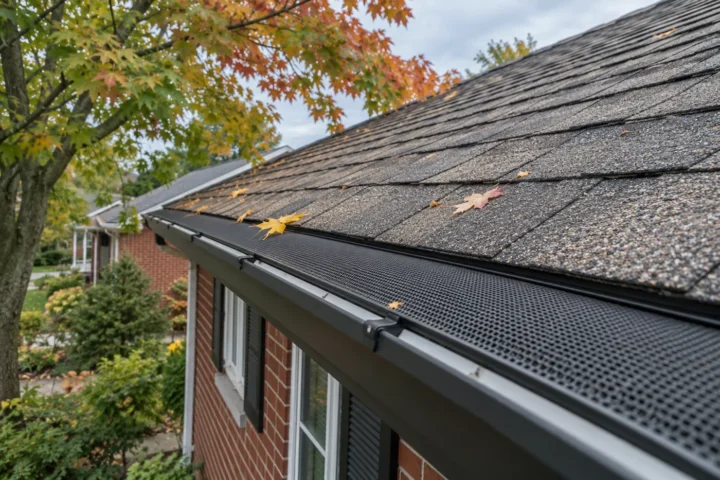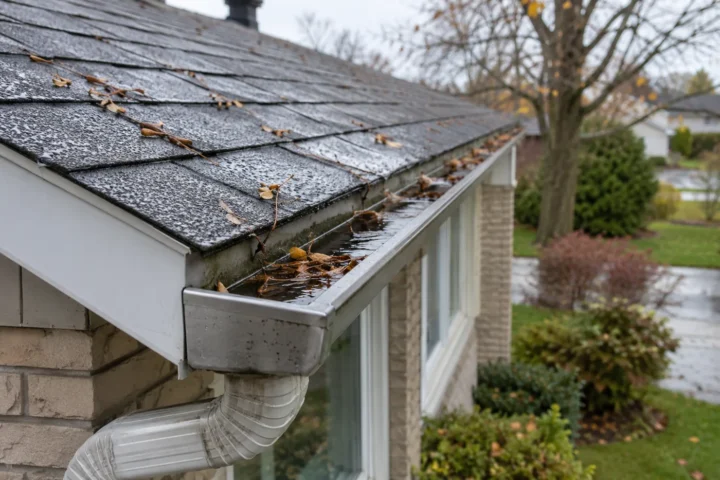
Eavestrough cleaning is more than lifting a handful of leaves from the visible channel. Seeds, roofing grit and decaying organic matter can settle around outlets, at corners and inside an upper downspout elbow. Some guards accumulate debris on top while smaller particles pass beneath. The appropriate frequency depends on trees, roof geometry, guard type and a property’s actual clog history. One universal schedule would miss the conditions that determine whether an individual Milton roofline needs attention.
Recognize a likely blockage
Overflow limited to one outlet area, a downspout that stops flowing during rain or plants growing in the channel are useful clues. A long run might appear mostly clear from the ground while a compacted plug remains beneath leaves at the outlet. Standing water days after rain can signal a restriction but may also reveal poor slope or a depressed section.
A lower elbow that releases debris when separated points to a downspout issue. Water escaping from a corner seam can instead be a leak, and water running behind the gutter may relate to roof-edge detailing. Cleaning is useful where material obstructs flow; it should not be sold as a cure for every wet wall.
Work through channel, outlet and downspout
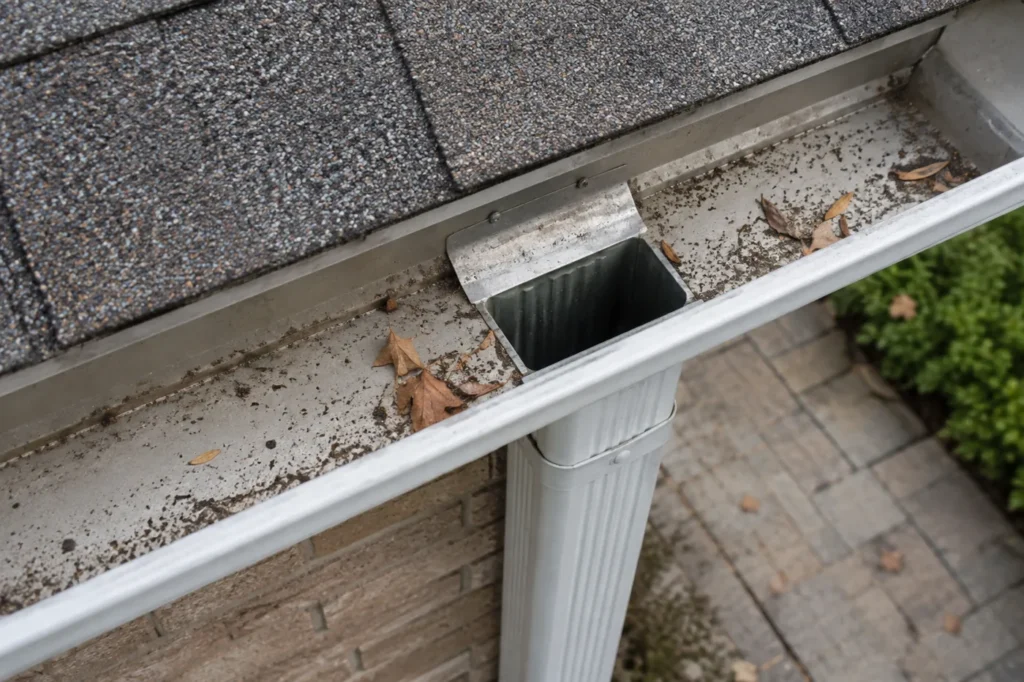
Remove accumulated leaves, seeds and grit without pushing a plug into the outlet. Check corners and high-flow valleys where material gathers. The outlet opening, elbows and vertical pipe deserve attention because a clear straight run can still back up against one blocked connection.
If guards are present, consider their attachment and access before lifting or cleaning them. A guard that makes future inspection impractical may need a different maintenance method. The goal is to restore a connected path without damaging the roof covering, gutter finish or joints.
Frequency should reflect the property
Overhanging deciduous trees can drop leaves in autumn and seeds or blossoms at other times. Evergreens, nearby vegetation and roofing grit create different debris patterns. Valleys concentrate flow and material at particular sections. A house with little tree cover and a history of clear outlets will not necessarily need the same schedule as a wooded lot with recurring clogs.
A sensible plan uses observations after storms and seasonal debris periods, adjusted when a blockage recurs. Guards can reduce some entry yet do not end inspection. At high elevations or complex rooflines, safe professional access is preferable to an unsafe homeowner climb.
Notice defects revealed by cleaning
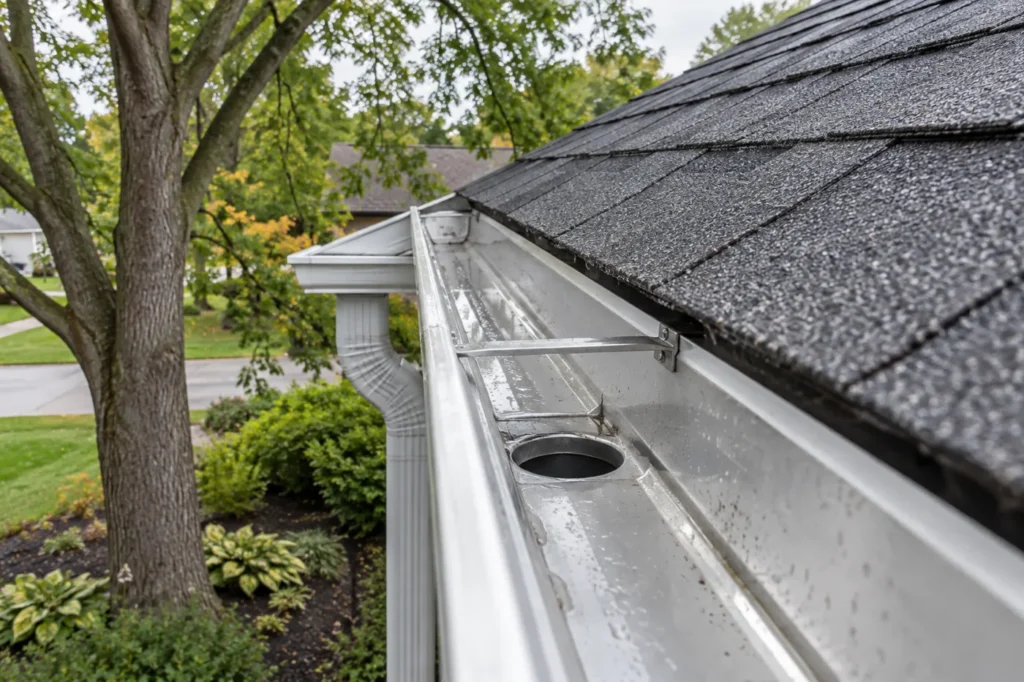
Once the channel is clear, a low spot, split seam, displaced hanger or corroded fastener may become visible. These are separate repair questions. A gutter can remain full of water because its slope is wrong even when no debris remains. Record the condition rather than repeatedly cleaning the same problem.
Check that downspout discharge does not empty beside the foundation or into an unsafe walking area. Cleaning restores flow and may increase the water delivered to that ground-level point. An extension or routing assessment could then be relevant, especially if previous blockage had hidden the discharge pattern.
Debris behaves differently across seasons
Spring seeds and blossoms can form a dense layer over an outlet even before autumn leaves arrive. Summer storms can wash roofing grit into a low section, while late leaves may gather against a guard. A property’s actual tree cover and roof valleys are better guides than assuming every home clogs only once a year.
The debris source can vary between front and rear elevations. A sheltered rear valley may retain material that a more exposed straight run sheds. Describe which section repeatedly overflows so cleaning can focus on the place where a plug is likely to form.
Cleaning does not correct geometry
After material is removed, water should be able to travel toward the outlet. If a sagged channel still holds a substantial pool, the next decision is an attachment or slope assessment. Continuing to clean a permanently low section does not change its geometry.
A high-flow valley can still overwhelm a clear arrangement if the outlet layout is unsuitable. Cleaning establishes a sound baseline for diagnosis, then separate work may address the gutter or downspout design.
Safe access is part of the job
A tall roofline, sloped ground, conservatory, porch or landscaping can complicate access. Do not risk reaching from a window or walking a roof to retrieve debris. Photos from ground level and descriptions of overflow are enough to begin scoping an appropriate method.
Material removed from channels should not simply be washed into a downspout, where it may clog a hidden elbow. A clear lower discharge after cleaning is a practical confirmation that the debris has not just moved.

Confirm the outlet rather than only the trough
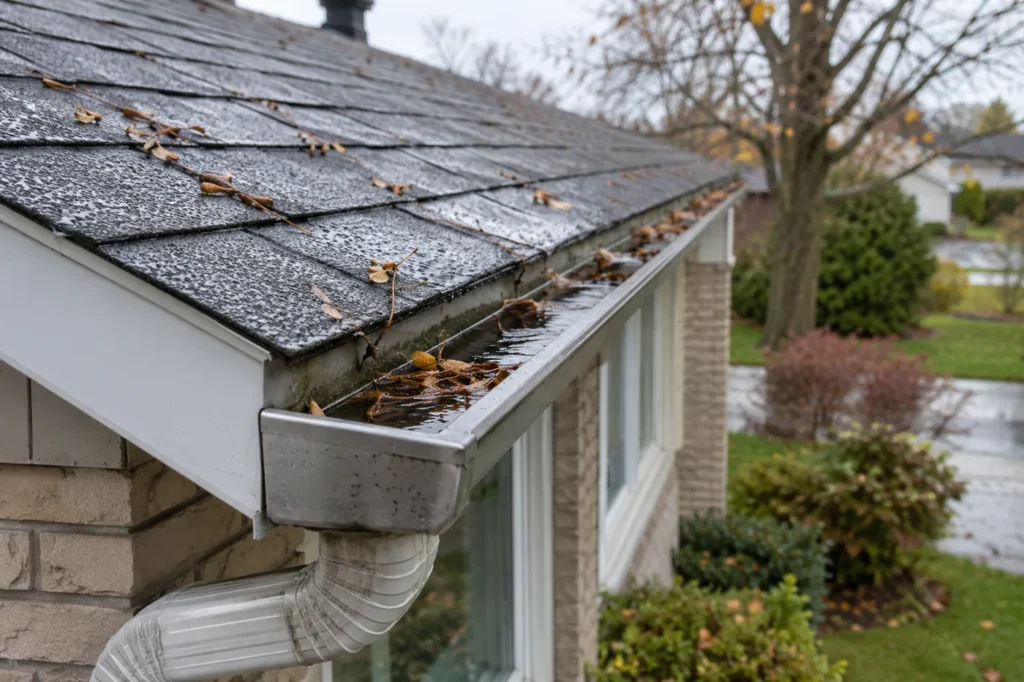
Material can pack into the outlet throat while the surrounding channel looks almost clear. An upper elbow can hold a plug that makes the entire run back up. A thorough scope should address the accessible route and state how a suspected deeper restriction will be handled.
Avoid flushing piles of leaves into the downspout. That can move the obstruction to a less visible location. Clearing the exit and checking for flow helps distinguish a successful cleaning from debris that has simply travelled down one connection.
Inspect what cleaning reveals
Removing debris can expose a split end cap, a loose hanger, a low spot or a guard that no longer sits properly. These are separate findings, not ordinary debris. Continuing to schedule cleaning when water remains trapped by poor slope may waste effort.
Restored flow also increases the amount of water at the downspout exit. If it empties against a foundation or across a walkway, a routing discussion can follow. Cleaning and rerouting have different scopes even though they affect one connected system.
What a clear gutter should reveal
Once the debris is removed, inspect whether the channel drains toward its outlet. A remaining pool can indicate a low spot or misplaced outlet, while dripping at a joint may reveal a separate leak. The downspout should carry water from the outlet and empty where the property can receive it. If the lower route is obstructed or too close to a wall, that is not solved by clearing leaves above. This final check helps distinguish a completed cleaning from a property that needs targeted repair or a discharge change. It also provides a sound baseline for deciding when future cleaning is necessary.
Clear the route, not only the visible channel
The cleaning path begins with roof runoff entering the channel, then clearing the channel and outlet, following the downspout and observing the final discharge. A clean upper run that empties onto a low spot at ground level is only a partial drainage result. The inspection should distinguish a blockage from slope or route issues.

Scope and cost factors
Scope depends on building height, number and length of runs, guard access, tree cover, debris volume, downspout blockages and safe access around landscaping. A service description should state whether downspouts and guard surfaces are included. Repairs discovered during cleaning should be identified separately.
Details to include in your request
Describe where water overflows, whether downspouts run during rain, and any past cleaning or guard installation. Photos from the ground of tree cover, roof geometry, outlets and discharge points help establish access and likely debris sources.
Continue planning the right work
For a repeatable condition check, maintenance and inspection covers joints, support, guards and the final discharge beyond debris removal. Guard options can reduce some material entering a sound channel, but the product needs ongoing access. The clogging guide separates channel, outlet and elbow restrictions, while overflow troubleshooting helps when a clear system still spills during rain.