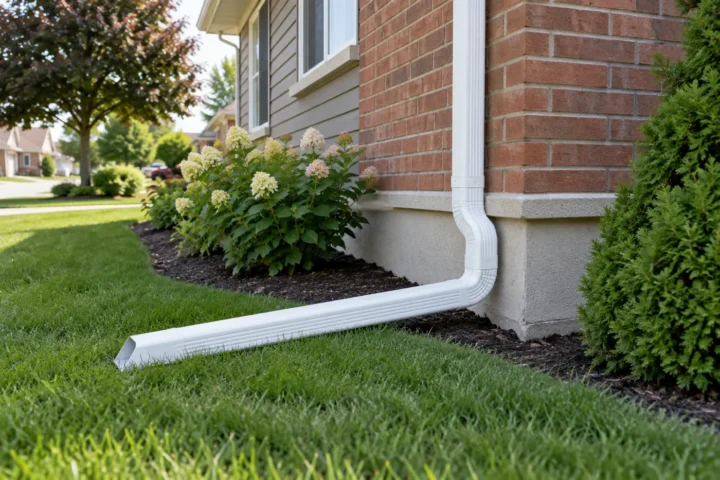
A gutter can be clear and still need attention: a hanger may pull loose, a corner may leak, a run may settle into a low spot, or a downspout may end in an unsuitable area. Inspection brings these observations together before a small issue creates visible water damage. Larger homes, landlords, multi-property owners and houses beneath mature trees may especially benefit from a repeatable record of what was seen. The schedule should match site conditions and previous problems rather than a promised one-size-fits-all interval.
Look at the channel and its connections
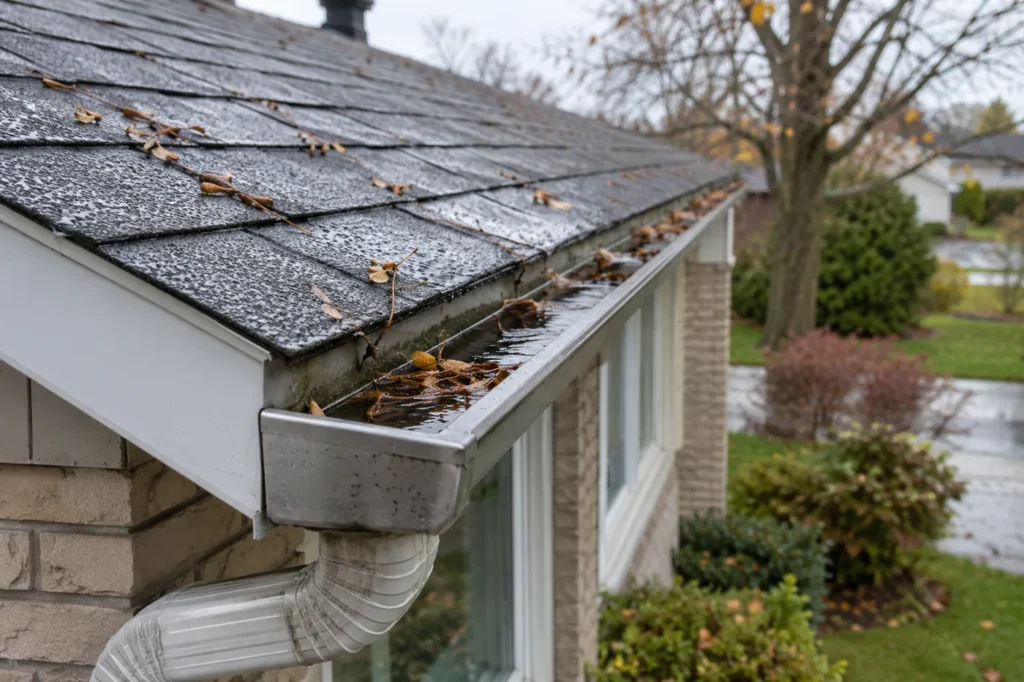
Check seams, corners and end caps for staining or separation. Notice standing water, distorted sections and debris patterns that recur in the same place. Hangers and fasteners should keep the channel aligned against suitable fascia. A slight movement may grow over time if the underlying support is weak.
At the outlet, look for accumulating leaves or grit and confirm the opening is not narrowed by debris or a poorly fitted guard. A clean channel upstream cannot drain through a restricted outlet. Visible symptoms in rain often reveal more than dry-weather appearance alone.
Follow the downspout to the ground
Elbows can separate or clog, straps can loosen and extensions can be shifted by mowing or landscaping. Inspect each downspout’s route and the place water leaves it. The final discharge area should be considered with grade, foundation proximity, walking areas and neighbouring property.
Winter changes the picture. A loose extension may direct thaw water across a walkway where it freezes. Debris trapped in an elbow can hold water. Inspection after storms or freeze-thaw activity should focus on visible displacement and safety, while avoiding work from an icy ladder or roof.
Include guards, soffit and fascia
A guard can collect leaves on its surface or hide fine material below. Check its fit and the gutter beneath where safe access permits. Displaced soffit panels, stained fascia or a gutter pulling away can reveal problems with support or water bypassing the channel. A mark on soffit alone does not establish whether gutter, roof or another source is responsible.
Where a gutter is fastened through aluminum fascia, assess the supporting material if the section moves. Tightening into deteriorated backing can conceal the risk briefly. Record which component requires cleaning, repair, replacement or a separate assessment by another trade.
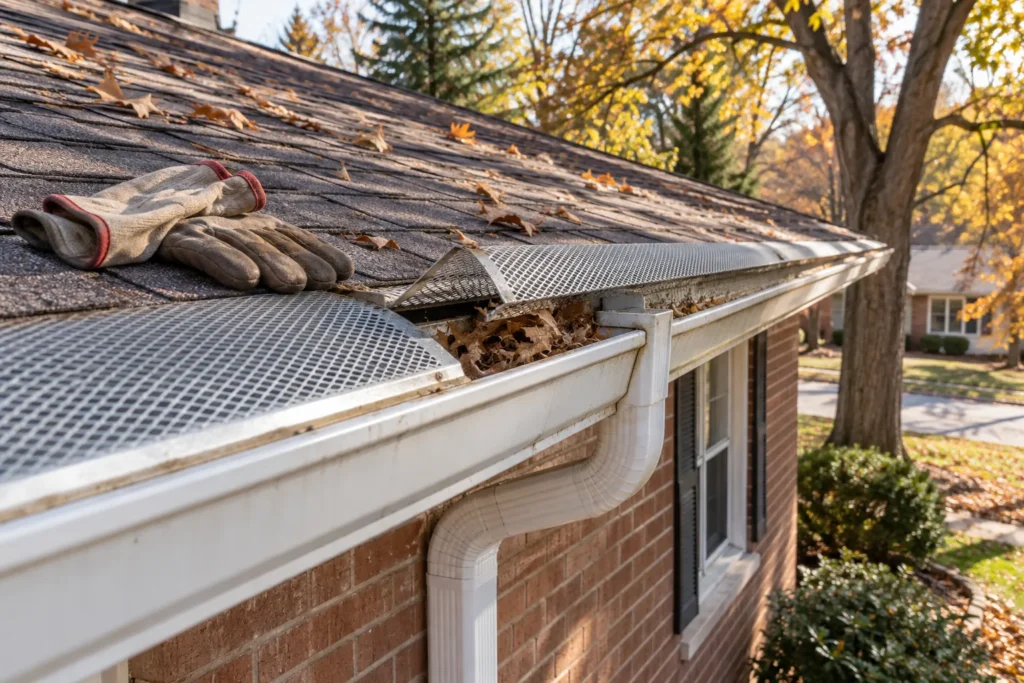
Use observations to plan the next step
A maintenance record can note affected elevation, approximate location, symptom, photos and whether it occurs in light rain, heavy rain or snowmelt. That is more actionable than a generic “gutters checked” entry. For a landlord or multiple buildings, consistent location descriptions can help distinguish recurring issues from new ones.
Small targeted repairs are appropriate where the system is otherwise sound. Repeated failure at several elevations may justify a replacement discussion. Maintenance should make that distinction clear and prevent cleaning, sealing and refastening the same failed layout indefinitely.
Use a consistent location record
Name the elevation and approximate point along the run, then note the visible condition. “Rear gutter near garage outlet holds water” is useful for a later comparison; “gutters need attention” is not. Photos taken from similar positions over time can show whether movement or staining has increased.
For several properties, a building identifier and date matter. Repeated reports can then be matched to earlier repairs or distinguished from unrelated sections. A record supports practical decisions without requiring a formal reporting system.
Make a seasonal check condition-based
After seed drop, strong wind or heavy leaf fall, look for material at guards and outlets where the property has a history of clogs. After ice or severe storms, watch for displaced pipe, loose straps and gutter movement. These events are prompts for observation, not a universal calendar imposed on every roof.
A mature tree above one elevation may require more attention than an open side of the same house. The inspection plan can be adjusted after seeing which locations actually collect debris or overflow.
Prioritize findings by consequence
A downspout directing meltwater across an entrance may need a faster routing decision than minor finish fading on a rear gutter. A loose run above a frequently used area differs from a cosmetic dent. Inspection should explain the condition and the water or safety consequence instead of giving every item the same priority.
When water enters the home, a gutter assessment can examine roof runoff but should also acknowledge that foundation, grade or other systems may be involved. A maintenance check identifies visible roof-edge issues; it does not certify the entire building against water entry.
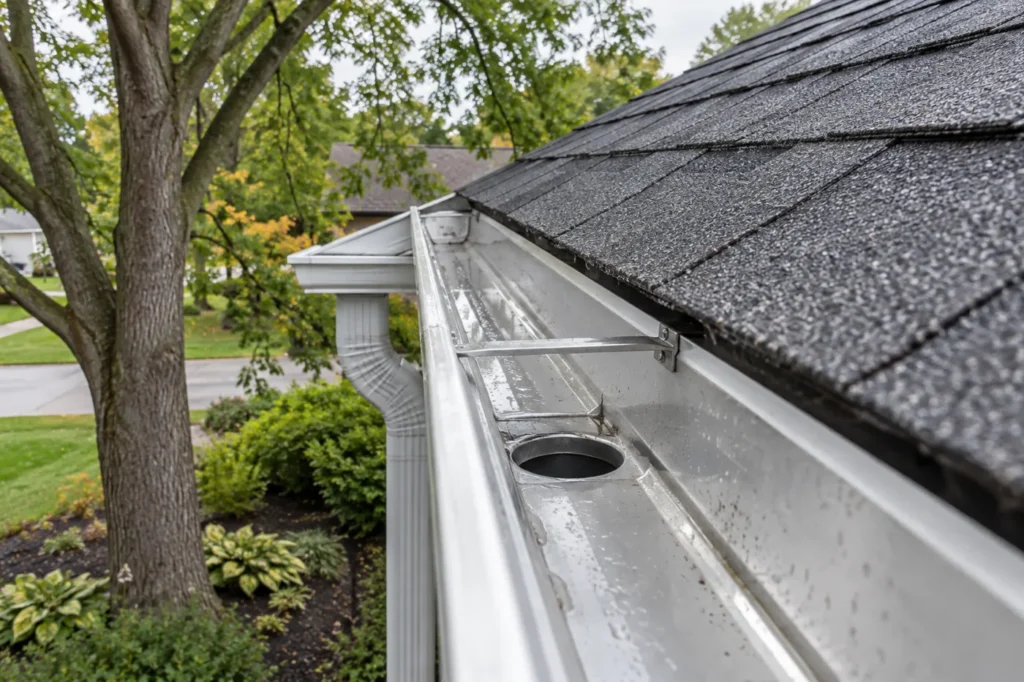

Choose observations that can be repeated
A useful check notes the elevation, condition and likely consequence: a stained rear corner, a sag beside the garage outlet or an extension pointing toward the house. The next visit can compare the same location. A vague statement that gutters “look okay” makes it hard to judge change after another storm.
Photographs from a safe position can record visible movement and discharge, but they do not replace close inspection when a hidden outlet or upper elbow is suspected. The scope should identify what can be observed and when access is needed.
Convert findings into a proportionate action
One local end-cap leak can be considered for targeted repair. Several unstable runs with failing fascia require a broader conversation. A blocked outlet may need cleaning before a capacity decision is possible. Inspection earns its value by separating these paths instead of recommending a single standard service.
When a symptom suggests a roofing, foundation or grading issue, record it as a separate concern. An eavestrough inspection can trace visible roof runoff and still acknowledge that some moisture routes lie outside its scope.
Use changes, not just dates, to set priorities
An inspection becomes more useful when it compares current conditions with previous observations: a corner that has started staining, a downspout that has rotated toward the house, or a hanger that is moving. Note which conditions are stable and which are worsening. A property under mature trees may need more outlet attention after seed or leaf drop, while another may mainly need checks after wind or ice. This approach avoids treating every elevation alike. It also lets a homeowner decide whether the next action is cleaning, a small repair, a wider replacement discussion or a separate evaluation of ground drainage.
Inspect the route to the receiving surface
The inspection follows roof water from edge through channel, outlet, downspout and final discharge, then looks at adjacent fascia and soffit for clues. It is meant to identify maintenance needs and likely causes, not to guarantee that every moisture issue originates with gutters.

Scope and cost factors
Work scope depends on property size, elevations, access, guard type, building height and whether downspouts and final discharge points can be observed. Cleaning or repairs may follow the inspection as separate tasks. A practical proposal describes what will be checked and how findings will be conveyed.
Details to include in your request
Mention previous leaks, overflow, repairs or storm damage; share photos and specify the affected elevations. For a managed property, identify access constraints, tenant parking and whether the concern repeats at several buildings.
Continue planning the right work
When an outlet is packed with debris, cleaning is the immediate task; a failed joint or attachment moves toward targeted repair. If the pipe empties in a poor location, evaluate rerouting before simply clearing the channel again. The seasonal guide connects those observations to spring seeds, autumn leaves, storms and thaw without imposing one schedule on every property.