Installation and replacement
How do I know if eavestrough replacement is needed? Look for widespread leaks, repeated sagging, sections that cannot maintain fall, extensive material damage or a layout that no longer manages runoff. One failing corner or short section may be repairable. Compare the condition of the entire run, fascia support and downspout route before deciding. Our repair-versus-replacement guide explains the trade-offs.
Are seamless gutters completely without joints? No. A long formed run has fewer joints along its length, but corners, outlets and end caps remain connection points. Those details still need correct installation and maintenance. Seamless describes how the straight run is formed, not a guarantee against leaks.
Do I need 6-inch gutters? There is no universal answer based on house size alone. Roof catchment, valleys, slope, outlet placement, downspouts and observed overflow matter. A 5-inch system with suitable routing can perform well; a wider channel will not solve a restricted downspout. See the profile sizing guide.
Leaks, sagging and overflow
Why does a clean gutter overflow? Water may reach a blocked outlet or elbow, collect in a low section, overshoot at a valley or exceed the arrangement's capacity during concentrated rain. Attachment and guard condition also matter. Follow the first escape point and then trace the water path to ground level.
Can a leaking corner be sealed? A sound corner with a localized failed joint may be repairable. If water ponds against it or the run moves, sealant alone may not last. The adjacent metal, attachment and outlet should be checked before a repair is scoped.
What if water runs behind the gutter? A gutter that has pulled from fascia, a roof-edge detail, misalignment or water arriving from above can create that appearance. Staining on fascia does not by itself identify the source. Photograph the path during rain from a safe position for problem diagnosis.
Downspouts and local drainage
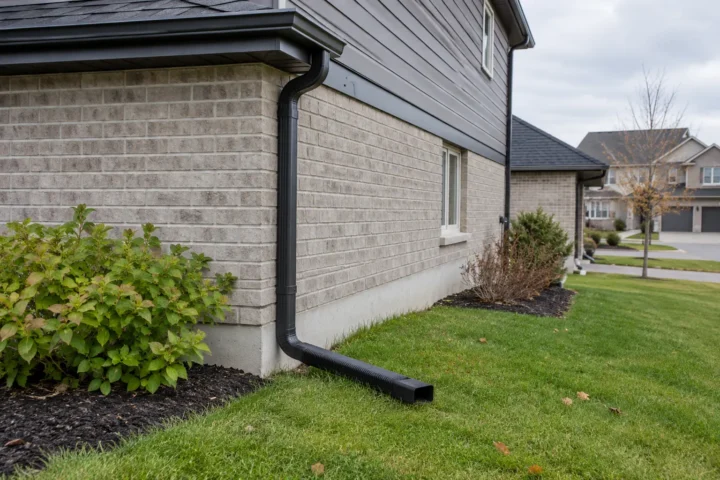
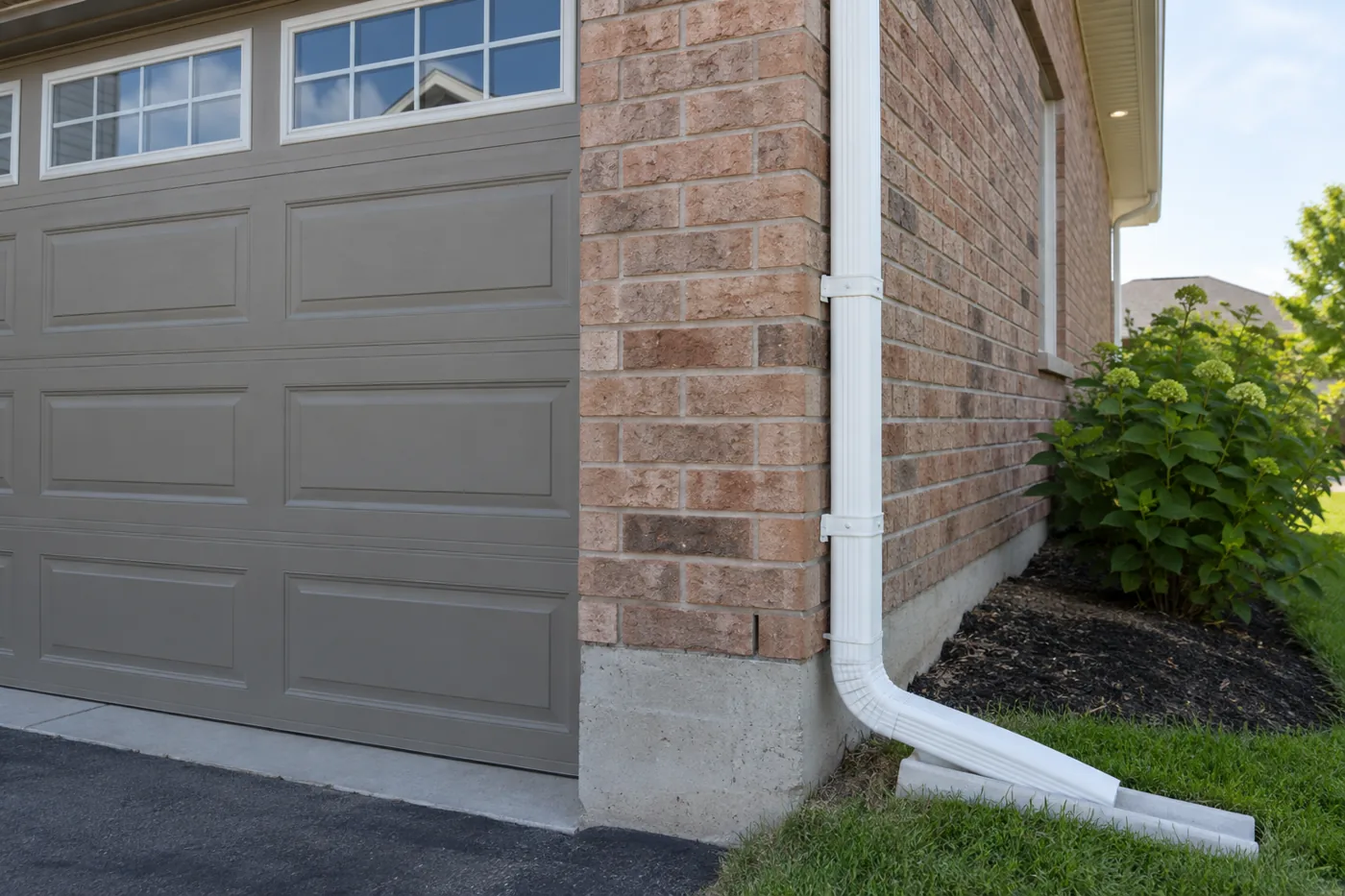
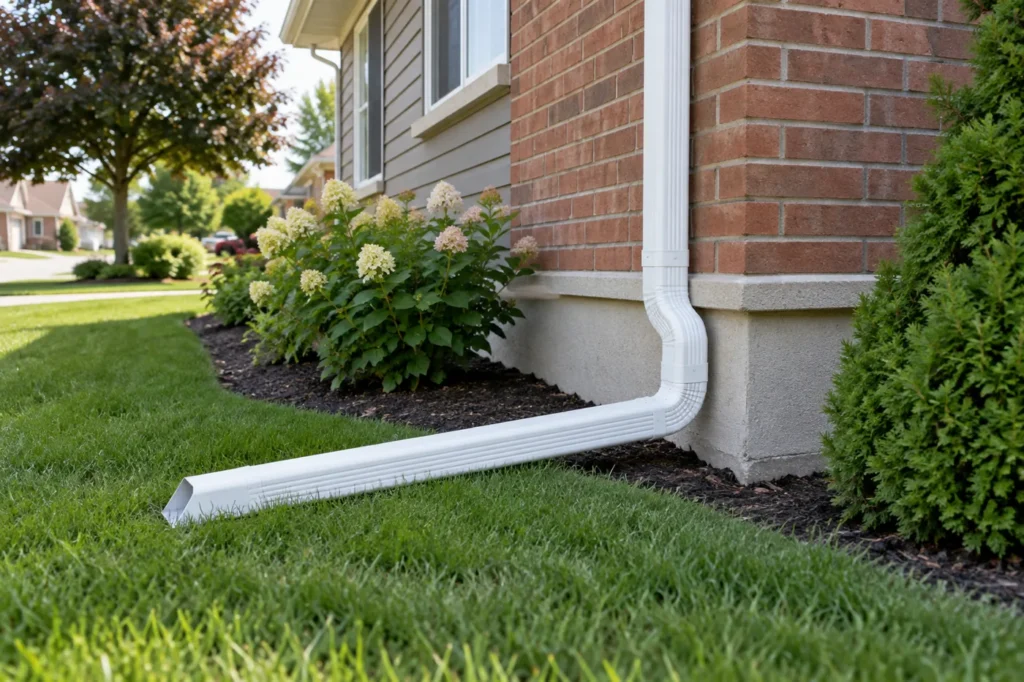
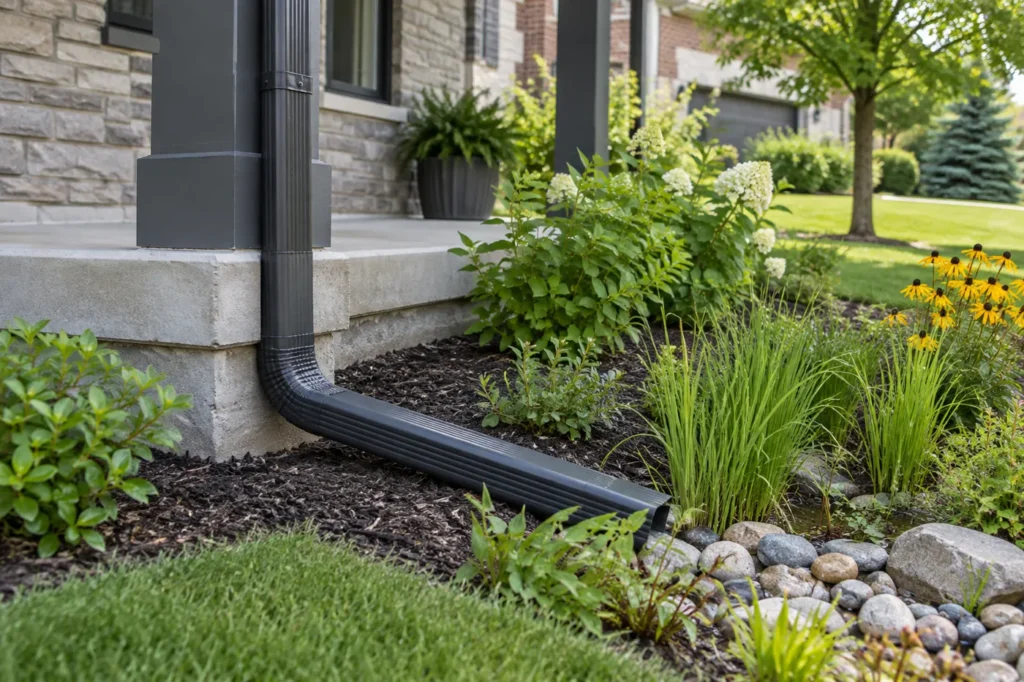
How far should a downspout release water from the house? Milton's flooding page recommends extending downspouts at least 2 metres (6 feet) from basement walls. Halton's guidance describes 3 metres from the foundation as ideal onto ground sloping away. The endpoint must also work for paths, grade and neighbouring land. These are guidance statements, not a promise that a set pipe length solves every property.
Can I discharge onto a driveway? The route may create concentrated flow and winter ice near vehicles or people. Assess where water travels from the endpoint and whether a suitable permeable, away-sloping area exists. Do not shift runoff to an adjacent property. A site-specific downspout rerouting discussion is more reliable than choosing a pipe length in isolation.
Will an extension stop basement leaks? It can reduce roof runoff beside the foundation, but a basement can admit water through other mechanisms, including grading, foundation and sewer conditions. The visible roof-water path is one part of a broader assessment.
Is there a Halton rebate for any downspout? The Region's published Downspout Disconnection Program is specifically for qualifying, confirmed connections to sanitary or wastewater infrastructure, with documentation and timing conditions. It is not a general gutter or extension rebate. Verify current eligibility before work.
Guards, cleaning and maintenance
Will a guard eliminate cleaning? No. Leaves may sit on top; fine particles and seeds may reach the channel or outlet. The appropriate inspection frequency depends on trees, roof geometry, debris and past clogs. Gutter guards should be installed only after the existing gutter works correctly.
How often should gutters be cleaned? There is no responsible interval for every property. A heavily treed roofline with recurring outlet blockages needs a different schedule from a simple roof with little debris. Check after relevant seasonal shedding and storms, and use the results to set the next interval.
Is an inspection different from cleaning? Yes. Cleaning removes debris and clears outlets; inspection examines joints, slope symptoms, attachment, fascia, downspouts, guards and the discharge endpoint. Both may be needed, but one does not automatically include every aspect of the other.
Soffit, fascia and capping
Does new aluminum fascia repair rotten wood? No. A finish can cover the underlying material but cannot restore suitable attachment support. The backing should be assessed before new gutter hangers are secured.
Will vented soffit fix attic ventilation? Vented panels can be one part of an intake route, but airflow also depends on clear openings and a suitable overall ventilation system. Replacement panels alone are not a guaranteed fix for attic moisture or ice.
Can only one soffit or fascia section be repaired? Often, if surrounding material and support are sound and the colour difference is acceptable. Repeated displacement or water damage needs the cause addressed first.
Planning answers that connect the components
What if only the downspout is damaged? A crushed lower section or separated elbow can often be addressed as a downspout problem if the gutter and outlet are sound. The replacement still needs a supported vertical route and a suitable ground endpoint. If the outlet is damaged or poorly placed, work upstream may be needed.
Does a wider gutter prevent basement flooding? No. A larger channel may help collect some concentrated roof flow, but foundation-area risk depends on outlets, downspouts, final discharge and other property conditions. Groundwater, grading, window wells and sewer backup can require separate investigation.
Why does water remain in a gutter after rain? A low pocket, insufficient fall toward the outlet, debris or an outlet restriction can retain water. The exact cause needs inspection. Standing water can add load and trap sediment, so it is worth describing even without active overflow.
Can I move a downspout to another wall? Possibly, but the gutter's fall, outlet position, pipe support and final destination must all work. Check paths, property boundaries and winter icing. Grading or drainage-pattern changes may need municipal review.
Are commercial flat-roof drains included with perimeter gutter work? Internal flat-roof drainage is a separate system. Describe the component and building so the appropriate scope can be identified rather than assuming all commercial drainage issues are eavestrough work.
One more question before work begins
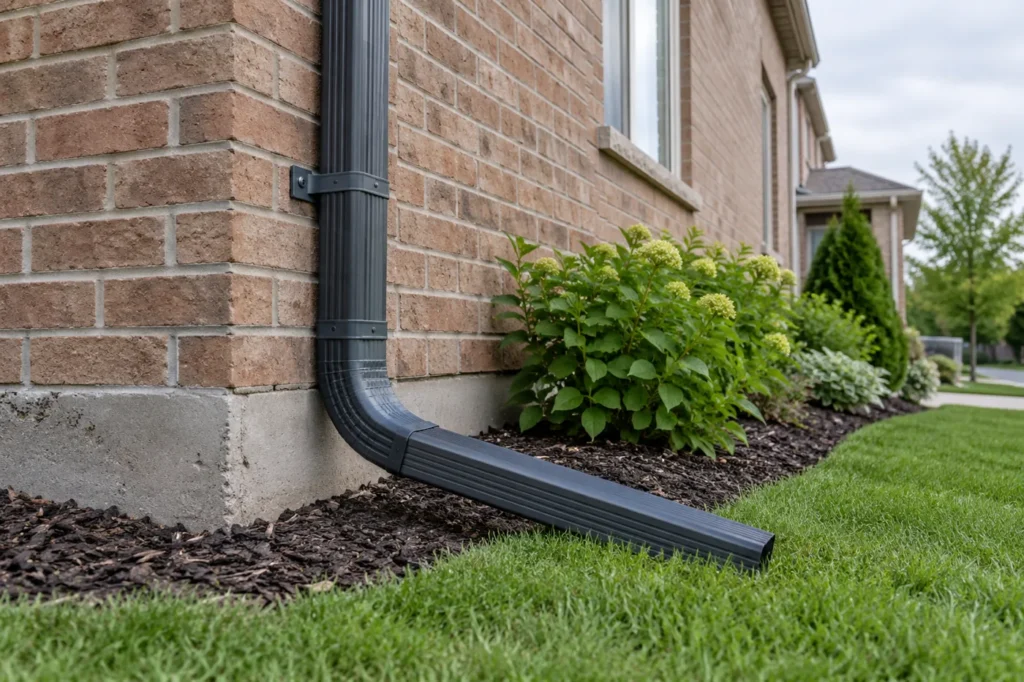
What should a photo show for an estimate? Include a wide view of the roof planes and affected elevation, a closer view of the symptom from a safe position, and the complete downspout route to ground. Identify which image shows the first point of overflow or leakage. This context is more useful than a tight detail of wet metal without the surrounding roof and discharge.
Cost, commercial work and requesting an estimate
Why do two estimates differ? The measured footage may be similar while access, corners, profile, downspouts, guards, fascia repair, removal and discharge scope differ. Compare what each proposal actually includes using the cost guide.
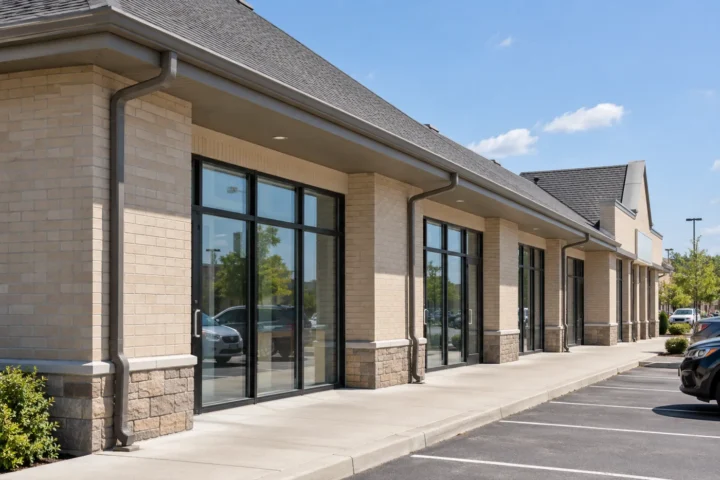
Can commercial gutters be treated like a larger house? A low-rise commercial roofline can involve larger catchments, longer runs, entrances, loading areas, tenant access and scheduling. A site-specific scope is needed. Internal flat-roof drainage is a separate issue unless expressly assessed.
What should I send with a request? Share the property location, building type, affected elevations, photographs of the roof edge and ground discharge, and when the symptom occurs. Note guards, previous repairs, interior water and access constraints. This information helps distinguish repair, replacement and downstream drainage work.