Differentiate a wet channel from a persistent pool
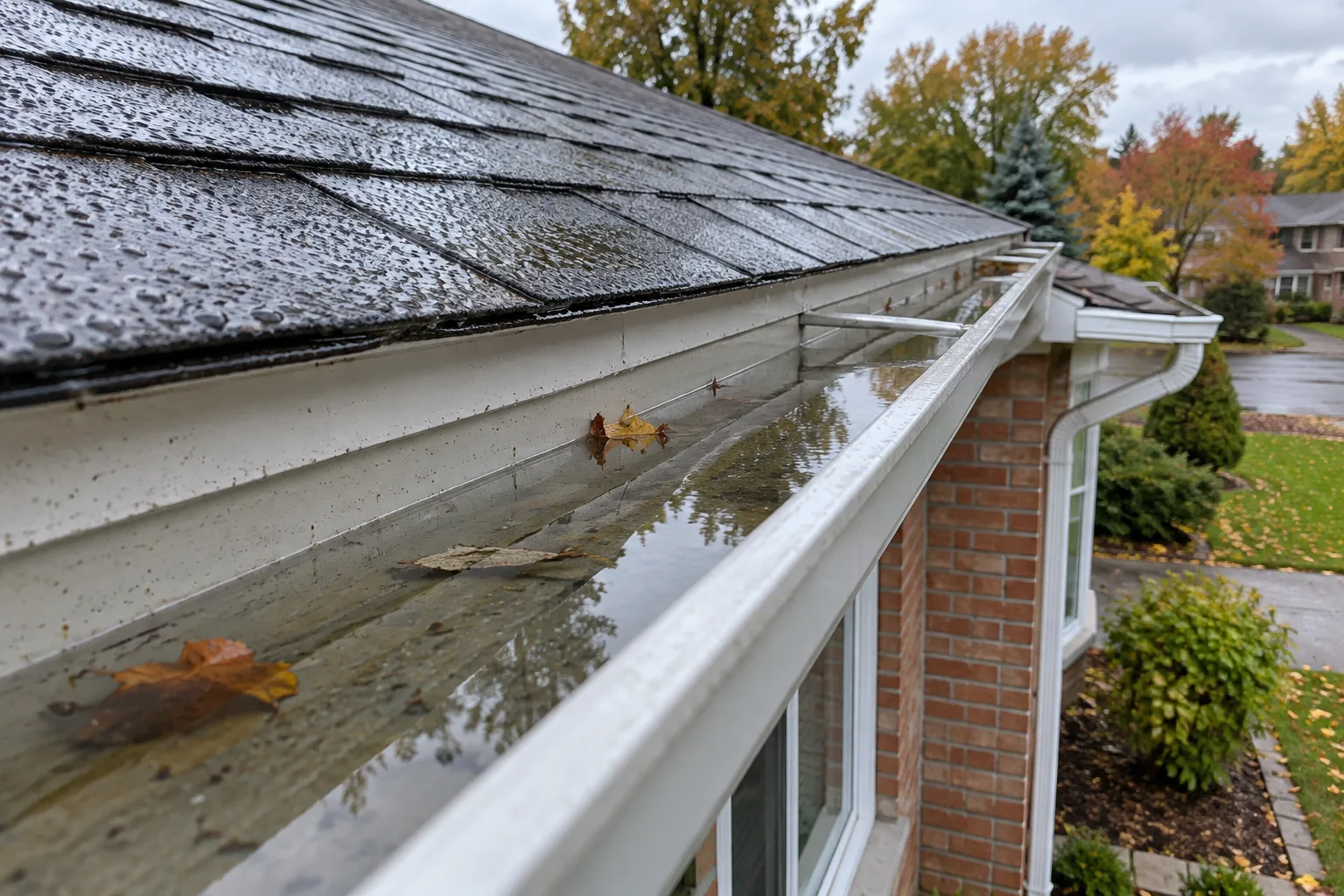
A gutter is an outdoor metal channel and may have a film of moisture after a storm. A distinct pool several hours after surrounding sections have drained deserves closer attention, especially if it collects leaves, creates staining, or remains through repeated dry intervals. Note the depth and length of the pool from a safe vantage point rather than climbing to take a measurement.
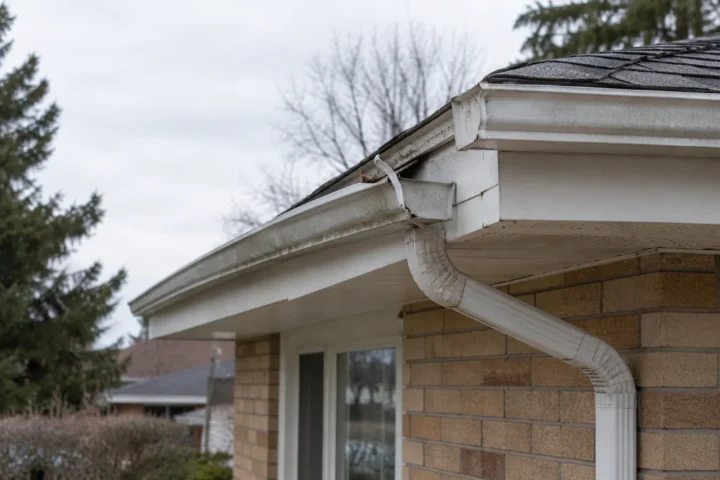
Where the water sits is diagnostic. A pool near a middle section can indicate a sag or slope reversal. One just upstream of an outlet may point toward debris or an outlet opening higher than the effective bottom of the channel. Water across many feet can reflect broad alignment or a blocked downspout. Its position tells more than the word “standing” by itself.
Slope and outlet elevation
The channel is intended to carry water toward an outlet. A run installed with little effective fall, a later shifted section or a low pocket can trap water. The outlet must be placed so water can reach it; an opening that sits above a nearby low point leaves a residual basin. Roofline geometry and the number and location of outlets affect the route.
A gutter that looks level from the street may still drain, while a visibly sloped gutter may have a local reversal. Assessment should focus on how water actually moves along the channel and into the downspout. Simply adding an outlet without planning where the new downspout will discharge can create a different problem at ground level.
Sagging, deformation and attachment
Loose hangers can allow a loaded gutter to bow. Once water gathers in the bow, extra weight can increase the sag and collect more debris. A creased or twisted aluminum section might hold a pocket even after hangers are tightened. The state of the supporting fascia matters: fasteners must hold in suitable material, not just the visible metal covering.
Inspect a run from end to end for an outward-tilted lip, separated back edge and movement near corners. A sound short run may be reset, while permanently deformed metal may require section replacement. See the sagging gutter guide for the attachment and load relationship and pulling away from fascia for support concerns.
Blockages can imitate poor slope
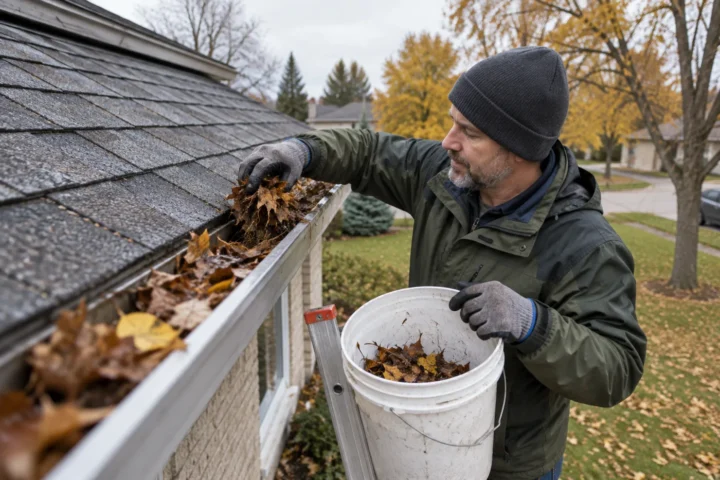
Leaves and seed debris may create a dam in the channel. Roofing grit tends to settle where water is already slow. A small outlet can be partly packed with organic material while appearing open from above. Elbows in the downspout can be restricted farther downstream, leaving water backed up at the outlet. The water level may lower only slowly after the storm.
Cleaning is the first practical step when debris is present, but a cleaned gutter that repeatedly pools in the same location suggests the shape and route still need attention. Gutter guards do not rule out fine grit below them or material collecting on top. The cleaning page explains what an outlet-and-downspout check should consider.
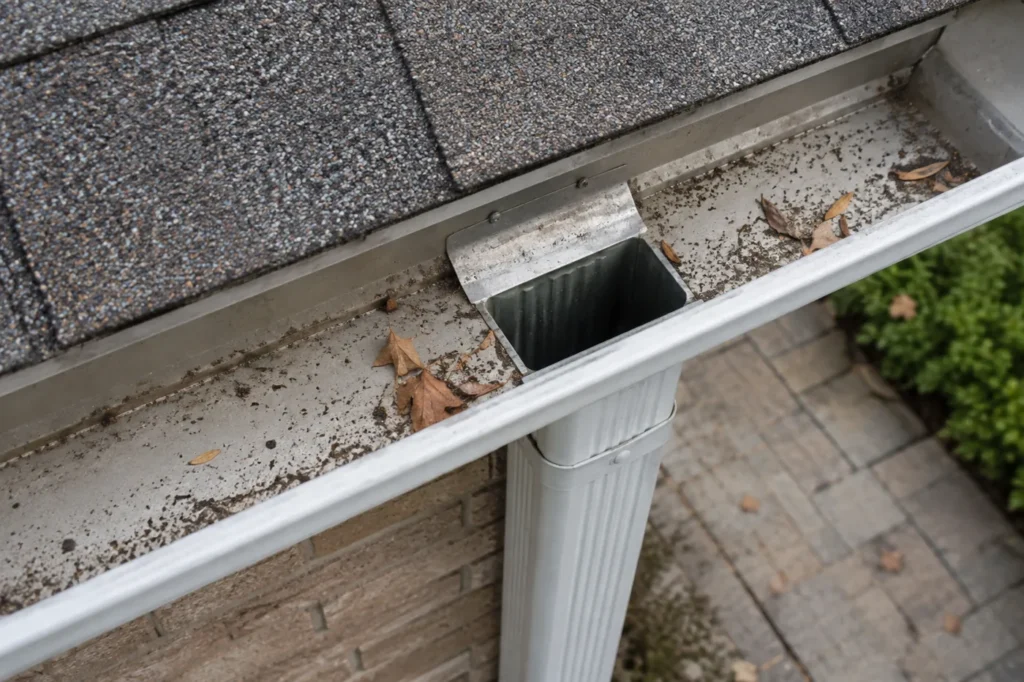

Effects of a persistent low pocket
Standing water can collect additional organic material, place sustained weight on hangers and encourage staining at joints. In freezing weather a retained pool can become ice and add stress to an already weak run. These are reasons to investigate a recurring pocket; they do not mean a small puddle after every rain automatically requires full system replacement.
If water eventually spills over the front at the low point, the symptom becomes an overflow issue too. Observe whether the downspout was flowing at the time. A gutter can have both a local dip and a downstream restriction; correcting only one may leave the other. The overflow guide works through that wider route.
Possible scopes of correction
A localized cleaning, outlet clearing, hanger adjustment or slope restoration can be appropriate where the channel and support are sound. A severely distorted section or one whose profile cannot be reset may need replacement. If the planned outlet position changes, the downspout path must be reviewed through to the discharge area, including walkways and the grade beside the home.
Repeated pockets on multiple elevations, loose attachment and ongoing leaks at stressed joints point toward a broader discussion. The repair versus replacement guide gives a framework for distinguishing isolated defects from a system that no longer routes water reliably. A quote should name the cause, not simply promise to “fix standing water.”
What to photograph and report
Tell us how long the water remains, whether the pool is present after every rain, and whether visible debris is involved. Photograph the full elevation from ground level, then the outlet/downspout route and any staining. Mention recent work at the roofline, a new guard, or a downspout that does not flow during rain.
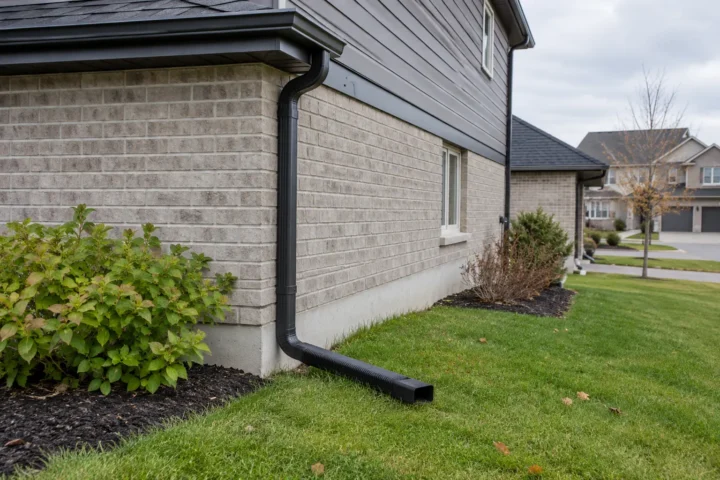
In Milton, the final discharge is part of the planning even when the immediate symptom is high on the roofline. A newly positioned outlet should not send water onto a walkway, into a low area or toward a neighbouring lot. The local drainage resource covers the ground-level questions.
Notice how the pool changes across storms
If a pool is present only after a storm with heavy leaves, debris may have created a temporary dam. If it returns in the same location after cleaning and in light rain, channel geometry becomes a stronger concern. A pocket that has gradually grown over several seasons may indicate movement in attachment or deformation. Keeping a short record of dates, rain intensity and whether the outlet flowed makes the assessment more precise.
The apparent pool can also differ when a downspout is frozen or when an extension is blocked at grade. In winter, do not strike ice out of a channel or work on a ladder over a slippery surface. Photograph the condition safely and describe whether the same location holds water in warm weather.
Why a new gutter alone may not be the answer
A replacement run installed with the same poorly positioned outlet or insufficient support can reproduce the low point. The design should show the intended fall, the outlet position and the downspout route. If the problem is a restriction at an elbow, replacing only the horizontal channel leaves the actual bottleneck untouched. Conversely, a new downspout cannot straighten a twisted channel.
A proper scope identifies the component to change and the reason. It may include cleaning, a hanger correction, section replacement, outlet work or a combination. Ask how the chosen repair will be checked for drainage and where captured water will discharge. This is especially important when the standing water has also caused overflow or seepage near a wall.
Consider the surrounding property
A low point above a front step can create a localized spill even if the remainder of the gutter drains. A ponding section above a porch or addition may be hard to reach and may receive runoff from another roof plane. Storey height, landscaping and access influence how an assessment and correction can be done safely. Describe these conditions when requesting service so the visible symptom is understood in its full setting.
Where an adjusted outlet changes the amount of water sent down one side of the building, evaluate the discharge point rather than assuming the existing extension remains suitable. The gutter and ground-level route are one system.
Avoid masking a low point with a guard
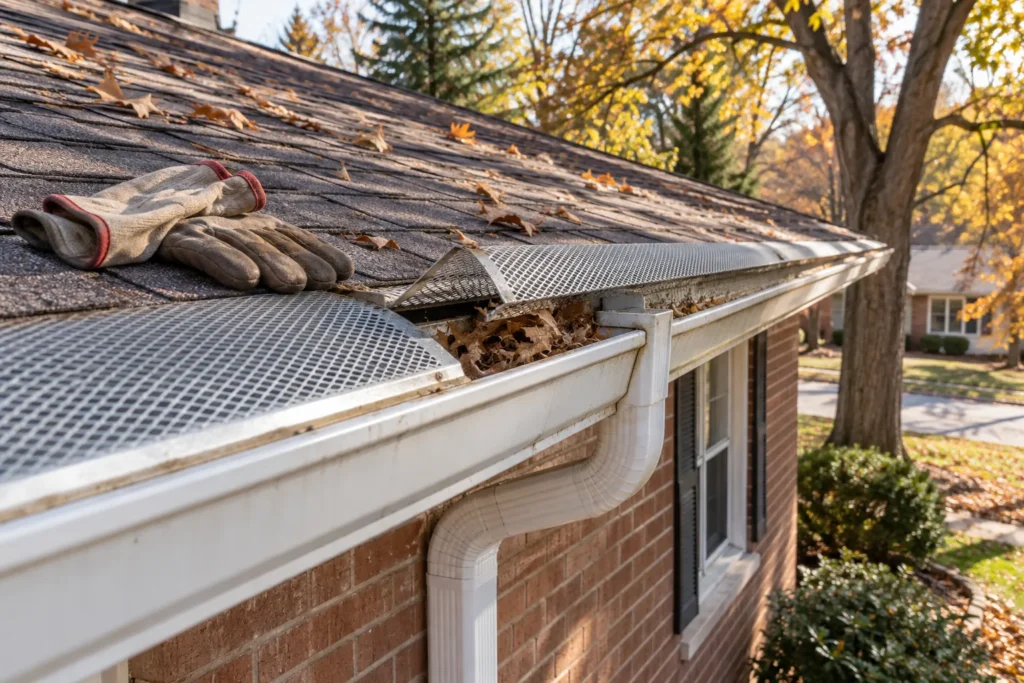
Adding a guard can make a gutter harder to view while leaving an existing pool underneath. Before installing protection, verify that the channel is sound, its slope works and the outlet is open. A guard suited to tree debris cannot repair distorted metal, an elevated outlet or loose hangers. If protection is already present, the assessment should still find a way to evaluate the hidden channel safely.
Where water remains near a leaking joint, repairing the joint without correcting the low point may leave the seam under prolonged load. The order of work matters: identify why water stays, restore a route to the outlet and then address any failed connections. A balanced estimate describes both drainage and sealing rather than promising that a single bead of sealant changes the gutter geometry.