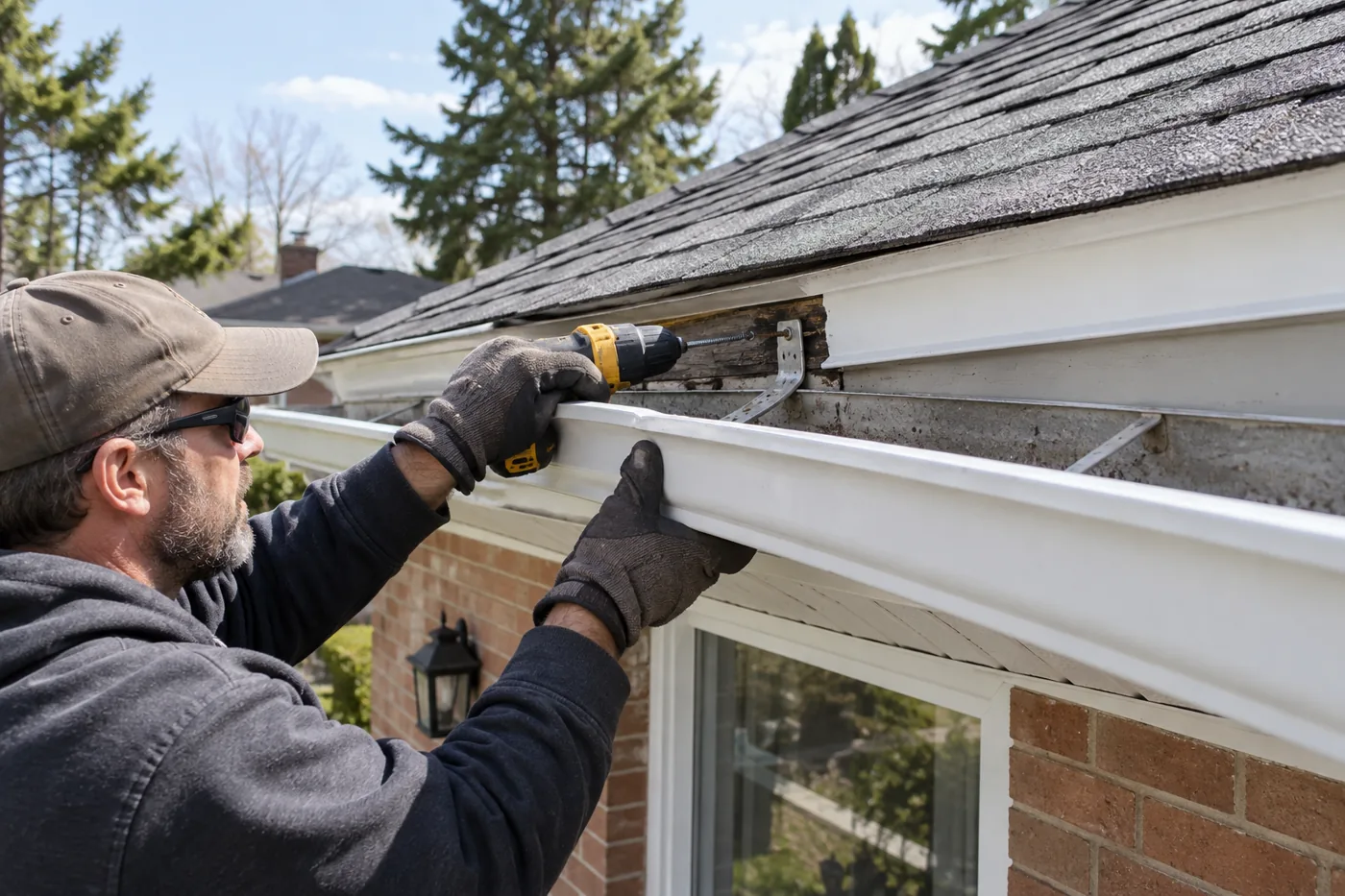
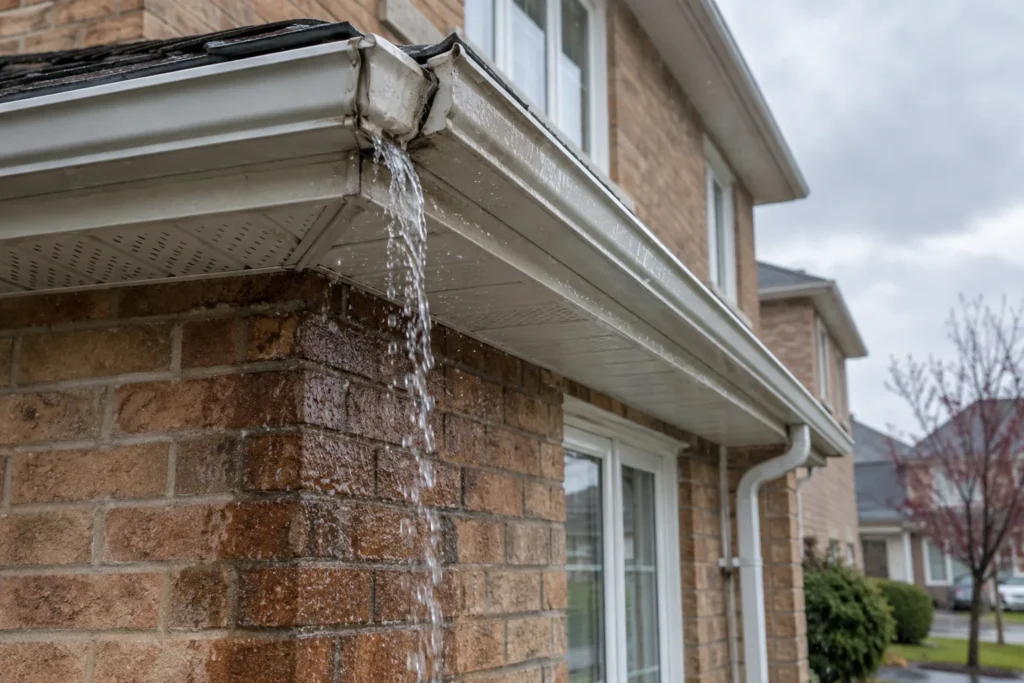
Eavestrough repair addresses a defined failure while keeping sound material in service. A leaking corner may need connection work, a loose section may need its attachment evaluated, and a short impact-damaged length may be replaced without rebuilding every run. The first job is to locate the failure accurately. Water emerging near a seam can have travelled behind the gutter from the roof edge, while water pouring over the front could point to a restricted outlet. The repair scope should match the actual route, not just the nearest visible drip.
Find the source of the water
Timing and location matter. Does the drip start as soon as rain begins, only when a roof valley feeds the run, or after the channel fills? A crack at an end cap differs from an overflow that spills over the end. Inspect the inside of a suspect run for debris and ponding, then follow the outlet and downspout to see whether water can leave freely.
A wet fascia line behind the gutter raises a different question: the back edge, attachment, drip-edge relationship or roof detail may be involved. Gutter work may help in some cases, but a roof or flashing fault should not be presented as something a simple gutter seam repair will automatically correct.
Common targeted repairs
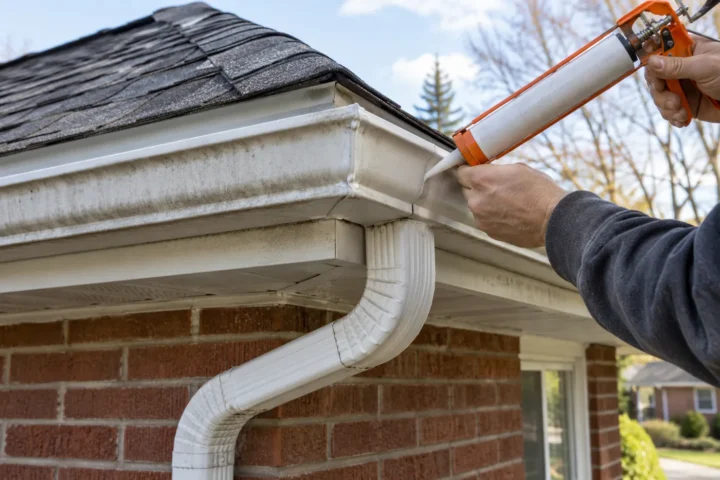
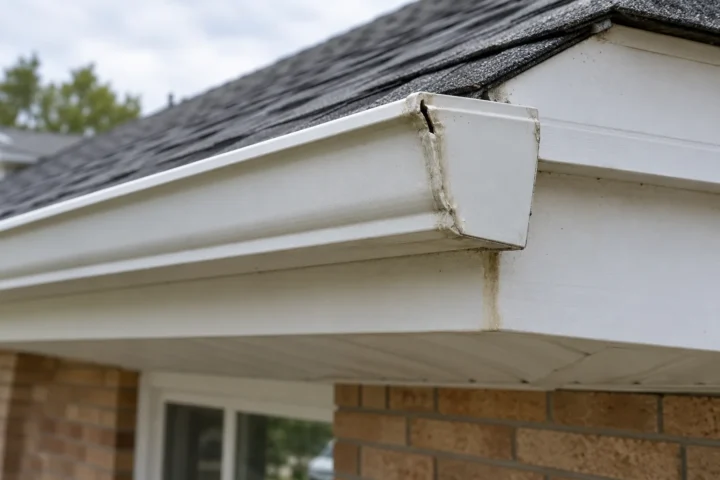
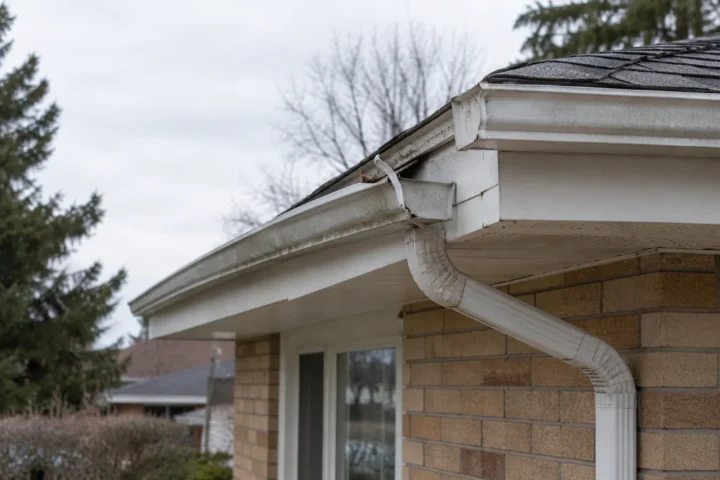
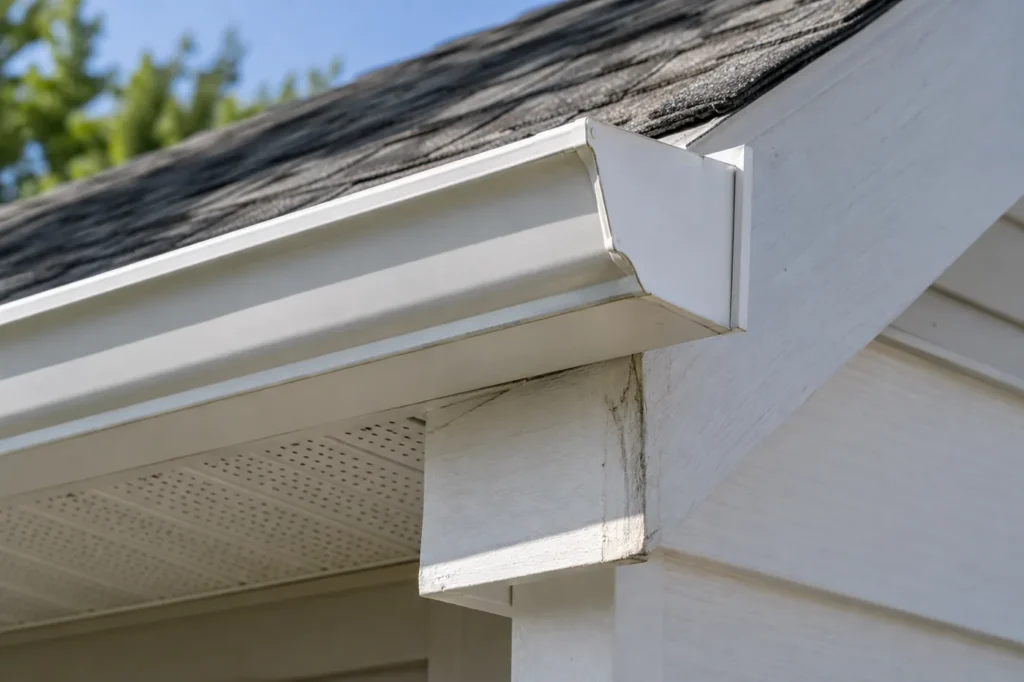
Corners, joints and end caps are natural points for localized work because they interrupt otherwise continuous gutter runs. A small damaged piece, a loose downspout elbow or an outlet connection can sometimes be addressed without full replacement. A repair should also consider why the joint failed: recurring standing water or poor alignment may undermine a fresh seal.
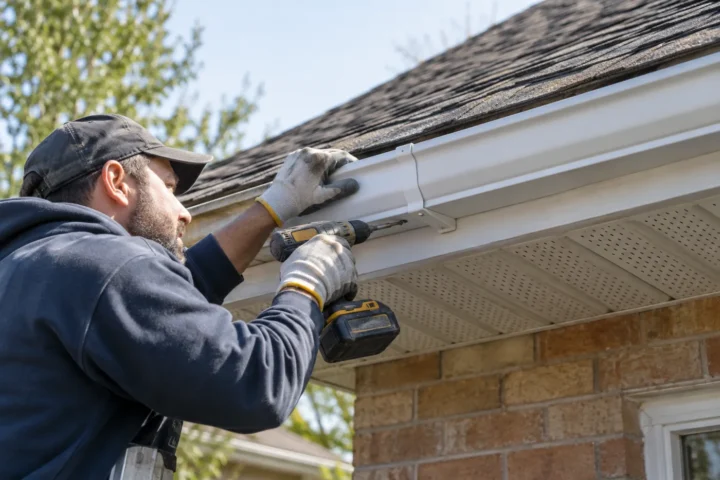
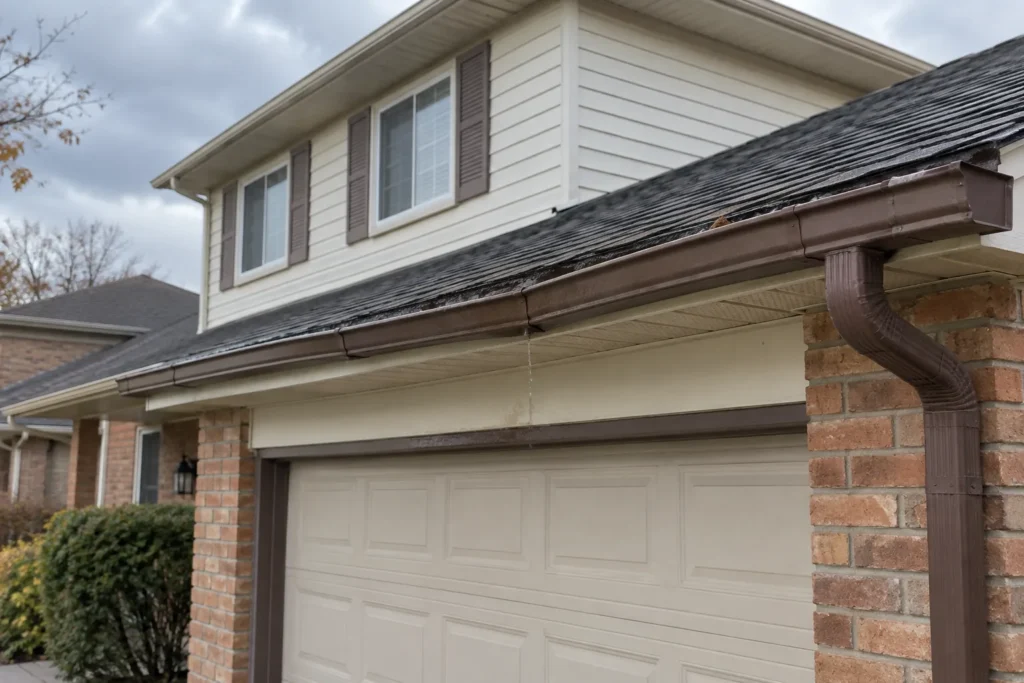
Hangers and fasteners need sound backing. Tightening or adding an attachment to soft, deteriorated fascia can leave the gutter insecure. A shallow sag might be corrected with appropriate support and slope work; a permanently deformed channel or widespread backing damage may call for a larger scope. A good repair decision distinguishes a component failure from a system failure.
Where replacement becomes the better discussion
If many joints leak, multiple runs are deformed or pulled away, or prior repairs have repeatedly failed, piecemeal work can become an expensive holding pattern. The same applies when old outlet placement consistently sends water to a poor discharge area. Review the condition of the material, attachment and drainage layout together rather than counting the number of drips alone.
A well-scoped partial replacement may sit between a small repair and a complete new system. One elevation could be replaced while another stays. The choice depends on condition and the practical ability to join new work to existing runs without creating mismatched slope, profile or drainage capacity.
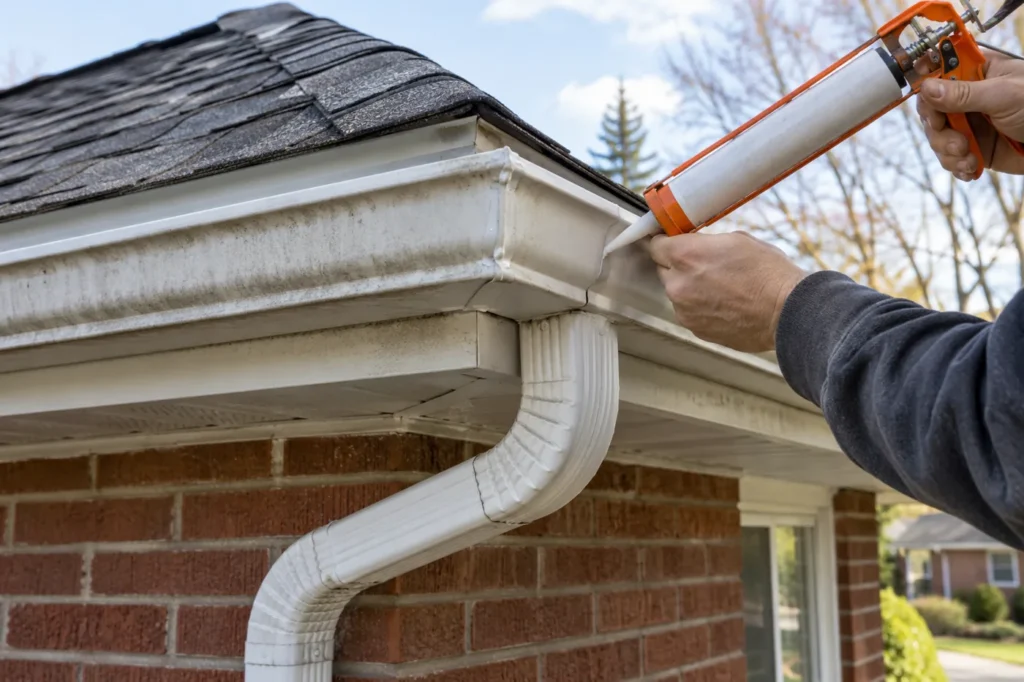
Check the downstream consequences
Sealing a leak can send more water to a previously restricted downspout; clearing that restriction can reveal an unsuitable discharge point. Follow the water through the outlet, vertical sections and extension. This sequence prevents a technically dry seam from leaving the property with puddling at an entrance or water beside a foundation.
After targeted work, visible alignment and attachment deserve a second look. A brief test can help identify immediate leaks, but a wind-driven storm or heavy valley flow may behave differently. Keep track of where the original symptom appeared so future changes can be compared meaningfully.
Use rainfall timing to distinguish failures
An immediate drip at one end cap in light rain points to a different investigation from water spilling along an entire run only in a downpour. A connection can leak because its seal has failed, because the gutter moves, or because water ponds against it. The timing helps determine whether a localized seal, support correction or wider slope work deserves attention.
Water may travel along the underside before falling away from its source. Inspect upstream of the visible drip and compare where the gutter is wet inside. If a gutter has guards, the cover might conceal a pocket of debris at the outlet while leaving the front of the run looking clean.
Avoid repeated patching of a moving assembly
A corner can reopen if the runs on either side shift under water, debris or ice load. A hanger may come loose again if the wood behind the aluminum fascia cannot hold it. Repairing the connection while ignoring movement can lead to a cycle of new sealant and recurrent leakage. A practical scope addresses the force acting on the failed area.
A short dented length after impact is often different: if the surrounding run is supported and drains, replacing that piece may be enough. The goal is to identify the smallest scope that is durable in the observed conditions, not automatically the smallest piece of metal.
Check whether a repair changes drainage elsewhere
Closing a leak keeps more water inside the run. That is the intended result, but the additional flow should pass through the outlet and downspout without backing up. If the pipe ends near a foundation, restored flow can make the discharge condition more visible. This is why a repair assessment should extend past the specific joint.
If a repair is limited because access or another trade’s work is required, that boundary should be stated. A gutter repair cannot establish that a roof flashing detail is sound, and a sealed seam does not alter grade. Honest limits help a homeowner decide what to inspect next if water remains.
An evidence-based repair hierarchy
Begin with the visible failure and ask whether the metal is still shaped correctly. A sound corner with a failed connection differs from a twisted corner between sagging runs. Evaluate support and slope before applying a local seal. If one outlet backs up, clearing it may address what looked like a leak. This hierarchy avoids using a familiar repair material before the mechanism is known.
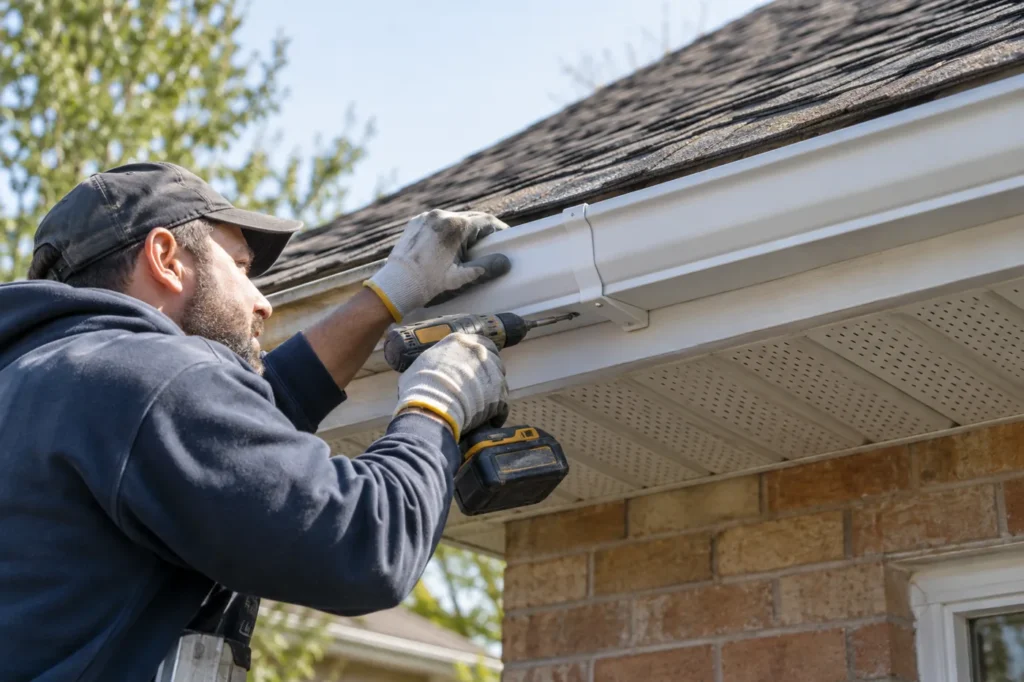
Check the fascia or backing at loose fasteners. If it cannot support the gutter, a new hanger alone may soon withdraw. Where material is otherwise good but a short section was dented, a limited replacement could preserve the rest of the elevation. The findings should explain why that boundary is appropriate.
When to stop repairing one run
Multiple disconnected failure points can indicate that the run is reaching the end of a useful repair cycle. Repeated sealant applications, recurring low spots and several loose sections should be considered together. The comparison is not simply today’s repair cost versus a full system; it includes likely recurrence and whether the layout itself sends runoff to the wrong place.
A wider scope does not always mean the entire house. One elevation may be renewed while other sides remain sound. A written recommendation should identify the affected run, transition to retained material and changes in outlet or downspout position, rather than treating all gutters as a single unit.
What to observe afterward
Check the repaired location during the next comparable rainfall from a safe place. If the original corner stays dry but water appears farther down the run, the new observation may reveal another joint or a changed flow pattern. Record timing, intensity and exact location. A test with a small volume of water can reveal some connection issues, but it may not reproduce high-flow valley conditions. This is a reason to monitor, not a promise that the first repair failed.
Check what happens after the repaired joint
A useful repair begins at the symptom, then traces water back toward the roof edge and forward through outlet and downspout. The correct answer could be a resealed connection, a supported short run, clearing a restriction, adjusting drainage layout or a recommendation for separate roof-edge investigation. Repairing only the visible drip without identifying the surrounding cause risks a quick recurrence.
How large is the repair?
Cost and feasibility depend on access, building height, the length and condition of affected material, whether the fascia provides adequate support, and whether a safe localized connection can be made. Describe the intended fix and what it does not address. Where replacement is suggested, ask which findings make a repair unsuitable and which portions of the system remain serviceable.
Details to include in your request
Photograph the failed corner or run during dry weather and, if safe, from the ground during rain. Note whether it leaks at light rain or only in a downpour, whether water is inside or behind the gutter, and whether the downspout carries water. Mention previous sealant or hanger repairs.
Continue planning the right work
A drip traced to a joint is explored in the leaking-eavestrough guide. If a run holds water, sagging may be the more useful symptom; if it has separated from the roof edge, check attachment and fascia support. Once the cause is known, repair versus replacement helps frame a local fix against a broader renewal. Each route asks a different question, so start with the condition you actually observe.