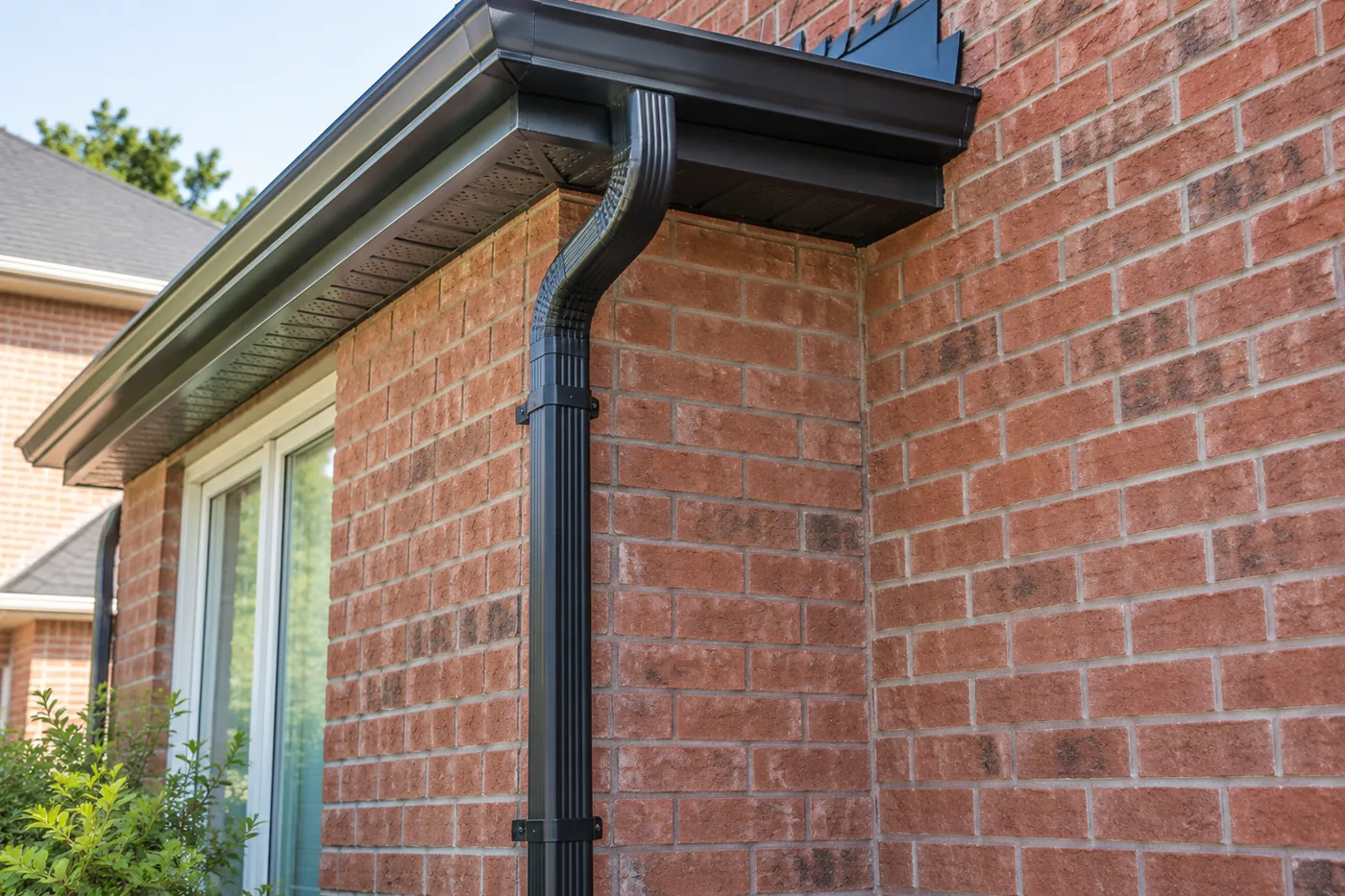
Downspout installation and replacement should start with the amount and location of water arriving at each gutter outlet. The vertical run, elbows, straps and extension then need a clear path past walls, trim, garages, porches and pedestrian areas. Replacing a crushed or disconnected section is often straightforward, but copying a poor route can continue a drainage problem. The work should carry water away from the roof edge to a discharge area that suits the property.
Assess the outlet and connection first
A downspout can appear blocked when the restriction is at the gutter outlet above it. Check the outlet opening, guard interface, upper elbow and any tight turns before assuming the entire vertical section is defective. A loose joint can spill onto the siding even while most water reaches the bottom. These observations determine whether cleaning, a local repair or replacement is appropriate.
The location of an outlet affects the wall route. The shortest descent may cross a window, door, gas meter or architectural detail, while another path may need extra bends and support. A proposed relocation should account for gutter slope and runoff concentration as well as where the pipe ends at ground level.
Choose the route and supports
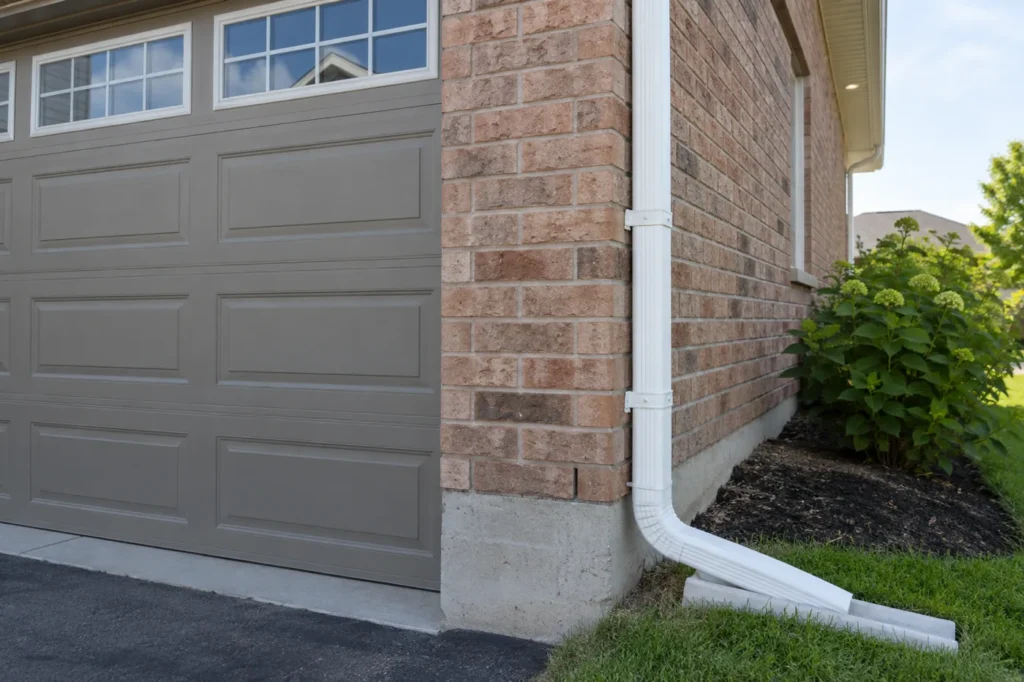
Elbows should connect without abrupt, debris-catching arrangements where a cleaner route is practical. Straps should secure vertical sections to suitable backing and keep the assembly aligned. Garage and porch roofs can add separate downspouts or feed a larger route; inspect how the current arrangement joins those sections before deciding.
Colour and material are visible parts of the finish, especially on a front elevation. Matching an existing system can be sensible when it is otherwise sound. A mismatched dimension or poorly supported replacement can cause trouble at the outlet and lower extension even if the pipe looks close to the original.
Discharge is part of installation
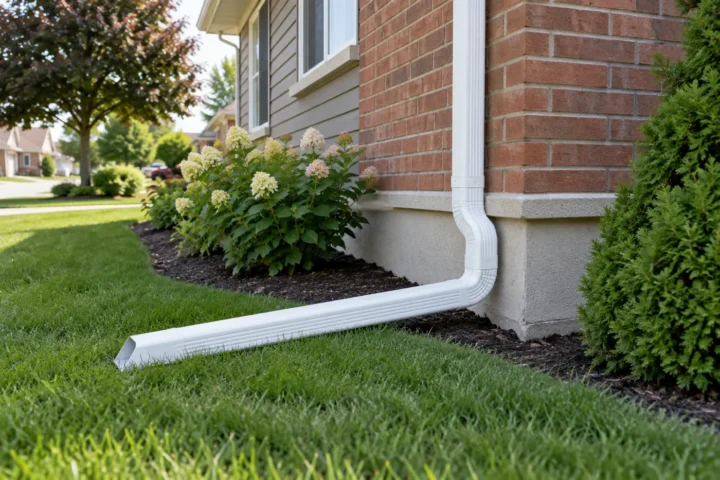
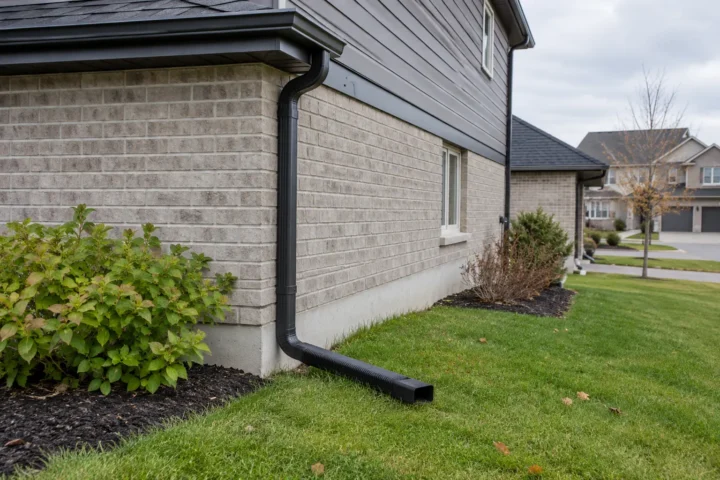
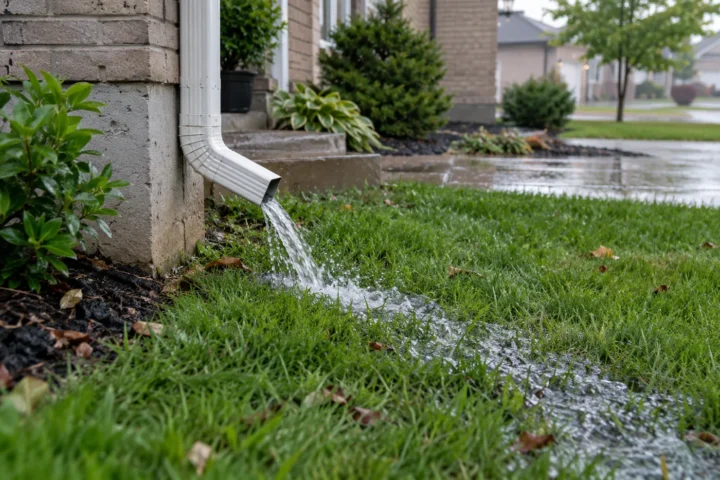
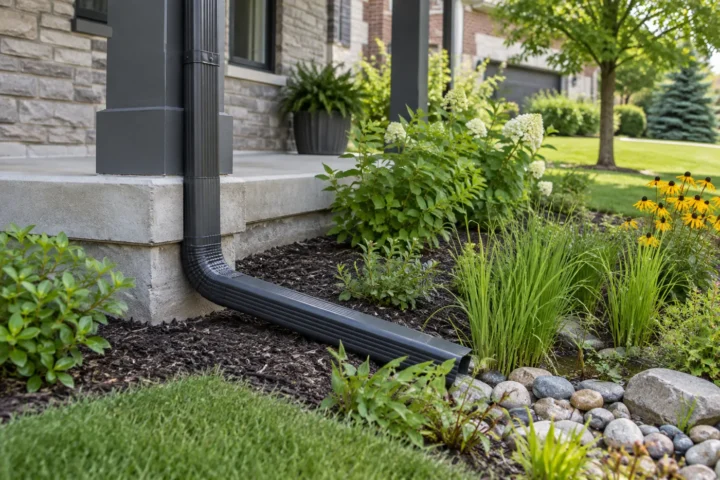
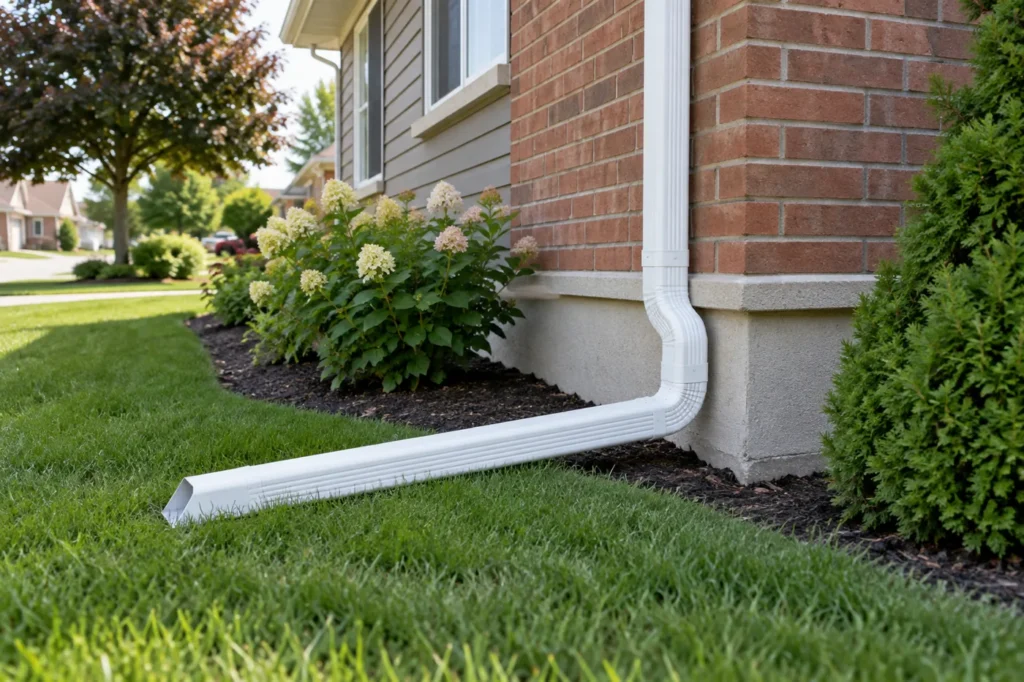
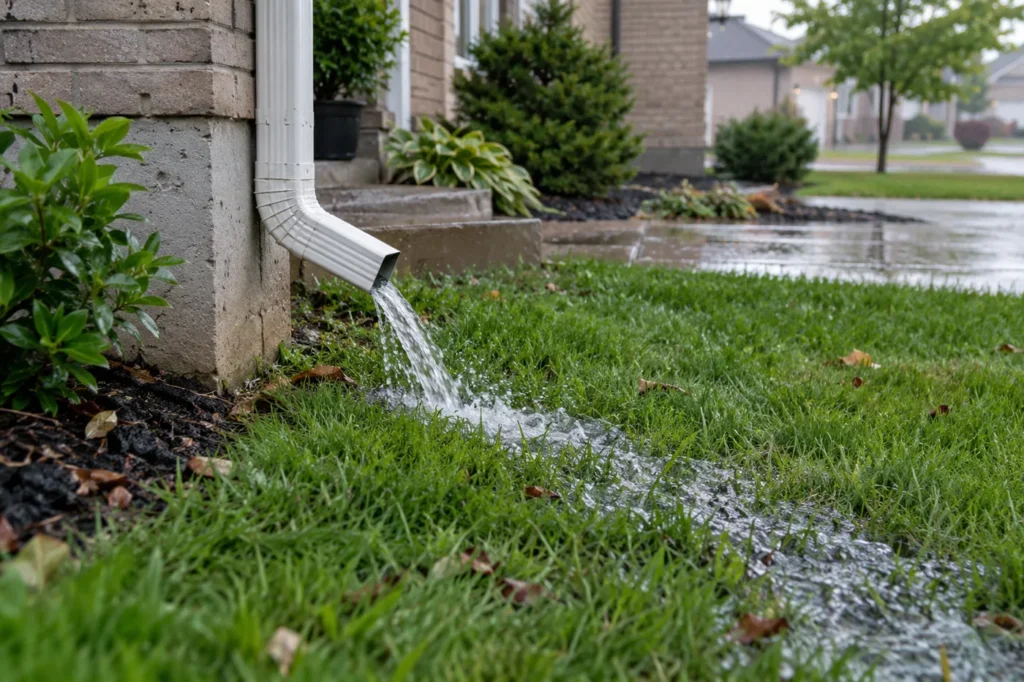
The lower elbow or extension governs where roof runoff actually reaches the ground. Evaluate foundation proximity, walkways, driveway edges, patios, side-yard grade and neighbouring property. An extension that is too short or easily displaced may leave water in the same problem area; one laid across a route people use creates another issue.
Town of Milton and Halton Region publish flood-preparedness advice about directing downspout water away from a building and considering grade. Their guidance is useful context, not a guarantee that one routing method works at every lot. See the dedicated Milton drainage resource before choosing a route near property boundaries or where runoff could create winter icing.
Replacement versus a route change
A dented lower section or detached elbow might need a limited component replacement. If the pipe is intact but water repeatedly ponds beside the house, the route and discharge may be the central issue. A larger outlet or pipe should be considered only after the actual restriction and roof runoff pattern are understood.
After work, check that outlet, seams and vertical sections are connected, supported and accessible for maintenance. Trace the final exit point and the surface slope beyond it. A downspout can empty freely yet still leave water moving back toward a foundation if the surrounding grade is unfavourable.
Build the route from the outlet down
An upper elbow should meet the outlet securely without forcing an awkward offset against the wall. Each further bend creates a place where leaves or grit may settle, so the shape of the route matters as much as the pipe length. Straps must support the assembly without depending on damaged trim. A loose connection can wet siding even while water reaches the lower end.
A gutter outlet cannot be moved independently of the channel slope. If a new vertical route is proposed on a different wall, evaluate how water will reach it and whether the roof catchment warrants another outlet. Garage, porch and addition connections should be mapped rather than improvised after the main pipe is fitted.
Distinguish damaged material from poor layout
A lower section hit by equipment may be replaced with matching pipe if the existing discharge is suitable. A sound pipe that releases water against a foundation calls for route planning instead. A recurring clog at one elbow could require clearing and a simpler arrangement, not a taller or more decorative pipe.
Before adding an extension, observe the grade beyond its end. Water can travel back across compacted soil or pavement. An extension that only shifts the wet spot a short distance may make a photo look improved while failing in a strong storm.
Verify the finished assembly
Look for a continuous connection from gutter outlet through each elbow, a supported vertical pipe and an extension that remains in position. Check that the discharge does not cross an entrance or create a known winter hazard. The homeowner should know which sections were replaced and which remained from the earlier system.
If a buried pipe is present, do not presume where it connects or what condition it is in. An exterior downspout replacement can be scoped without making claims about an unverified underground route. Any proposed connection below grade warrants a separate assessment.
Distinguish flow capacity from a blockage
A downspout that does not run during heavy rain may have a blocked outlet or elbow, not necessarily insufficient size. A pipe that gushes from a disconnected joint can still be moving most of its water. Inspect the opening, connection and lower exit before changing dimensions. Roof geometry and concentrated valleys then provide context if the system remains overloaded after restrictions are removed.
A larger pipe may require an outlet change and enough space on the wall to route it cleanly. It must also empty at an appropriate area. Capacity at one link cannot compensate for a ground surface that directs water back toward the building.
Special routes around additions and garages
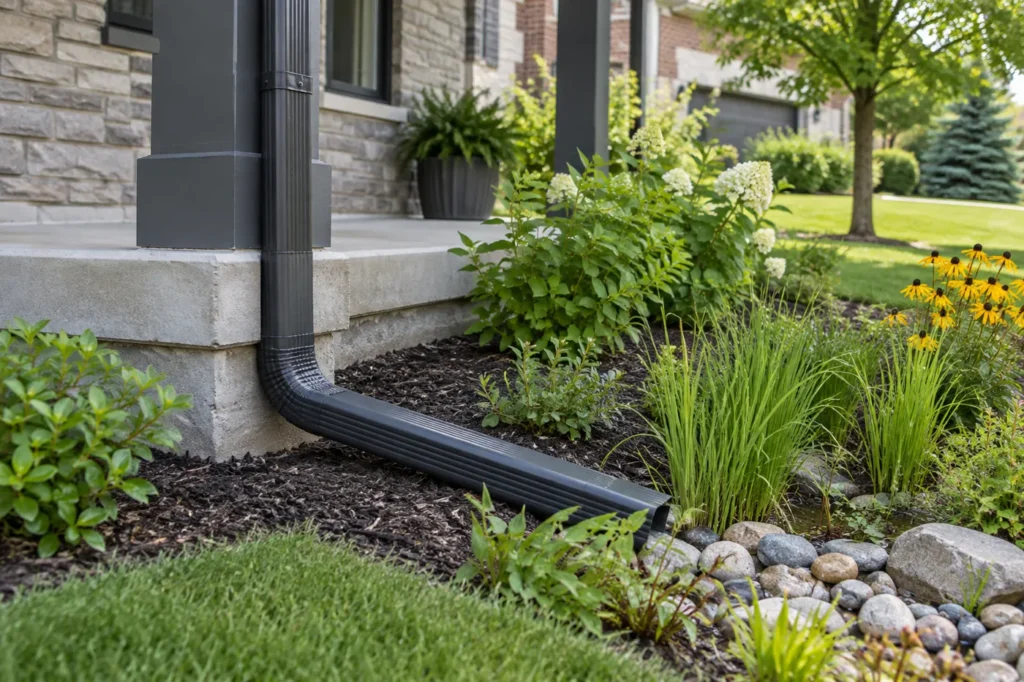
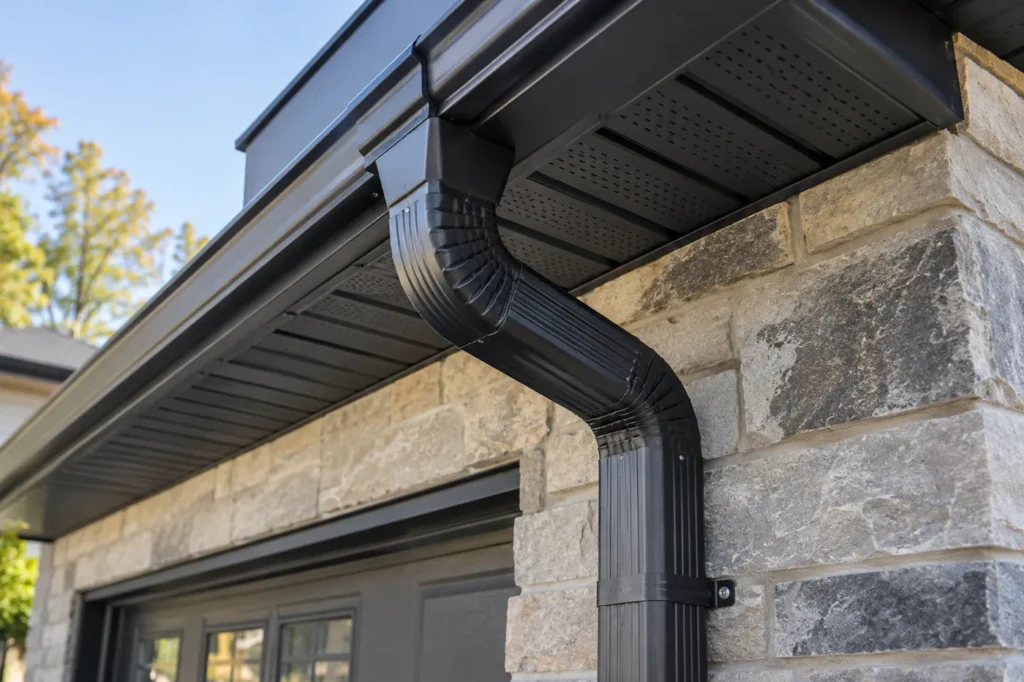
A garage or porch roof may need its own outlet or may direct water to a lower gutter. That lower channel may carry more runoff than its visible roof plane suggests. A replacement downspout should be planned with those connections mapped, avoiding an improvised splice that narrows the route or creates an inaccessible bend.
On a front façade, window, door and architectural trim constrain placement. On a side yard, available width and grade constrain discharge. The best wall route considers both halves of the problem rather than choosing a line that is visually unobtrusive but empties in a poor location.
How to judge a localized replacement
If the damaged section is only the lower pipe, confirm the upper material and outlet are sound, and check why the damage occurred. A vehicle or equipment strike may recur at the same exposed corner. An alternative route could be worth discussing if the site permits it.
A partial replacement should connect securely to retained sections, use compatible material and leave the supports properly spaced. The estimate should say which elbows, vertical lengths and extensions remain so the new component is not mistaken for an entire drainage redesign.
A downspout is not its lower extension
The visible exit at ground level is easy to focus on, but the outlet above, upper elbow, straps and vertical run all influence performance. A lower extension may be the only damaged component, or it may merely be where water from a blocked upper pipe escapes. Inspect the full assembly before agreeing to replace just one piece. Where the new pipe crosses different wall materials or a porch return, support details deserve attention. Where it ends, verify that grade carries water to a suitable receiving area. A successful local replacement should improve the identified condition without leaving an unexamined restriction above or an avoidable hazard below.
Follow every connection to the exit
Follow water from gutter to outlet, through each elbow and vertical section, and to the final discharge area. If a roof valley feeds the outlet heavily, a clean downspout still needs a layout capable of handling the inflow. The discharge location must be evaluated with drainage beyond the point where the aluminum ends.
What determines the pipe work?
Cost varies by the number and height of downspouts, elbows, material and finish, safe access, outlet modifications, garage or porch connections and extension requirements. A route change may require gutter slope work or a new outlet rather than only more vertical pipe. An estimate should identify these components and the intended discharge point.
Details to include in your request
Describe whether the current downspout leaks, separates, clogs or sends water to an unsuitable area. Send photos of the top connection, complete wall route and ground-level exit. Note the location of walkways, doors, landscaping and any winter ice that forms nearby.
Continue planning the right work
When the pipe is sound but empties in the wrong place, the decision moves to rerouting and extensions. The Milton drainage resource puts local distance and grading guidance in context. If water pools at the exit, follow the discharge symptom rather than assuming the upper pipe is damaged. If the gutter backs up before water enters the pipe, begin with overflow troubleshooting.