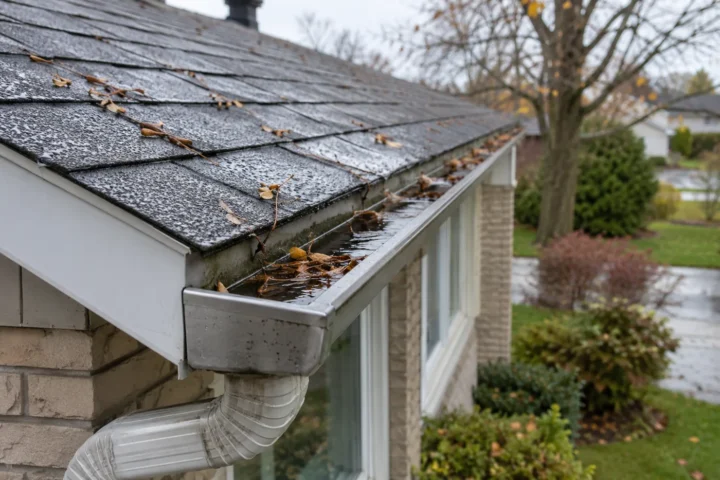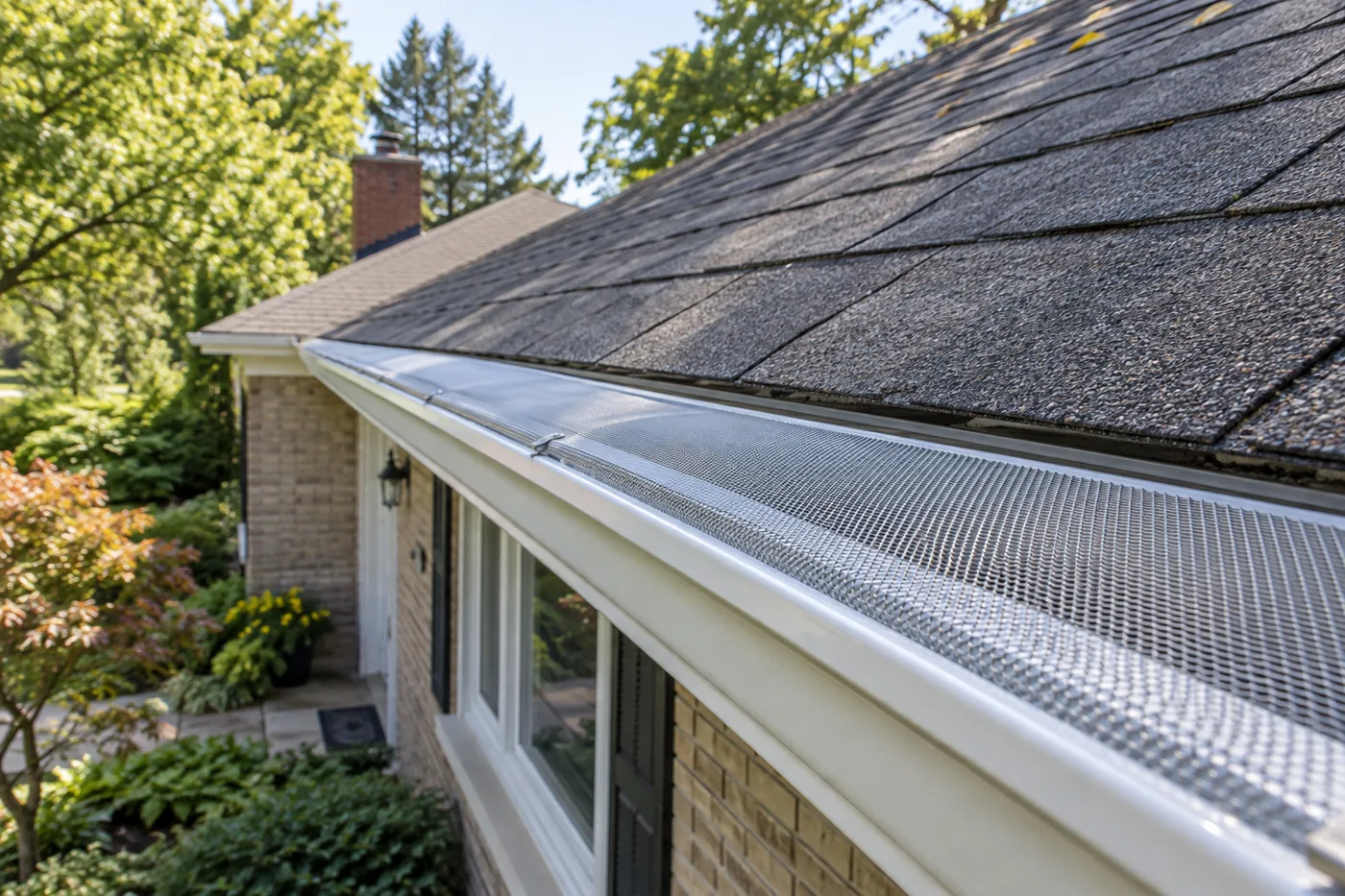
A guard should be chosen for the trees and debris around the property, the existing gutter’s condition and the roof-edge detail. Broad leaves, seeds, needles and roofing grit behave differently on a screen or micro-mesh surface. A guard installed over a sagging, leaking or blocked gutter can make the underlying issue harder to inspect. Start by understanding why cleaning is needed, where debris accumulates and whether the outlet and downspout are functioning before selecting a product style.
Types and their tradeoffs
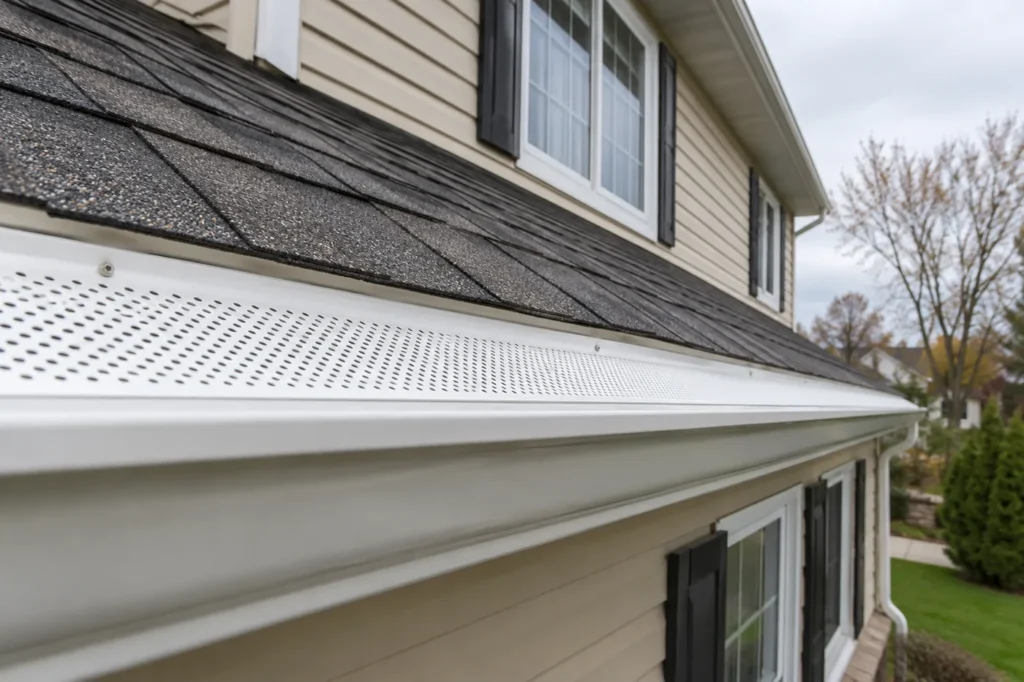
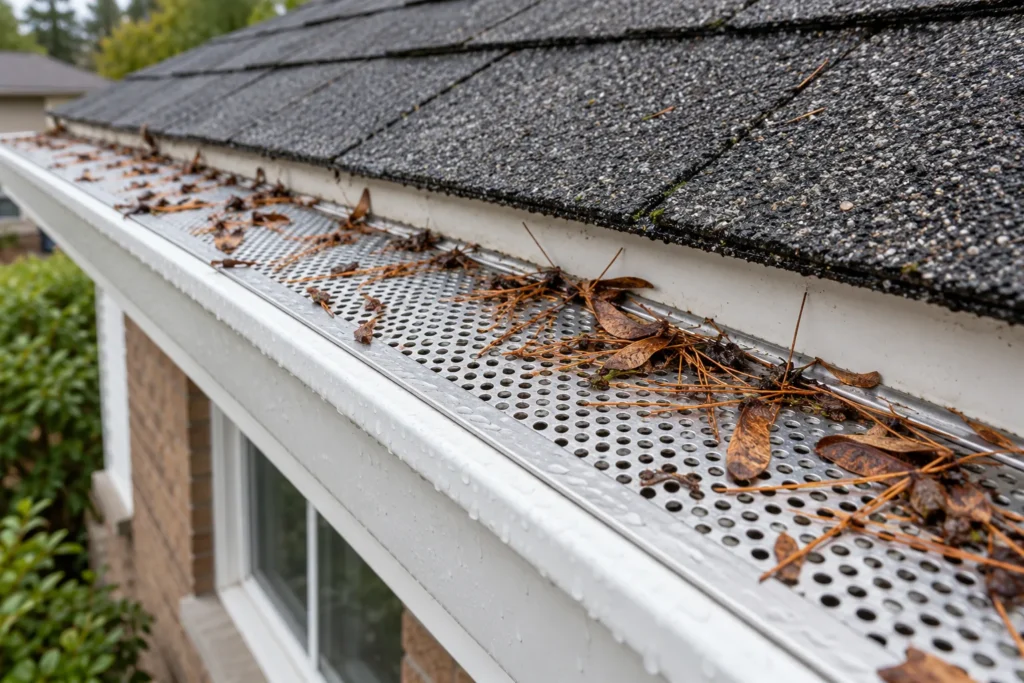
Screen-style guards have openings that can keep larger leaves from the channel, yet smaller seeds and grit may pass through or lodge on top. Fine mesh can screen smaller material but its surface can collect organic buildup that needs attention. The roof pitch, material, gutter profile and local tree cover affect how debris moves across any guard.
A guard is not a substitute for inspecting the gutter. Leaves can pile at valleys, bridge over an outlet or gather at the edge of a panel. The design should allow access for future cleaning and avoid interference with the roof covering or roof-edge drainage. No product should be described as eliminating maintenance in every season.
Prepare the existing system
Before installation, clear debris from the gutter and downspout, check slope and look at corners, hangers and fascia. Covering a low point that holds water leaves the same water below the guard. A loose back edge or failed end cap can continue leaking. Repairs or replacement should be considered separately when condition warrants them.
Confirm the selected guard fits the gutter profile and the roof edge without a forced attachment. Existing guards may be worth retaining if sound and compatible with the property’s debris pattern, but a recurring clog is evidence that the arrangement needs review. Measure the issue by actual buildup, not by a universal cleaning calendar.
Consider runoff and winter conditions
High-flow valleys can send water across a guard surface rather than into it under some conditions. A screening choice that works on a gentle straight eave may perform differently below a concentrated roof plane. Observe prior overflow locations and evaluate outlets and downspouts in the same visit.
Snow, thaw and ice can affect any exposed roof-edge component. Guards do not fix roof heat loss or prevent all icicles. Winter runoff still needs a clear path through the outlet and a discharge point that does not create slippery walking conditions. Avoid assuming a new cover solves problems outside its purpose.
Maintenance after installation
The amount of attention depends on trees, prevailing debris, roof geometry and past clogging. Visual checks from a safe location after leaf fall or storms can show buildup on the surface, overflow and displaced sections. Where access is required at height, use suitable professional methods rather than leaning out a window or walking an unsafe roof.
A guard can reduce the frequency of material entering the channel while still requiring cleaning of its top surface, corners, outlets or downspouts. Ask how the product will be accessed later and whether individual sections can be lifted or serviced without damaging the roof-edge assembly.
Match the guard to actual debris
Broad deciduous leaves, fine seeds, needles and roofing grit behave differently. A large-opening screen may admit smaller material; a fine mesh can accumulate a mat on top. Look at what is actually found in the gutter and on the roof, not just the type of tree visible from the front yard.
Wind can carry material from farther away, and valleys can pile debris at one specific section. A guard that performs adequately on a straight side eave may need closer maintenance below a roof valley. This is a site-specific tradeoff rather than a universal product ranking.
Do not cover an uncorrected problem
Before fitting guards, inspect slope, hangers, joints and outlets. A gutter that holds water will still hold water beneath the cover. A weakened fascia remains a weak attachment area. Cleaning the channel and downspout first reveals whether the guard is addressing debris or merely hiding a deeper defect.
An existing cover that causes runoff to skip across its surface may be incompatible with that roof edge or flow concentration. Replacement should consider entry behaviour and drainage, not only mesh size.
Plan for access years later
Ask how the guard is fastened and how a corner, outlet or underlying channel can be serviced without damaging it. A tight installation that cannot be inspected can make a minor obstruction harder to find. Surface cleaning and occasional access to the channel are normal considerations.
A seasonal check can be adapted to actual debris and storm history. Guards may reduce the volume entering the gutter, but snow, thaw, grit and leaves still interact with the roof edge. Their benefit is reduced debris entry under appropriate conditions, not a promise that water will never overflow.
Think in terms of debris journeys
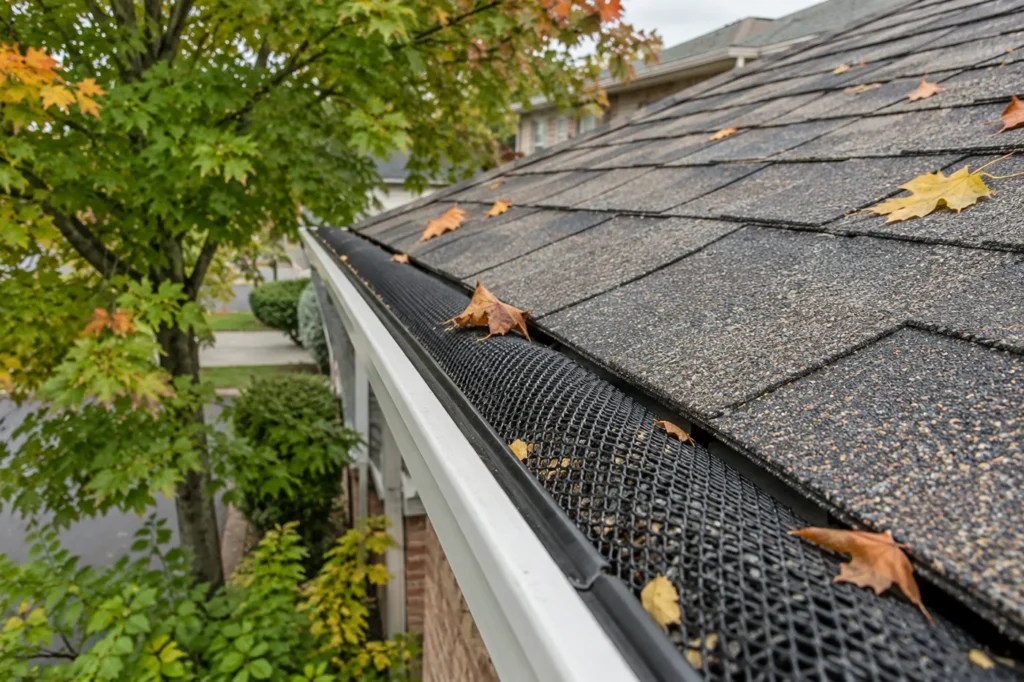
Leaves can slide off a guard, catch at its edge or collect at a valley. Small seeds can pass through larger openings, while fine material may form a film over mesh. Grit can accumulate inside the channel even if broad leaves stay out. The property’s dominant debris and the way the roof directs it are the basis for comparing designs.
Observe where the current clogs form. If a single outlet beneath an upper valley plugs repeatedly, guard behaviour there matters more than performance on an uncomplicated side eave. The choice may differ by elevation, but any mixed installation should have a clear maintenance plan.

Check fit to gutter and roof
The guard needs to suit the channel profile, roof-edge geometry and access without forcing a poor attachment. Its front edge should not block normal entry of roof water under the conditions that caused past overflow. Examine how it finishes at corners and outlets; those details can be more consequential than a broad claim about mesh type.
If the existing gutter is tilted or its outlet clogged, correct that first. A cover installed over the problem can make a temporary visual improvement while water continues to stand beneath it. Backing material and fascia condition also matter if new fasteners are contemplated.
Expect maintenance to change, not disappear
Guards can reduce the amount that reaches the channel, but a surface mat may need removal and outlets may still collect small debris. A safe visual check after leaf drop or significant storms can indicate whether the guard is clear. Frequency should respond to actual conditions rather than a universal promise.
Ask how the guard can be lifted or serviced later, and whether cleaning underneath is possible without damaging the roof edge. In winter, snow and thaw still affect the system. A guard does not fix heat loss, ice dams or an unsafe discharge location below a downspout.
When a guard may be the wrong first purchase
If a gutter already sags, has a failed joint or empties into an unsuitable location, a guard does not solve those issues. Installing one first can make the channel harder to see and create an impression that the system has been improved when the main fault remains. The assessment should separate debris-caused clogs from slope or capacity problems. Where cleaning consistently restores proper flow and mature trees cause repeated debris entry, a compatible guard may be a useful option. Even then, its service access, valley performance and maintenance expectations need to be understood before deciding on a style.
Protection above, flow below
A guard sits above the gutter channel but the drainage path continues beneath it. The channel needs slope, the outlet needs clearance and the downspout needs capacity and a suitable ground-level exit. A clean-looking cover cannot verify the downstream route. Consider guards as debris control within a functioning system.

What belongs in a guard quote?
Scope varies with gutter length and profile, roof pitch, number of storeys, access, guard type, corner/valley details and any cleaning or repairs needed first. A quote should distinguish guard material and fitting from separate gutter or fascia work. Claims of zero maintenance deserve scrutiny because site conditions change.
Details to include in your request
List the nearby tree types if known, and describe whether leaves, needles, seeds or grit are the main issue. Share photos of existing guards, problem valleys, the gutter condition and any overflow. Mention whether a recent cleaning helped and for how long.
Continue planning the right work
The detailed guard comparison covers mesh, screens and roof-edge fit. Keep cleaning in the plan for material collecting on top or beneath a cover, and use inspection to check outlets and attachment over time. If water is already backing up, the clogging guide helps locate whether the material is in the channel, outlet or elbow before any guard is installed.