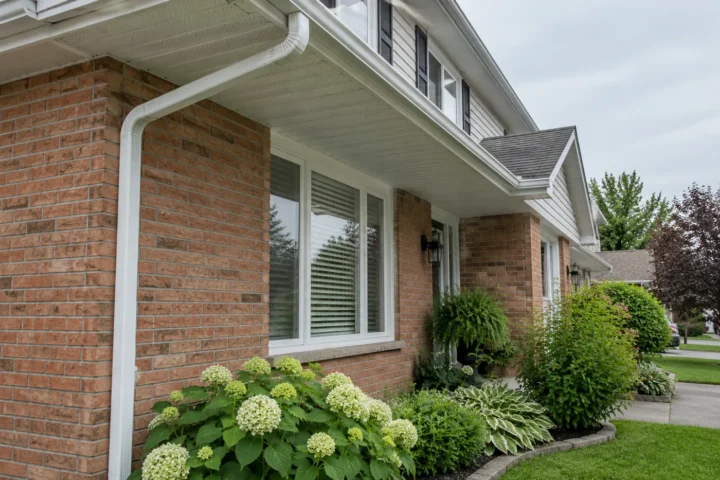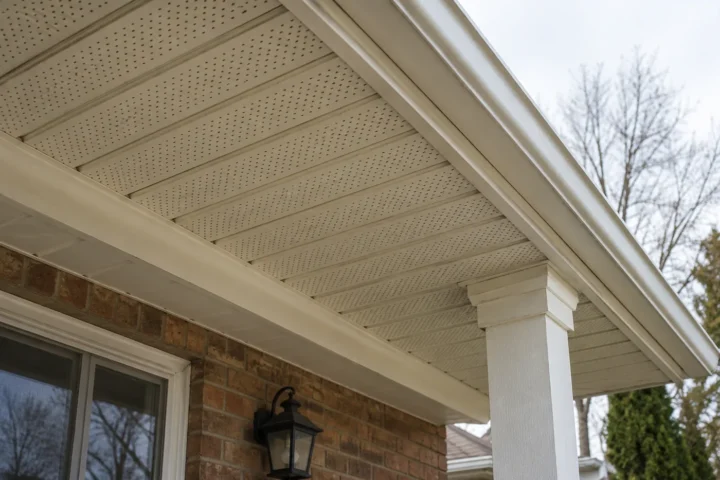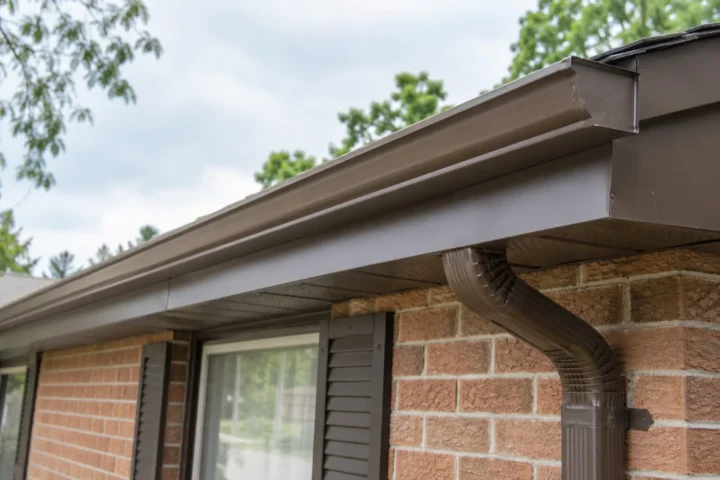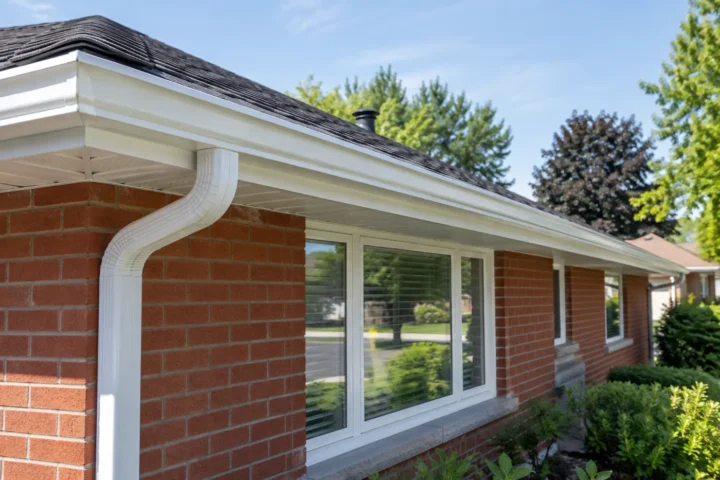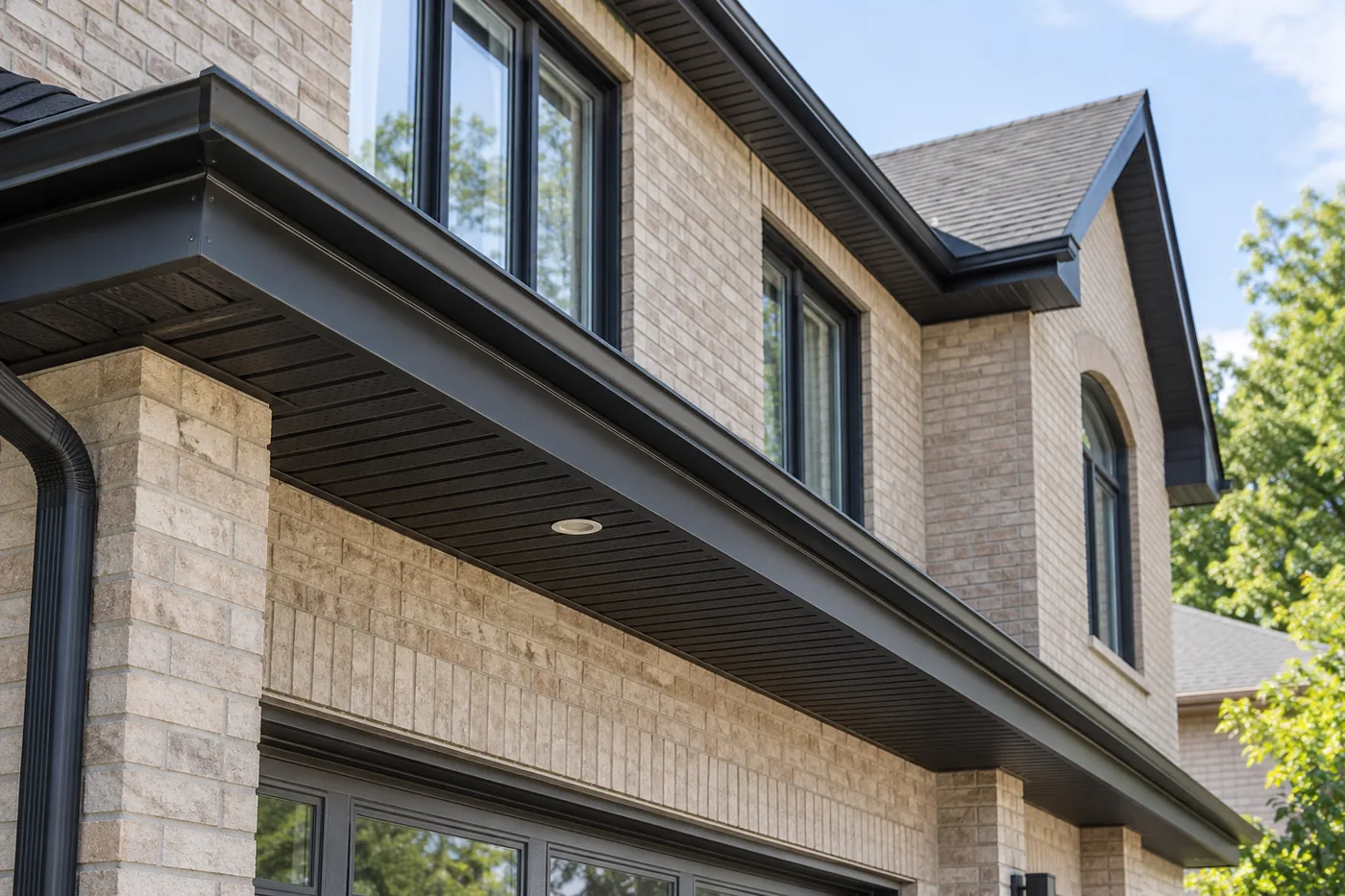
Fascia installation and replacement must distinguish the metal finish from the material beneath it. Aluminum fascia can protect and coordinate a roof edge, but it does not turn rotten or unsuitable wood into reliable structural backing. A gutter that has pulled away may indicate failed fasteners, loading, poor spacing or weak fascia support. Replacing the visible cover alone could leave the original attachment problem untouched. The scope should identify the affected elevations, condition of backing and relationship to soffit and gutter work.
Find why the fascia needs attention
Peeling finish, dents, loose metal and stained sections can reflect different causes. Look at whether water is spilling over a gutter, running behind its back edge or coming from a roof detail higher up. A dark stain does not prove a particular cause on its own. Inspect joints, corner transitions and places where a downspout strap or gutter hanger places load on the roof edge.
Where a gutter is separating, the fastening substrate deserves direct attention. New screws in soft wood are not a durable repair merely because the metal face looks clean. If damage extends beneath the surface, the extent of wood or roof-edge repair may need a separate assessment after removal exposes it.
Coordinate finish and supporting material
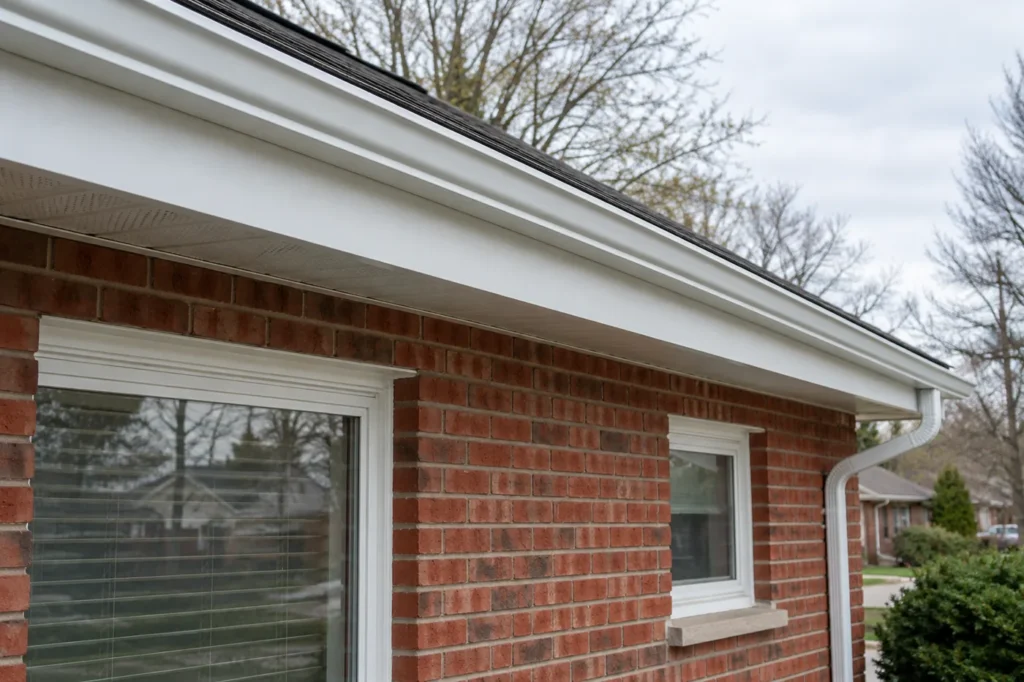
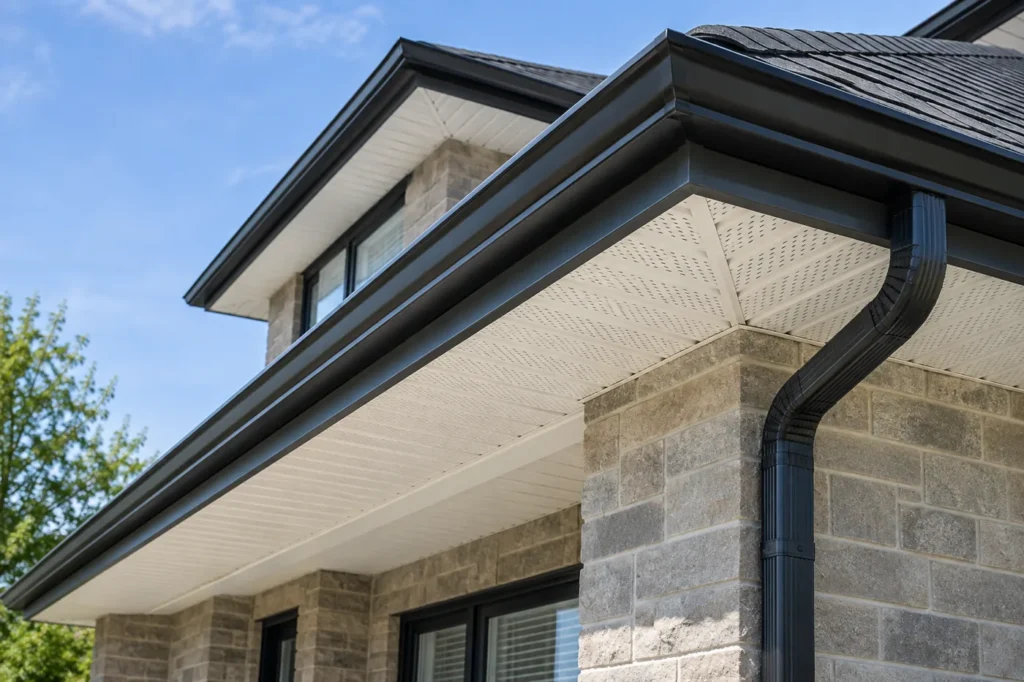
Aluminum fascia colour should relate to gutters, soffit and other exterior trim. The shape and depth of the roof edge matter as much as colour for a straight finish. Short awkward pieces, exposed gaps and uneven transitions can make an otherwise sound material look unfinished.
Determine whether a local section can be renewed cleanly or whether a full elevation offers a more consistent result. The estimate should distinguish new aluminum cladding from any substrate replacement; those are different materials and tasks. A finish-only quote should never imply hidden structural repair.
Gutter attachment must be planned
Taking down a gutter may be necessary to reach the fascia beneath it. Reattaching that gutter should include a check of hangers, alignment and slope. If the gutter itself is worn, combining scopes may make sense, but fascia replacement is not automatically a reason to replace every eavestrough.
Outlets and downspouts can constrain the sequence, especially around garages, additions and porches. A final inspection should confirm gutter support and the route for runoff after the fascia finish is complete, not only a straight-looking strip from the street.
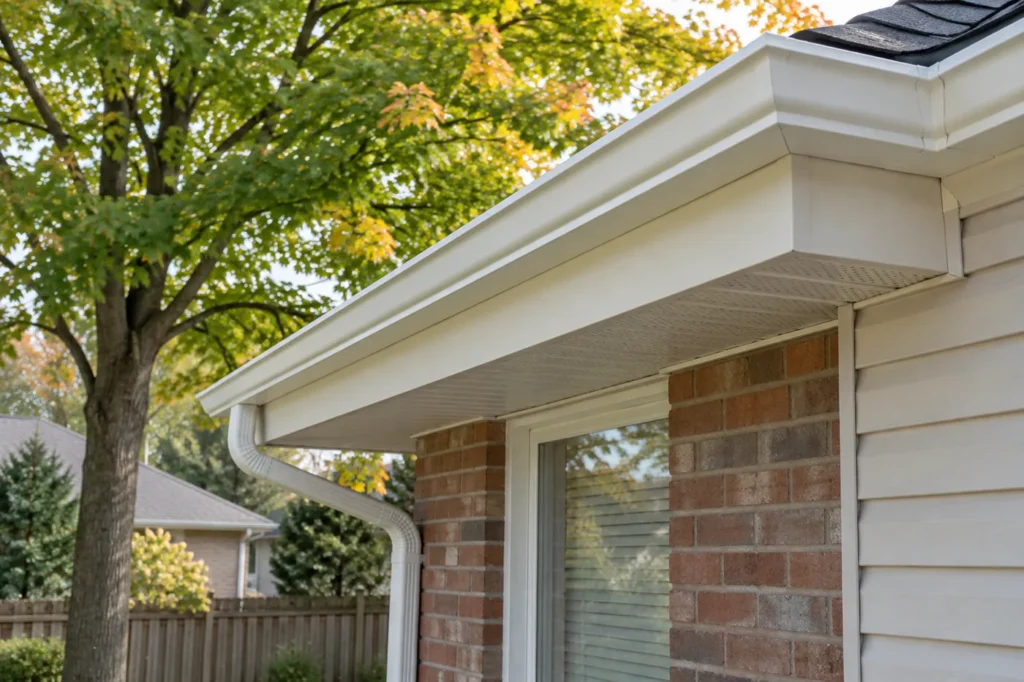
Avoid hiding a continuing water source
If a roof-edge leak or recurring overflow is staining the fascia, a fresh finish will be exposed to the same water. The source may involve debris, an outlet, slope, attachment or roofing and flashing outside gutter work. Identify the likely route and handle the appropriate work before relying on new metal to mask the symptom.
Document the condition discovered when old material is removed. Where concealed damage changes the proposed scope, explain it before proceeding. That allows a homeowner to distinguish cosmetic restoration from necessary support work and to decide whether connected soffit or capping work belongs in the project.
Distinguish facing from backing
A new aluminum fascia face can create a crisp line and protect an appropriate substrate, but it does not serve as a structural fix. If the wood behind it is soft, a hanger can still pull away. An estimate should state how exposed backing will be evaluated and how additional repair would be authorized.
The fascia depth and roof-edge geometry vary around gables, porches and additions. A neat replacement aligns with adjacent pieces and leaves a suitable junction with soffit and drip edge. A visibly straight face is only one measure of successful work.
Understand partial replacement
One dented metal length can potentially be changed without disturbing the whole house. Compare weathering and product availability before promising a perfect colour match. A transition at a corner can be less conspicuous than a short patch in the middle of a long front elevation.
If deterioration repeats along an entire run, local patches may leave unstable sections between them. The choice should be based on the condition of substrate and gutter attachment across that elevation, not solely the most visible dent.
Reattach a gutter thoughtfully
When a gutter is removed for fascia work, its hangers, slope, end connections and outlet should be checked before it returns. Old fasteners should not simply be placed into damaged holes. The finished assembly must support the gutter and still convey water to a suitable downspout route.
Where the original fascia stain was driven by water from above, document the source separately. New metal can hide evidence of continued leakage, which may then affect soffit or wall finish later.
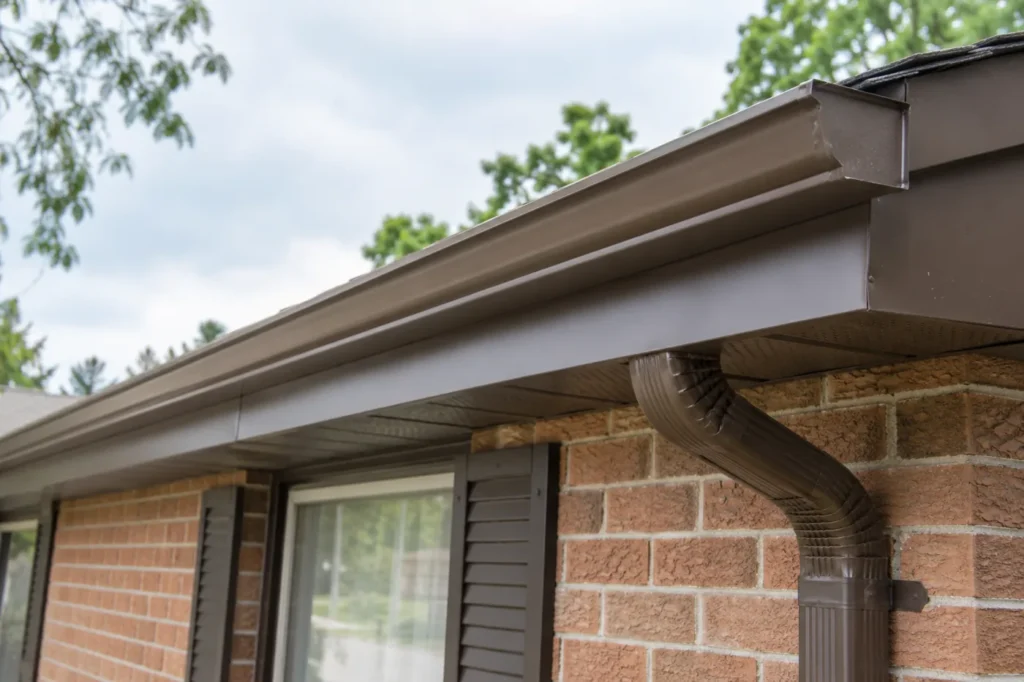
Inspect after old fascia is exposed
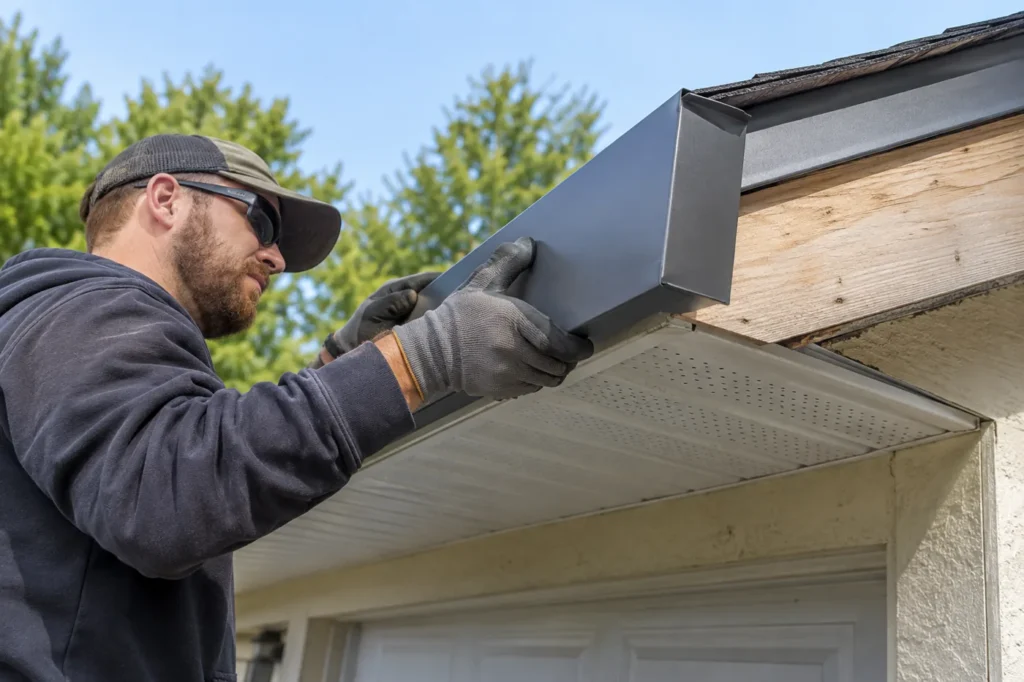
The condition of wood behind metal can be difficult to confirm from ground level. Once a damaged face is removed, check backing for soft areas, old fastener failure and signs of ongoing moisture. If the substrate cannot support a gutter, replacing just the aluminum is incomplete. The plan should allow a clear discussion of any additional work found.
A stain can be caused by an overflowing gutter, water travelling behind it or a separate roof-edge problem. If the source remains active, new fascia may hide it temporarily. A finished appearance should follow an effort to identify the water route.
Balance a local repair and continuous finish
A dented length may be replaced locally where support is sound. On a long front elevation, an exact finish match can be difficult because existing metal has weathered. Corners provide a natural transition in some cases; in others, a larger continuous length looks cleaner.
The decision is both practical and visual. Scope should show how much fascia is removed, which gutters are detached, and whether soffit transitions or end details are affected. That prevents a price for a small face piece from being mistaken for full roof-edge restoration.
A gutter’s weight changes the fascia conversation
Fascia is not just a decorative strip where eavestrough hangers fasten. Water, debris and winter loading act on the gutter, and its support must remain suitable in the material behind the visible aluminum. If fasteners have withdrawn, look beyond the face metal to the backing. A replacement estimate should say whether a gutter is being refitted, whether new fastening positions are needed and what happens if wood damage is exposed. This is especially important when a homeowner requests fascia work because the gutter is pulling away. Finishing the metal neatly without resolving support would leave the central problem in place.
Support and drainage meet at the roof edge
Fascia sits between roof-edge runoff and the gutter support system. Proper work reviews how water enters the channel, whether it spills or tracks behind, and how hangers are anchored. Downstream discharge may also affect stains near lower wall sections, though it does not replace the need to inspect the fascia itself.
Scope and cost factors
Height and safe access, total fascia length, corners, removal and reattachment of gutters, supporting substrate condition, finish and adjacent soffit work all affect scope. If new backing is required, it should be described and priced distinctly rather than silently treated as an aluminum-cover detail.
Details to include in your request
Share close photos of loose or stained fascia and wide images showing gutters and roofline. Mention whether a gutter is pulling away, whether the issue worsens during rain and whether only one elevation is affected. If the backing is exposed, photograph it safely from the ground where possible.
Continue planning the right work
If the underside is also loose or weathered, consider whether soffit work belongs in the same access plan. A small local defect may be addressed through repair, while capping concerns suitable exterior finish rather than structural backing. Where the gutter has to be removed and refitted, installation planning explains why hanger support, outlet and slope need attention as well as the new fascia face.