Leaking Eavestroughs
Water dripping from a corner, end cap or gutter run can leave marks on siding and collect where it should not. The position…
View details
The same patch of wet siding or ground can have several causes. Start with the symptom you can observe, then follow rainwater from roof edge through gutter, outlet, downspout and final discharge.
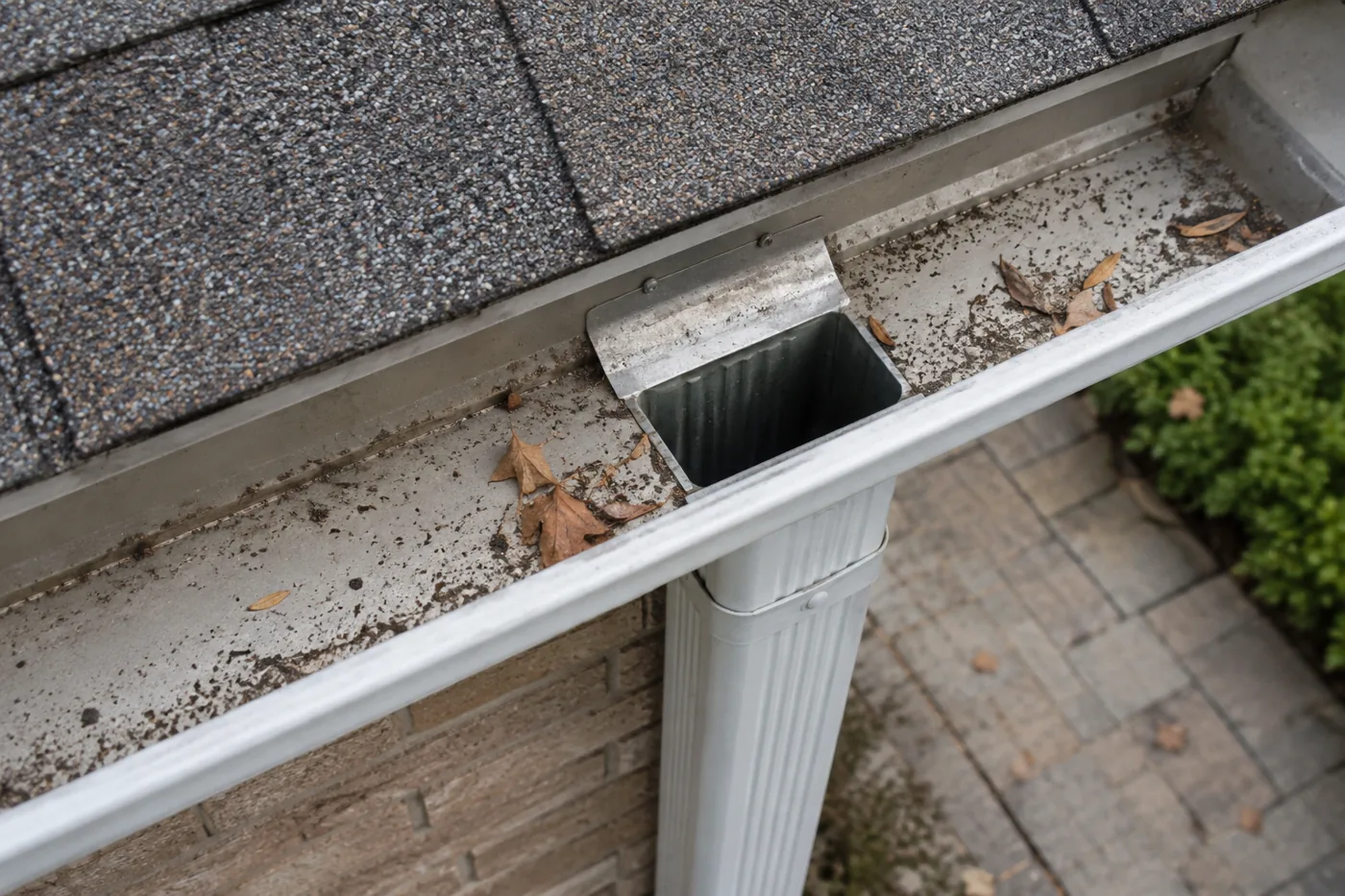
The location and timing of water often reveal more than the first visible stain.
Water dripping from a corner, end cap or gutter run can leave marks on siding and collect where it should not. The position…
View detailsA sagging run changes how roof water reaches the outlet. The low point can retain water and debris, strain its hangers and eventually…
View detailsA gap between gutter and fascia is an attachment warning. Rain may reach the wall or ground behind the gutter, and a loaded…
View detailsWater spilling over a gutter can appear to be a simple clog, but the real bottleneck may be at the outlet, downspout, slope…
View detailsWater remaining in an eavestrough after rain can point to a low spot or a restricted route. The depth, location and duration matter…
View detailsA blocked eavestrough is not always full of leaves from end to end. A compacted outlet or downspout elbow can stop the whole…
View detailsWater streaming between the gutter and the wall is a clue about where runoff enters the system. The gutter, its attachment and the…
View detailsThe eavestrough can be working while its downspout deposits roof water in the wrong place. Follow the route beyond the outlet to the…
View detailsStaining or loose material below the roof edge deserves a closer look, but appearance alone does not reveal whether the cause is a…
View detailsA gutter problem is easier to describe when the observation is specific. Is water escaping through a corner, passing over the front lip, running between the back edge and fascia, or collecting inside the channel after the storm? Does the entire run sag, or has one part pulled away from its support? Each pattern directs the assessment to different components. The nine symptom pages below keep those questions separate so a repair is not selected before the water route is understood.
Watch from safe ground level during rain if possible. Note the first point where water leaves its intended path, the roof plane or valley feeding it, and whether flow emerges from the associated downspout. A wide photo showing the whole roof edge plus a close context photo is useful. Do not climb during rain, lean into a loose section or try to clear an elevated downspout while water is backing up.
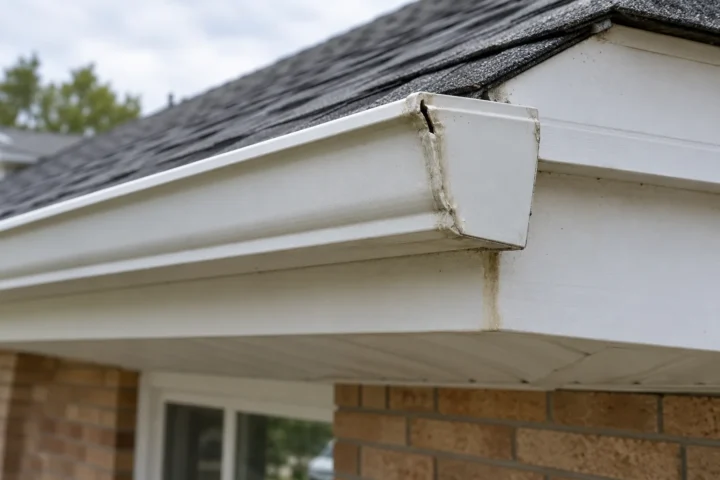
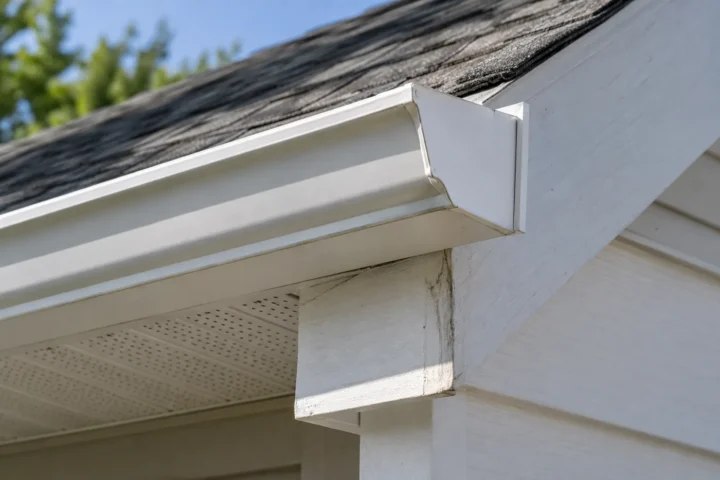
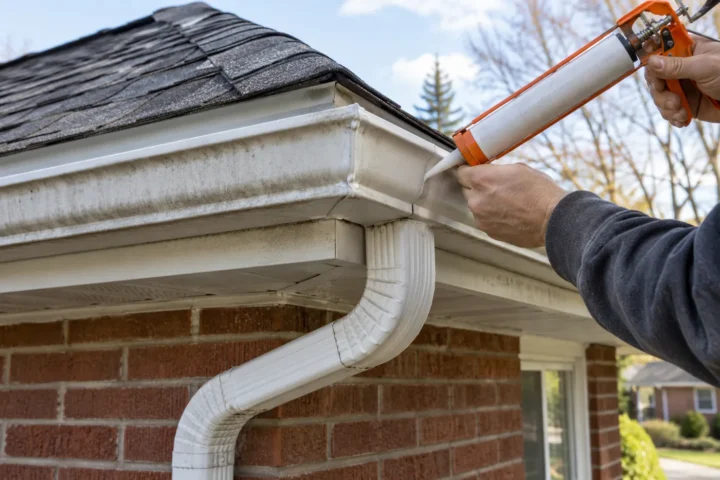
Leaking eavestroughs focuses on corners, joints, end caps and isolated damage. A dripping seam can often be distinguished from water simply spilling over a full gutter. A “seamless” straight run still contains corner, outlet and end-cap connections that deserve inspection. One failed joint does not automatically justify replacing every elevation.
Water running behind the gutter can involve attachment or alignment, overflow, the roof edge or a separate flashing/roof condition. Staining on fascia identifies where water travelled but does not prove where it started. A gutter repair cannot be promised to remedy an unseen roof assembly defect. If the back edge is visibly separating, examine the support as well as the water source.
Sagging gutters may have loose hangers, unsuitable attachment, a deformed channel or a low point that holds water. A dip changes the route toward the outlet. Gutters pulling away from fascia adds the question of whether fasteners grip sound supporting material. New aluminum fascia covering cannot turn deteriorated wood into a secure mounting surface.
Standing water is about what remains after the rain has stopped: a persistent pool versus residual dampness. Its location can reveal an outlet positioned above a low point, blockage, reversed slope or permanent distortion. Debris weight can deepen a sag, while a sag can collect more debris. Cleaning and attachment correction may both be needed; neither should be assumed before inspection.
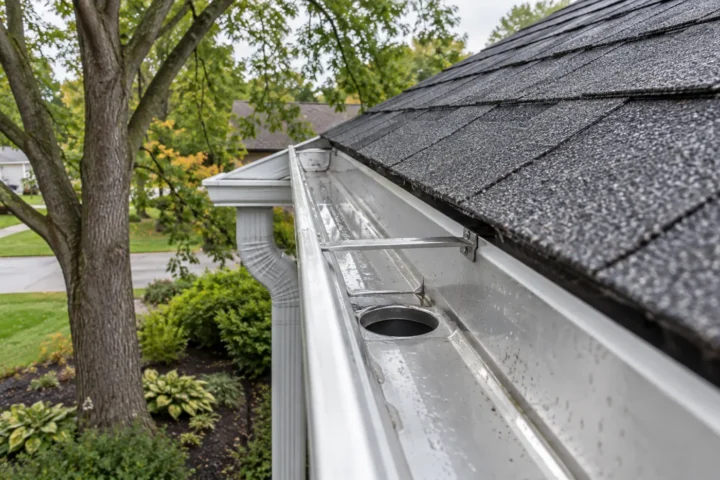
Overflowing gutters may involve debris, guards, an outlet or downspout restriction, slope or concentrated flow from a roof valley. A clean channel can still overflow. Check where the water enters and whether it can leave. Larger gutter profiles are one possible design question only after the existing route has been reviewed; they are not the automatic answer to every spill.
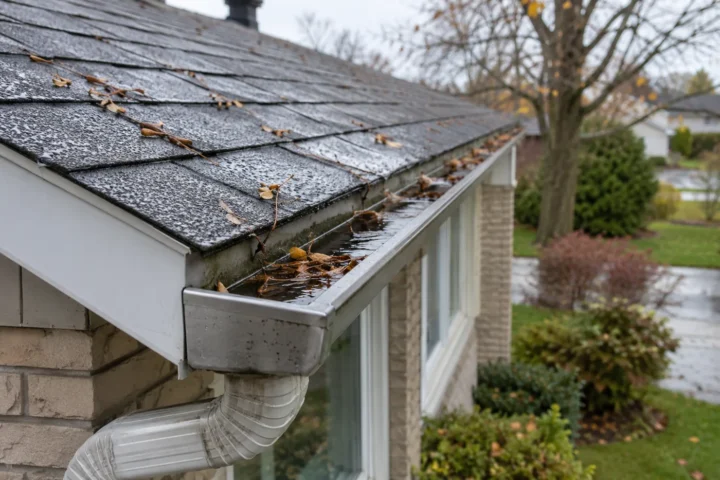
Clogged gutters and downspouts addresses leaves, seeds, roofing grit and restrictions at elbows and outlets. Material may be hidden where the downspout turns while the top of the gutter looks open. A guard can reduce some debris entry but still needs condition checks. Cleaning frequency should reflect tree cover, roof geometry, guard condition and past clogging rather than a universal schedule.
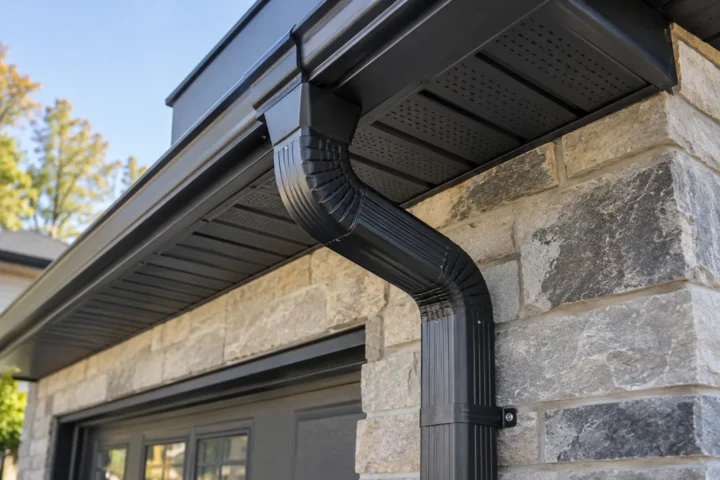
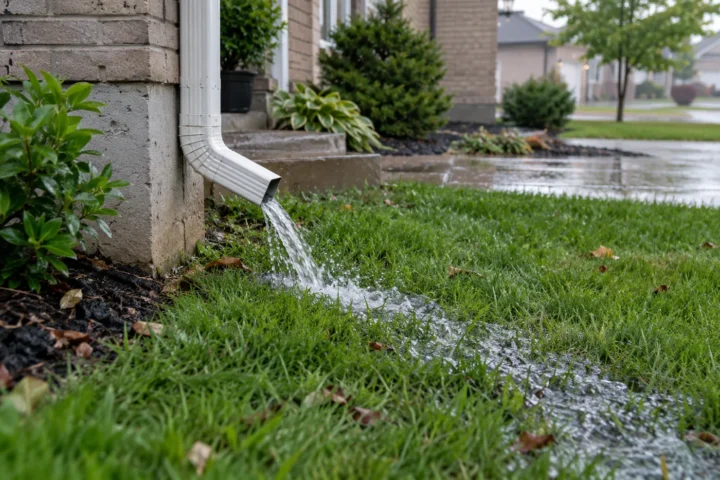
Downspout discharge problems start after water successfully leaves the gutter. A short or damaged extension can put roof runoff beside a basement wall, across a walkway or into a low part of the lot. Extending a pipe to a point that slopes back to the house can leave the surface issue unresolved. The route must consider winter icing, patios, driveways and neighbouring properties.
Damaged or stained soffit and fascia can be a consequence of gutter overflow or separation, but roof water, impact and older damage can produce similar marks. Identify the source and condition of supporting material before covering it. Vented soffit is one part of a ventilation arrangement and a replacement panel alone does not fix an entire attic system.
A localized failed end cap, loose hanger or short damaged run may support gutter repair when the rest of the assembly is sound. A gutter repeatedly holding water over several runs, failing at multiple joints or attached to unsuitable support can justify replacement planning. The repair versus replacement guide compares those conditions without making one choice universal.
A debris issue may call for cleaning, while recurring restrictions or loose connections deserve a maintenance inspection. Any proposed correction should explain the observed cause, the component to be changed, how runoff reaches the outlet and where the downspout deposits it. Repairing one visible symptom without checking the downstream route can leave another problem.
The Town of Milton’s flood page recommends downspouts extend at least 2 m (6 ft) from basement walls. Halton Region describes 3 m from foundations as ideal where away-sloping ground permits. Those are distinct sources of homeowner guidance. A suitable discharge point also considers pavement, winter ice and the direction water continues to travel.
Roof-water work can reduce runoff arriving at one place. Basement water may also involve grading, foundation conditions or storm and wastewater systems. It is not sound to promise that an eavestrough fix cures every basement leak. Our Milton eavestrough and drainage guide follows the complete route and explains where other investigation may be necessary.
A useful request includes the address, approximate storey height, which side of the building is affected, when the problem happens and where water lands. State whether there are guards, nearby trees, recent roofline work, prior repairs or winter icing. Photos can show the roof plane, entire run, outlet, downspout and final discharge; avoid unsafe close-ups from a ladder.
The nine dedicated problem pages provide more detailed observations for each symptom. If several symptoms appear together, describe them all: for instance, a sag that holds water, debris at the outlet and overflow over an entrance. The assessment can then follow one connected roof-water path rather than treating each photograph as an unrelated fault.
If water pours over the front, first ask whether the channel is full and whether the downspout flows. If the gutter is not full but water misses it, look at roof-edge alignment and concentrated entry. If the channel retains water after rain, examine slope and outlet elevation. If a gap has opened at the fascia, evaluate fasteners and support. These observations can coexist; a clogged outlet can load a loose gutter and produce both overflow and separation.
The point is to avoid treating a symptom name as a diagnosis. A quote should state which component and water route it addresses, especially when there is more than one visible defect. Share observations from different weather events without trying to make a repair yourself at an elevated, wet or unstable roof edge.
An initial description and photographs can narrow the likely route, but some conditions remain hidden behind a guard, at an elevated outlet or under fascia covering. An assessment should distinguish what is visible, what needs access to confirm and what may require another trade. It should not infer a failed roof detail solely from a wall stain or prescribe an entire new gutter system solely from one drip.
Use the dedicated symptom guide that most closely matches what you see, then note any second symptom on the same elevation. For instance, standing water and an open corner joint may share a slope issue, while a clear, empty gutter with water behind it points to a different investigation. The most useful work follows the evidence from roof runoff to final discharge.
Observe where runoff enters the channel and whether water exits the downspout. Debris, outlet restrictions, slope and concentrated valley flow all deserve consideration.
Yes. A low section can retain water and debris; the added weight can worsen attachment. A clogged outlet can cause overflow and stress a leaking connection.
No. A localized joint or end-cap issue in an otherwise sound system may be repairable. Widespread defects and poor overall routing can change the scope.
An extension can redirect roof runoff from a wall, but basement water has several possible pathways. Site grade and other conditions must also be considered.
Share where and when the problem appears. A roofline photo, downspout view and the final discharge area can help explain the pattern.