Define the failure before choosing the scope
The visible symptom is a starting point, not a full diagnosis. A drip from one corner may originate in the corner joint, water held upstream by a blocked outlet, or a section that has lost its fall. A line of water behind the gutter may reflect attachment, positioning, a roof-edge detail or a different source. Write down when it happens, where the first water appears and whether it follows light rain, heavy rain or snowmelt. This makes a repair estimate more meaningful than a request to “seal the gutter” without locating the cause.
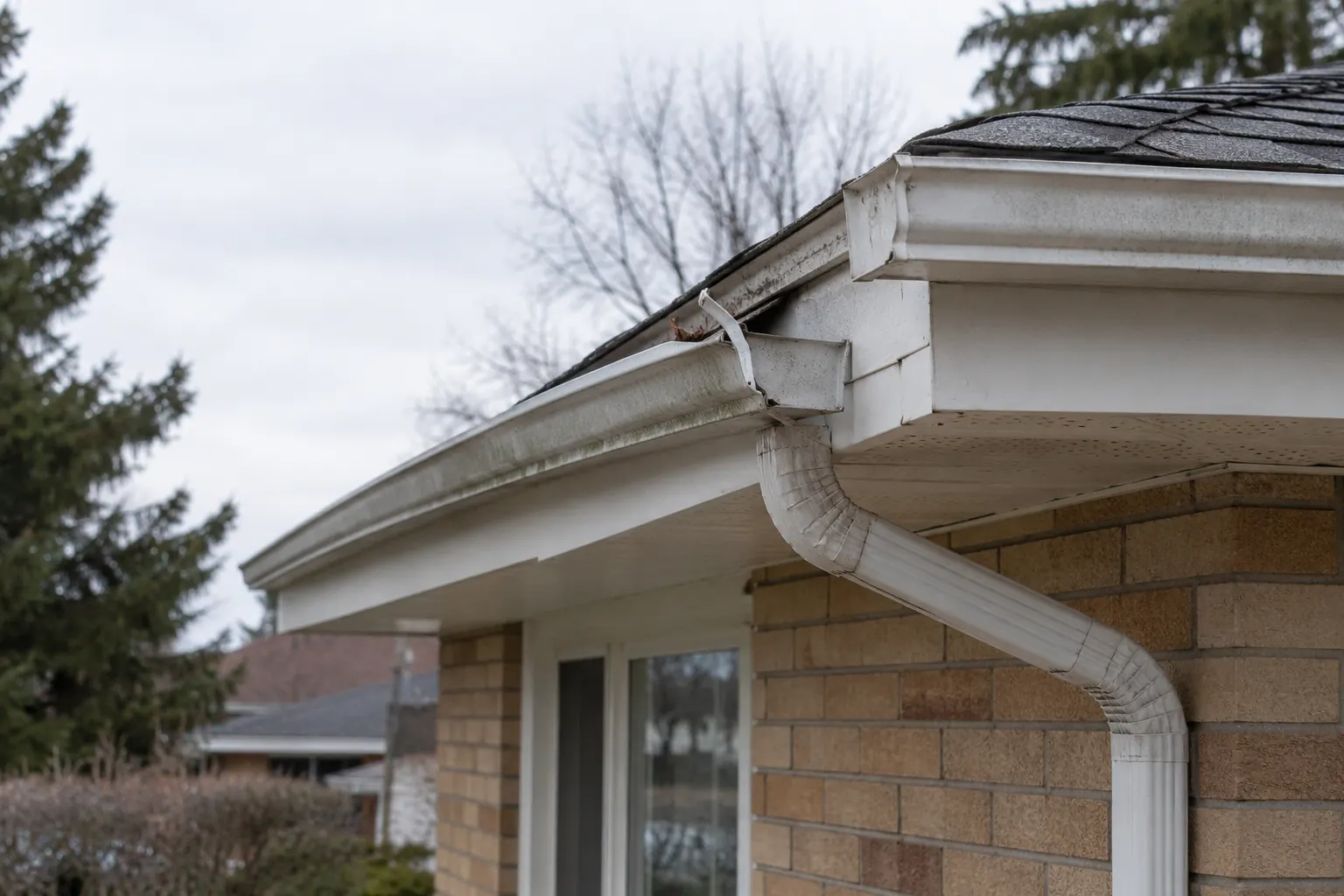
Walk each accessible elevation from the ground. Note loose hangers, pulled sections, displaced end caps, dents, separation at downspouts and water standing after rain. Check where every downspout ends. One bad connection at ground level can create a foundation-area puddle even while the upper gutter performs well. Separate roof-edge work from any separate grading or basement investigation.
Good candidates for a focused repair
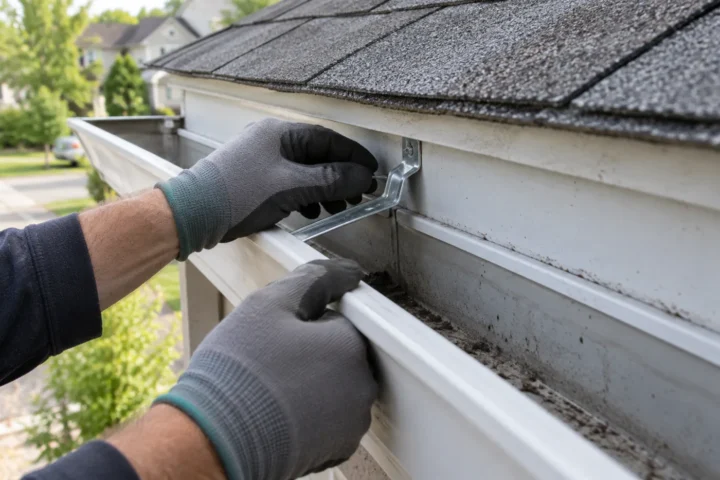
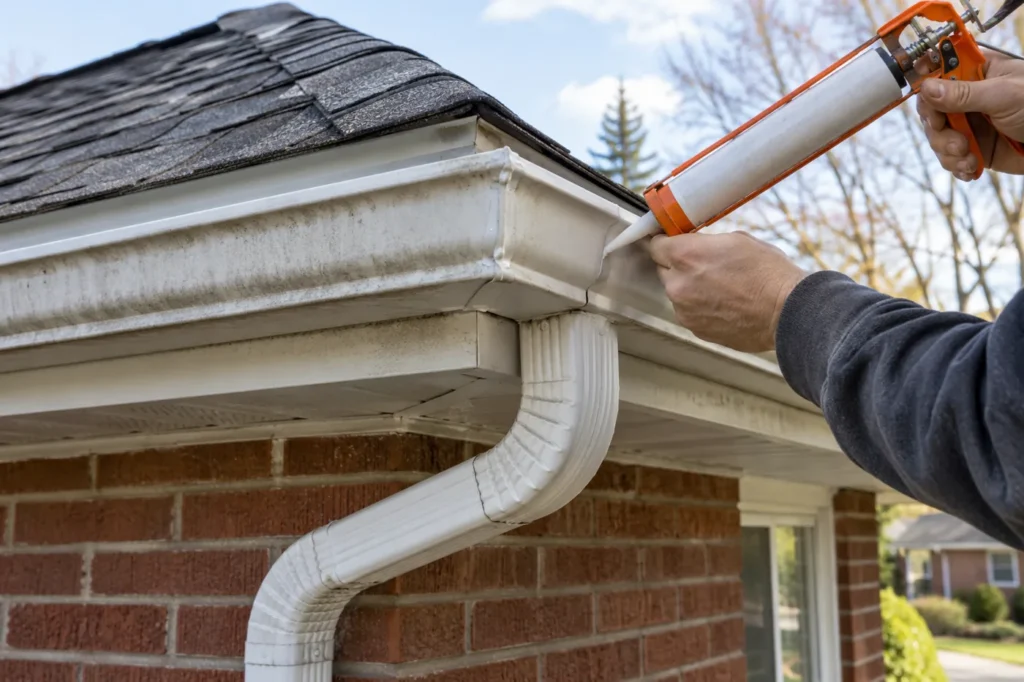
An isolated corner leak, loose end cap, localized hanger issue, short damaged section or disconnected downspout may justify a targeted repair when surrounding material is in serviceable condition. The repair must address the actual cause. Reattaching a short run to sound support is different from driving new fasteners into soft substrate. Sealing a joint may be reasonable after cleaning, drying and evaluating movement; applying sealant over trapped debris or an unsupported joint is unlikely to last.
An impact-damaged downspout or a single failed outlet may be replaced while retaining sound gutter runs. Matching the profile, colour and older finish can affect the appearance and feasibility of a small repair. Eavestrough repair should include the condition of adjacent material so the repaired component has a stable connection.
Signs that a broader replacement deserves consideration
Multiple leaking joints across different elevations, repeated sagging, widespread corrosion or damage, inadequate outlet planning and chronic ponding can make repeated small fixes less efficient. If the gutter is attached to deteriorated fascia along a long run, a secure replacement may require work to the support before new metal is installed. Extensive changes in roof shape or additions may also have made the old route unsuitable for current runoff.
The decision is about distribution and underlying cause. Three unrelated leaks in otherwise sound sections may still be repairable; one long section with the wrong slope and compromised backing may require rebuilding. The cost of scaffold or other access for an upper level can change the economics: combining related work during one safe access period may make sense, while replacing a whole house because one accessible corner drips may not.
Material condition and finish
Inspect for dents, deformation, failed seams, coating wear and how the metal holds a new connection. A small damaged area can sometimes be cut out and replaced. If the material has become too thin or distorted around many fasteners, the repair may not hold as intended. Appearance matters too: replacement aluminum can differ from sun-aged finish, even when the nominal colour is the same. Decide whether a visible match is acceptable before ordering a short run.
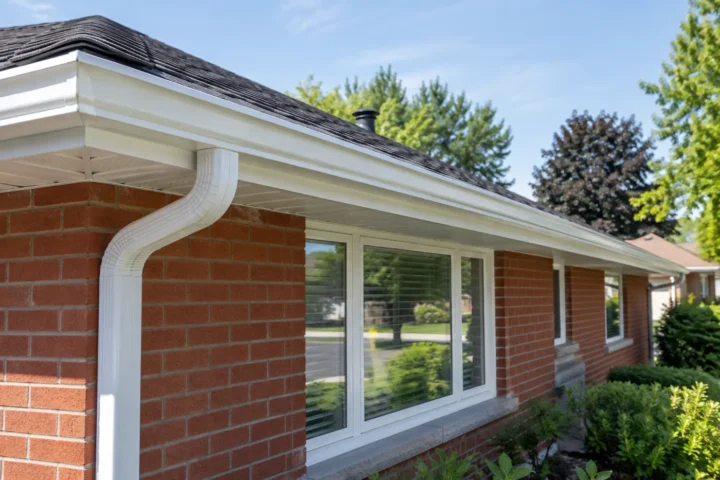
Seamless aluminum gutters have fewer long-run seams, yet still have corners, end caps and outlets where problems can occur. A leak at one of these points is not proof that the seamless design failed or that the entire system needs removal. The seamless aluminum service can be evaluated alongside existing material if replacement is warranted.
Attachment, slope and supporting fascia
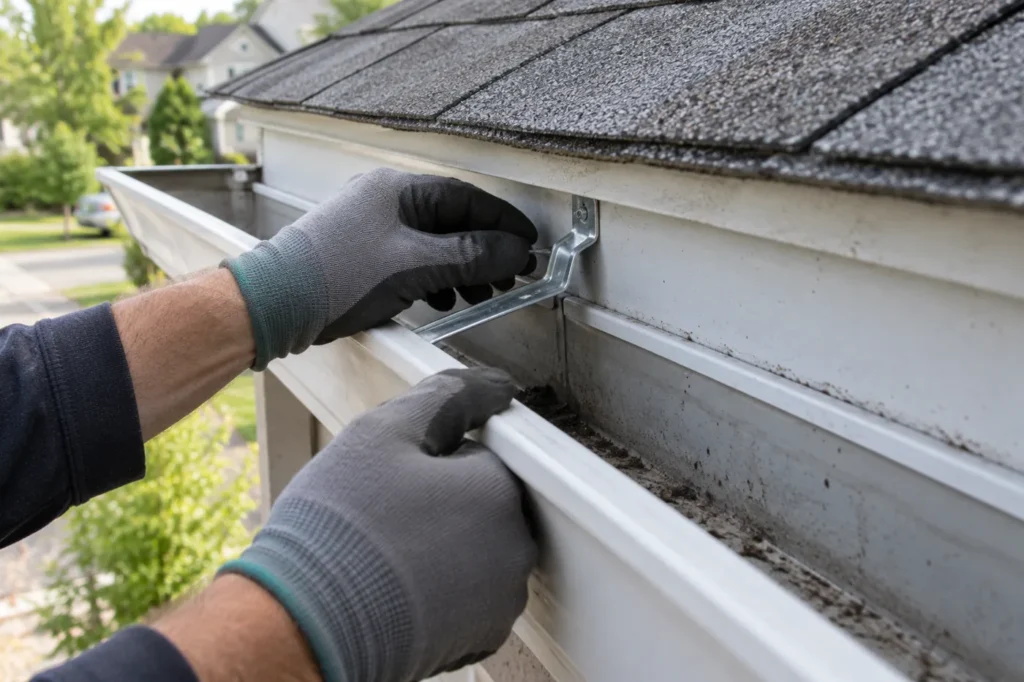
A channel must remain in position under water, debris and seasonal conditions. Repeatedly loose hangers may indicate attachment spacing, substrate condition or a section that has been carrying standing water. A low pocket retains sediment and can increase load. Simply adding sealant to a corner does not restore the run's fall. The appropriate work may involve resetting a section and supporting it properly, not necessarily replacing all metal.
Examine fascia beneath the aluminum face where there is evidence of water damage or movement. Aluminum capping protects a suitable substrate but does not make rotted wood structurally sound. If the backing is unsuitable, fascia installation and replacement must be considered in the scope. A repair quote that ignores the support can understate the real work.
The downspout layout may be the main problem
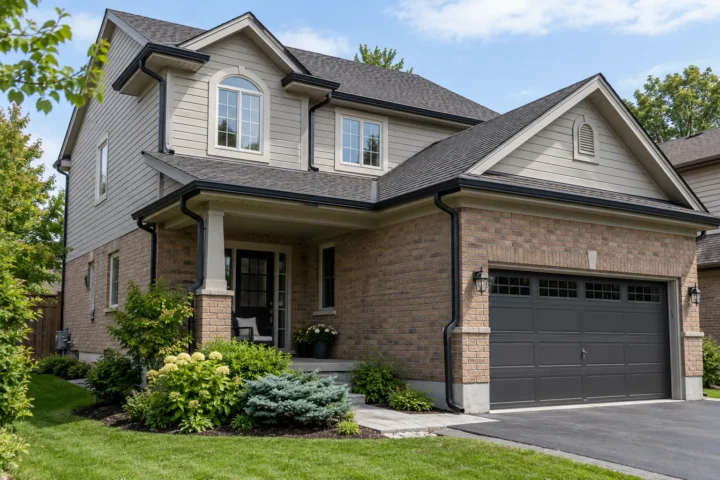
Before replacing the gutter, test the logic of its outlet and downspout arrangement. A restricted elbow, outlet located too far from a high-flow valley, crushed section or discharge that sends water back toward the building can create persistent complaints. Replacing an otherwise healthy channel with the same layout reproduces the weakness. Conversely, moving an outlet may require rebuilding a run for the right slope and connection.
The final discharge is a separate decision. A new downspout extension can move roof water away from basement walls, but the endpoint must respect walkways, driveways, grading and neighbouring property. Read the Milton roof-water drainage guide when the complaint includes water near the foundation.
Previous repairs and repeated costs
List what has already been done, where and when. Repeated sealing of the same corner suggests movement, poor drainage or a failed joint detail that was never corrected. Repairs appearing at new locations across an old system may indicate declining overall condition. Compare a properly scoped repair against a planned replacement, including access, disposal, downspouts, fascia support and any guards. A low initial price is less useful if it omits the cause or requires another visit to restore function.
It is also possible that an earlier repair was inadequate and a better targeted repair will work. Avoid declaring replacement solely because a previous attempt failed. Ask what the new assessment found that explains the symptom. Photographs of the problem during rain and a record of earlier work can help distinguish recurring damage from a new issue.
What a repair proposal should specify
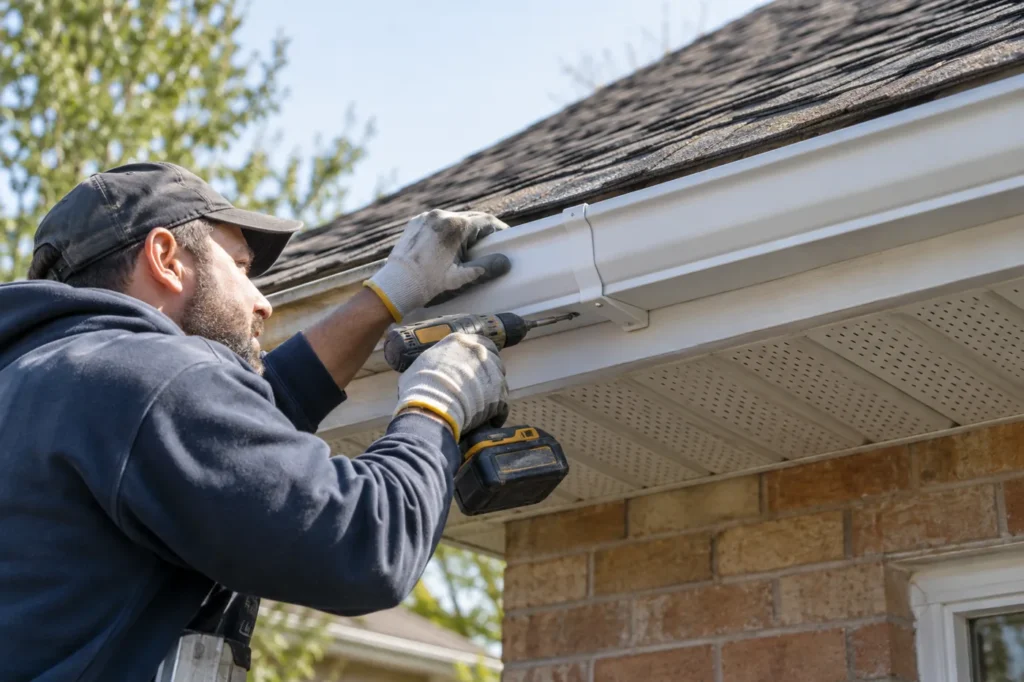
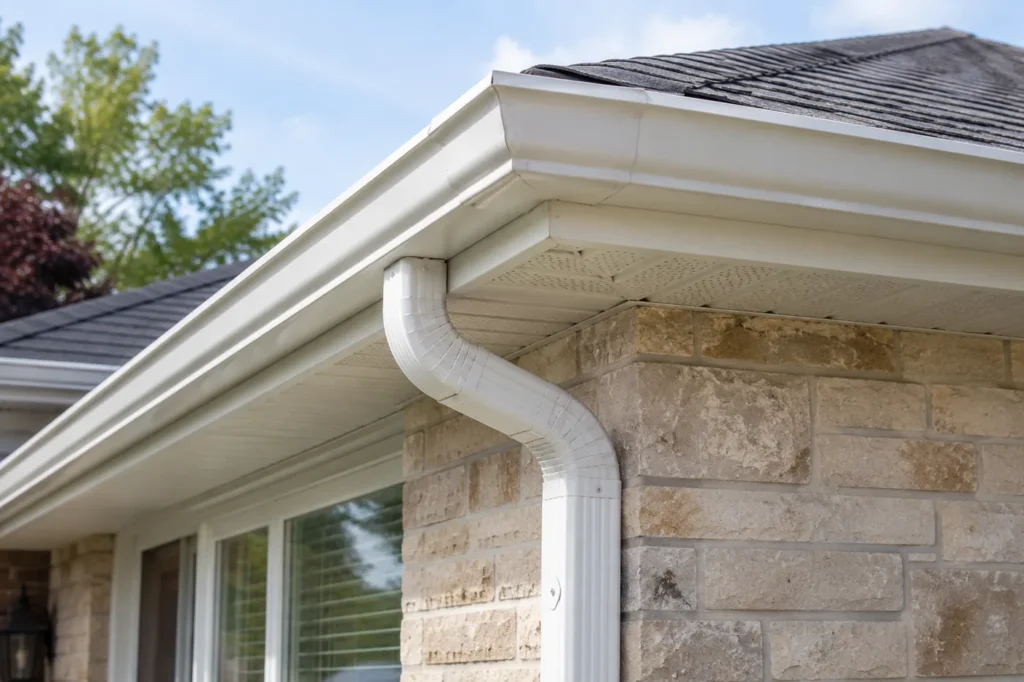
A useful repair scope identifies the affected section, underlying cause, adjoining material and intended test of the result. “Seal leak” is too vague when the joint moves, a low pocket holds water or an outlet is restricted. The proposal should state whether a hanger will be reset, a short run replaced, an outlet cleared, a corner remade or the downspout connection corrected. If access to a high roofline is needed, identify which related conditions will be examined during that visit.
After the work, a rain event may be the first meaningful performance check. Note any remaining spill location separately; water can appear at a different point if another restriction also exists. Keep a record of what was repaired for future comparison. A clear scope makes it possible to assess whether the system was repaired as proposed rather than treating every later water mark as the same defect.
A practical comparison for property owners
Choose a focused repair when failure is localized, adjacent material and support are suitable, the water path works, and the repaired connection can be made reliably. Consider replacement when weaknesses are widespread, the run cannot be reset to drain properly, substrate and attachment need broad work, or a redesigned outlet/downspout plan is needed. Both choices should state what is included and what separate problems remain.
For a quote, photograph each affected elevation and the ground discharge, then note if the roofline is one or two storeys and whether access is limited by planting, decks or parking. Ask whether a replacement estimate and a repair option can be compared against the same observed conditions. A clear decision rests on the actual property, not a blanket preference for one service.