What a guard can actually do
A gutter guard is a cover or screen designed to intercept some material before it reaches the eavestrough. It may reduce the frequency or amount of debris removal inside the channel, especially where leaves gather. It does not stop all debris, clear a blocked downspout, repair sagging metal or guarantee that water enters the gutter during every downpour. Fine grit can pass through many guards; leaves can collect on top; seeds can lodge at edges and openings. The claim that a system becomes maintenance-free should be treated skeptically.
Begin with a record of the property's actual problem. Are broad leaves accumulating inside the gutter? Are needles, seeds or roofing granules reaching the outlet? Does water spill over a roof valley even when the channel is clear? Those conditions need different responses. A guard selection should follow a clear explanation of the existing system, not a one-size-fits-all product pitch.
Screen-style guards
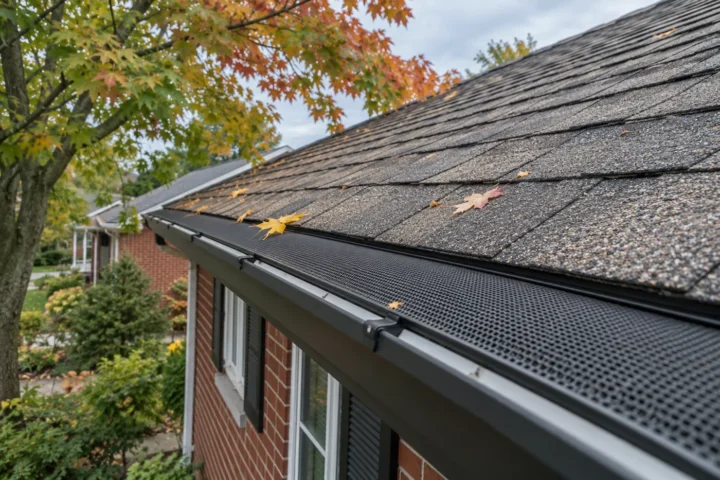
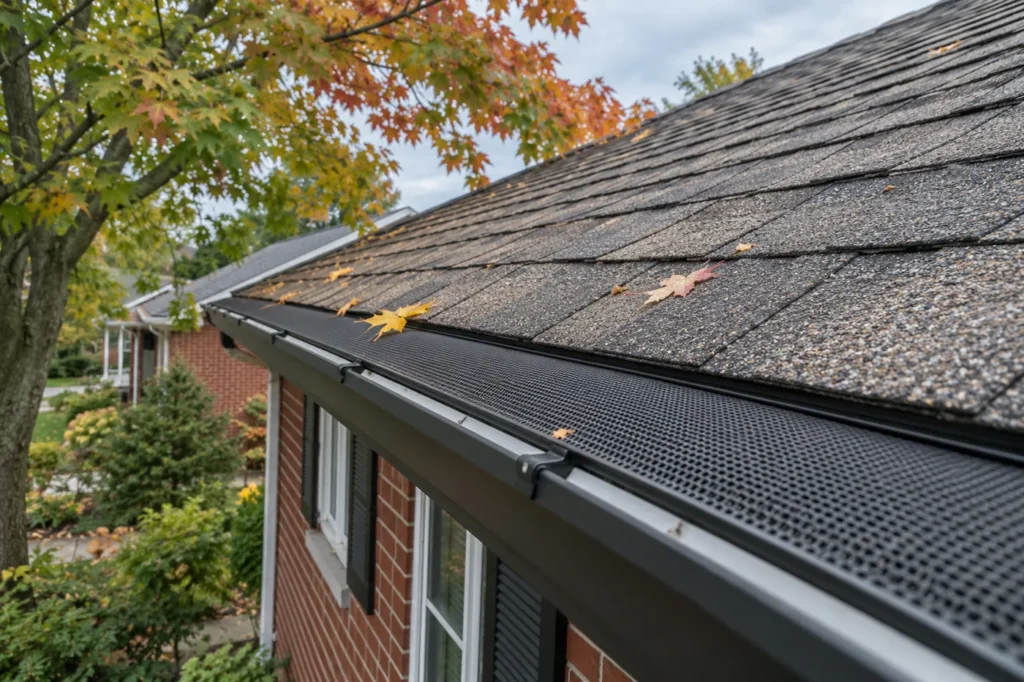
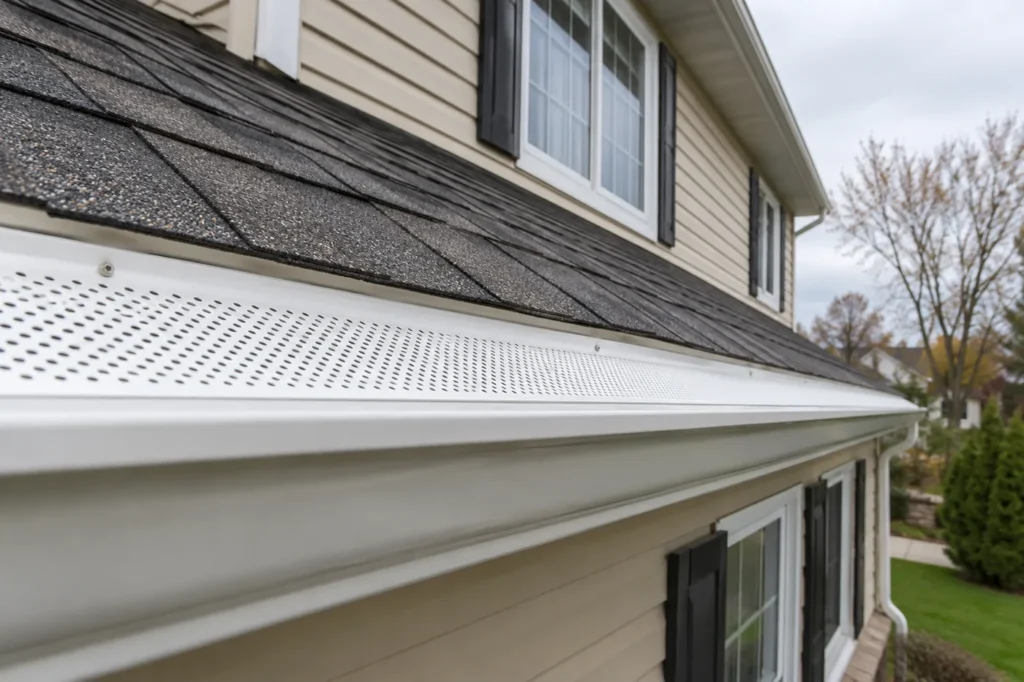
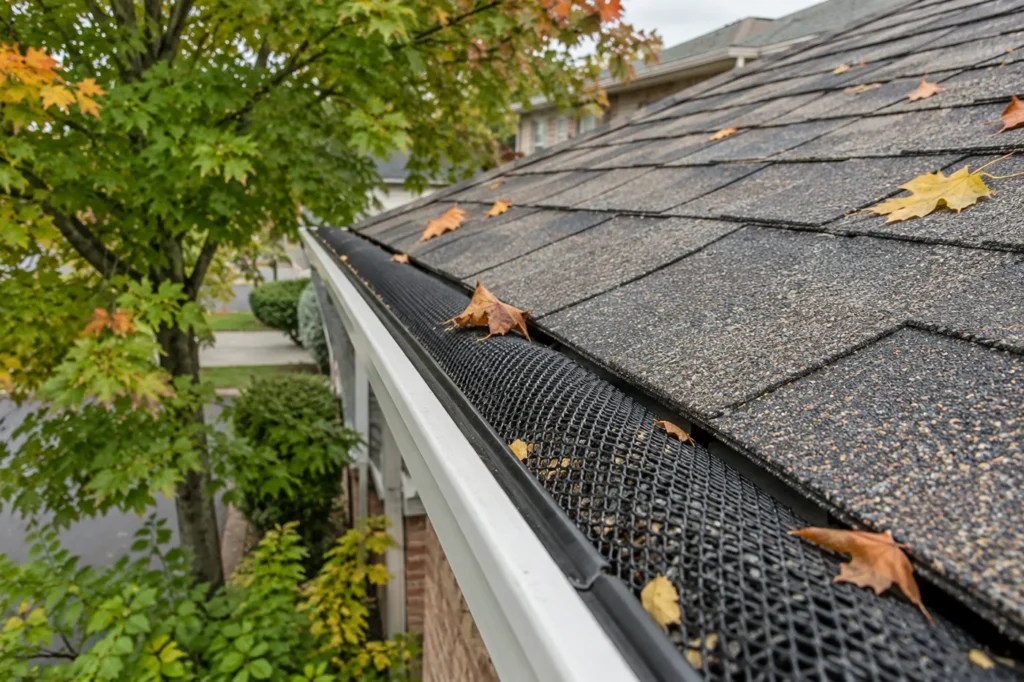
Perforated or screen-style products use openings to allow water through while intercepting larger debris. Opening size, material, strength, edge fit and how the screen attaches can vary. A screen may catch leaves on the surface while fine material passes inside. If debris sits on top in a shaded, tree-covered location, it may need removal so water can enter as intended.
Consider whether the screen can be lifted or accessed for inspection. Outlets, corners and valley discharge points remain important even when most of the gutter is covered. The installation must fit the gutter profile and roof edge without compromising other components. Do not assume a low purchase price means the installed result will perform better than targeted cleaning and outlet maintenance.
Micro-mesh guards
Micro-mesh uses finer openings intended to reject smaller particles than a coarse screen. It may be useful where fine leaves, needles or seeds are recurring issues, but its surface can collect those same materials. Water has to cross the mesh and enter the channel, and a high-flow roof valley may deliver water faster than a contaminated or poorly placed surface can accept. Mesh condition, pitch, support and edge details matter.
Ask how the mesh will be cleaned and how the covered gutter will be inspected. A product that is difficult to access may conceal an outlet restriction until overflow appears. The material and mounting approach should also be compatible with existing gutters and roof-edge details. “Micro-mesh” describes a class of product, not a single proven performance level for every home.
Understand the debris on the property
Map nearby trees and seasonal material. Broad leaves may arrive in a concentrated autumn period. Seeds and blossoms may appear in spring; needles and fine particles can arrive throughout the year. Roof grit can collect even without overhanging trees. A low-slope section can retain the fines that enter through a guard, while downspout elbows can collect debris from many roof areas.
Review earlier cleaning observations if available. Which runs clog, and where? If one outlet under a valley is the repeated problem, adding a guard to every roofline may be a poor substitute for correcting flow and drainage at that point. If debris originates from a neighbouring tree, site conditions can change each season. The selection should remain practical for the actual maintenance route.
Repair the gutter before covering it
A guard should sit over a gutter that is securely attached, drains toward clear outlets and has suitable fascia support. It cannot correct a low spot, loose hanger, leaking corner or downspout that empties beside a basement wall. Some defects become harder to see after installation. Clean and assess the channel, corners, outlets and downspouts first. Address gutter repair or overflow troubleshooting before covering a malfunctioning system.
The existing profile and roof geometry also affect fit. A guard meant for one gutter width may not seat properly on another; corners and short returns need careful detail. A porch or garage roof may feed water into a lower gutter in a way that changes the guard's performance. Roof-edge work should not damage shingles or compromise the intended water path.
Snow, ice and freeze-thaw conditions
In winter, meltwater can encounter snow or ice on a guard or at the outlet. Icicles at a roof edge do not by themselves diagnose a guard problem: roof heat loss, weather, drainage and other conditions can contribute. Guards may change where snow and debris sit, and water may run over the surface under some conditions. Examine a repeated winter symptom in the context of winter eavestrough problems, not with a blanket product claim.
Do not use force to chip ice from thin metal or reach an elevated roof edge during freezing weather. If a downspout discharges onto a walkway, a guard does nothing to change that endpoint. Revisit routing and winter icing risk before treating surface debris as the only issue.
Maintenance after installation
The inspection method may change, but the need to inspect does not disappear. Look from a safe position for leaf mats on top, overflowing valleys, separated edges, standing water, loose sections and discharge that pools near the building. After seasonal debris or a major storm, the right interval depends on the property rather than a universal calendar. Cleaning a guard surface and checking hidden outlets can take a different approach from open-gutter cleaning.
Ask how a future technician will reach the channel and downspout if a blockage occurs. A design that is easy to service can have practical value over a difficult-to-remove cover. Make room in the plan for inspection of fascia, attachment and joints; guards should not hide progressive damage.

A guard cannot correct the discharge route
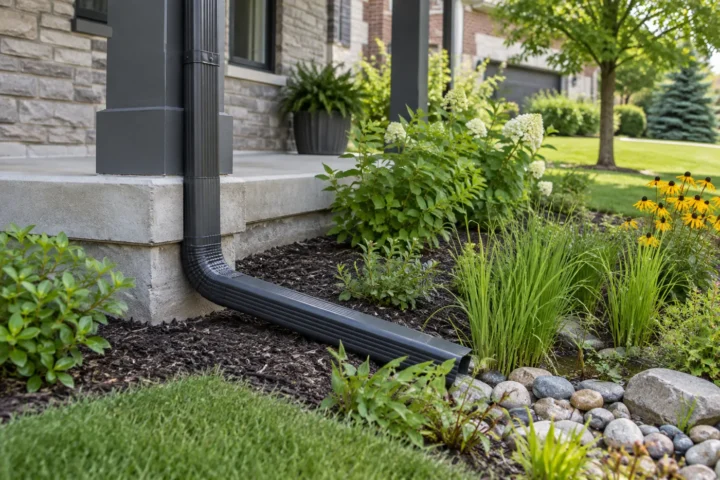
A property owner may first notice water near a basement wall and assume leaves in the gutter are the cause. If the channel and downspout are already clear but the extension ends against the foundation, a guard addresses the wrong link. Likewise, water crossing a driveway after a storm is a ground-routing issue. Inspect the full path before investing in protection at the roof edge. Guards can be one component of a better-maintained system, but they cannot choose a safe place for the collected runoff to go.
Where several guard products are being compared, request the cleaning method in writing. Ask how a technician accesses corners, outlets and the inside of the channel, and whether individual sections can be removed without damage. Seasonal tree shedding and upper-storey access affect that practical value as much as the product's advertised opening size. A guard that is difficult to maintain may shift the burden rather than reduce it.
Treat a product claim as a site question
If a product description promises unusually little maintenance, ask how it behaves with this property's trees and roof valleys. Request a practical explanation of what happens to leaves on top, fine grit below and water at a concentrated runoff point. The ability to inspect and clean later is a benefit in its own right, particularly on a second-storey elevation where access is less convenient.
Comparing guard proposals
Describe the roof planes, high-flow valleys, trees, existing gutter width, past clogs and access. Ask what material the guard intercepts, what can pass through or accumulate on top, and how water enters near a valley. Ask whether cleaning, repairs and outlet testing are included before installation. Confirm how corners, end caps and downspout outlets remain accessible.
The best outcome is an appropriate reduction in debris problems with a maintainable water path. If a property has little debris but poor slope or downspout routing, spending on guards first is unlikely to address the observed complaint. Gutter maintenance and inspection remain relevant after any cover is installed.