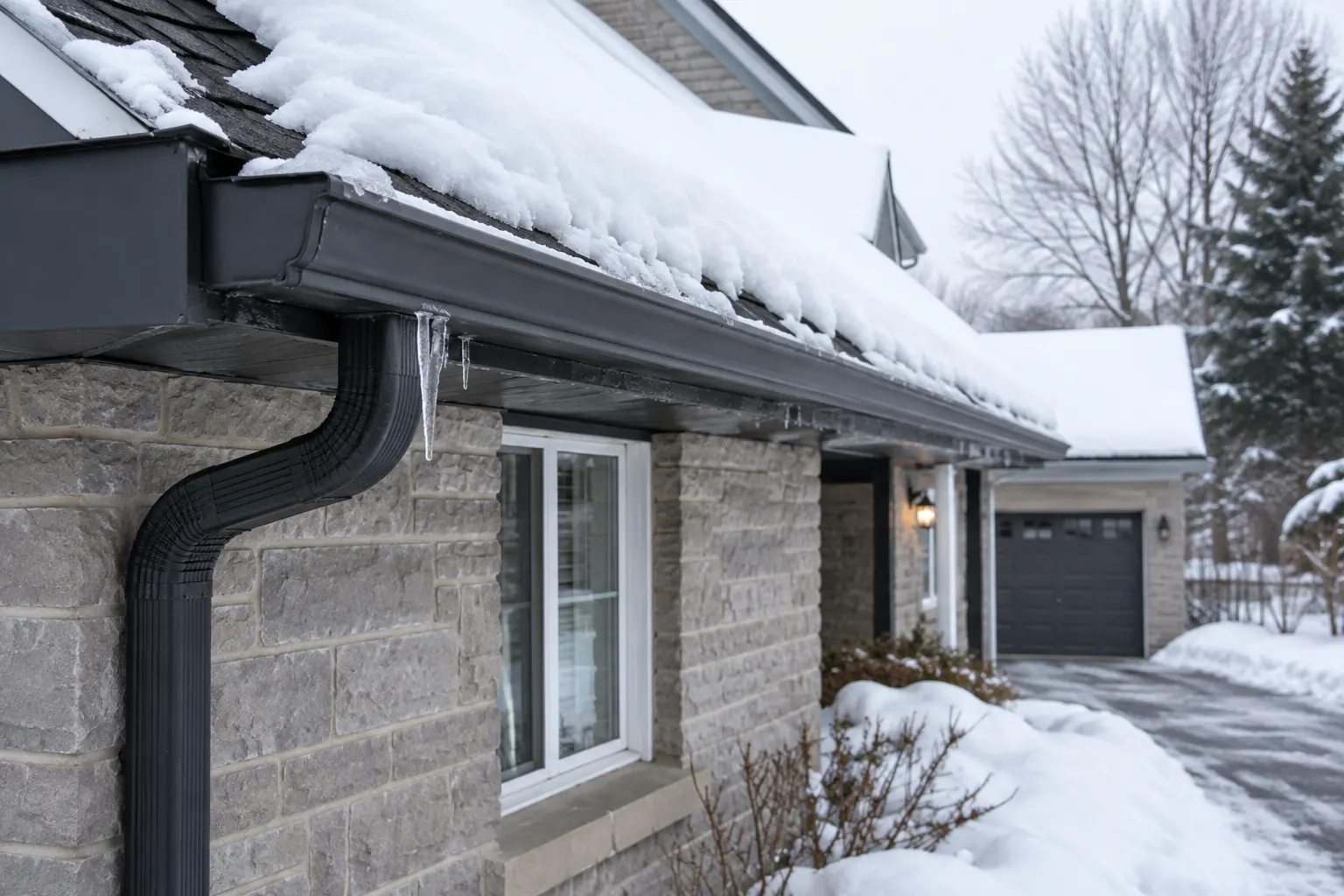
Why a working summer route can fail in winter
Snow covers the roof, gutter and ground discharge in different ways. Sun or warm air can melt snow while the outlet, downspout or extension remains cold enough to freeze. A channel that drains well during rain may back up when an elbow is blocked by ice. An extension that releases onto open lawn in summer may end in a snowbank or send meltwater across a frozen path in winter. The problem can change from collection at the roof to drainage at ground level.
Observe from a safe indoor or ground-level position. Where does meltwater appear first? Is it spilling over a short gutter run, emerging from a downspout joint, running behind fascia or freezing near an entrance? Record weather, sun exposure and timing. Do not stand beneath loaded ice, climb a frozen ladder or break ice from the roofline to get a closer look.
Snow load and attachment
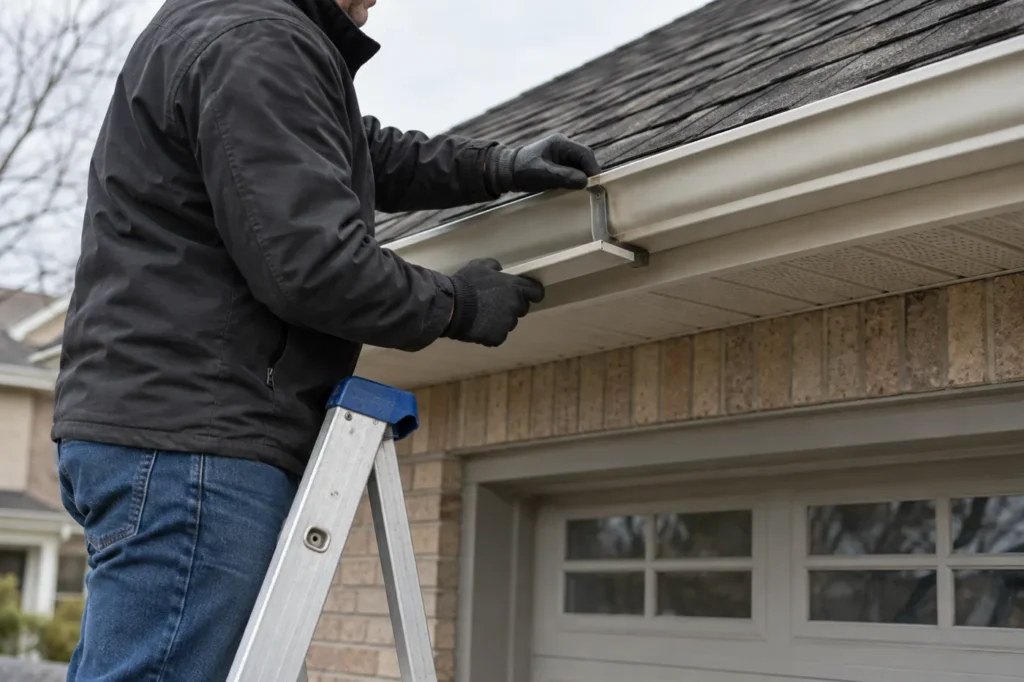
Accumulated snow and ice can add weight around roof edges. A gutter that already has loose hangers, standing water or unsuitable backing may move or sag. Check from the ground after a thaw for sections that no longer align with the fascia, joints that have opened and downspout straps that have pulled loose. A bent short section can sometimes be repaired, while widespread attachment problems require a broader assessment.
The fascia beneath a bright metal finish may need inspection. New fasteners require suitable material; aluminum capping cannot make deteriorated wood secure. If a gutter has pulled away repeatedly, ask what is happening at the attachment rather than simply reattaching the same metal in the same place.
Frozen outlets and downspouts
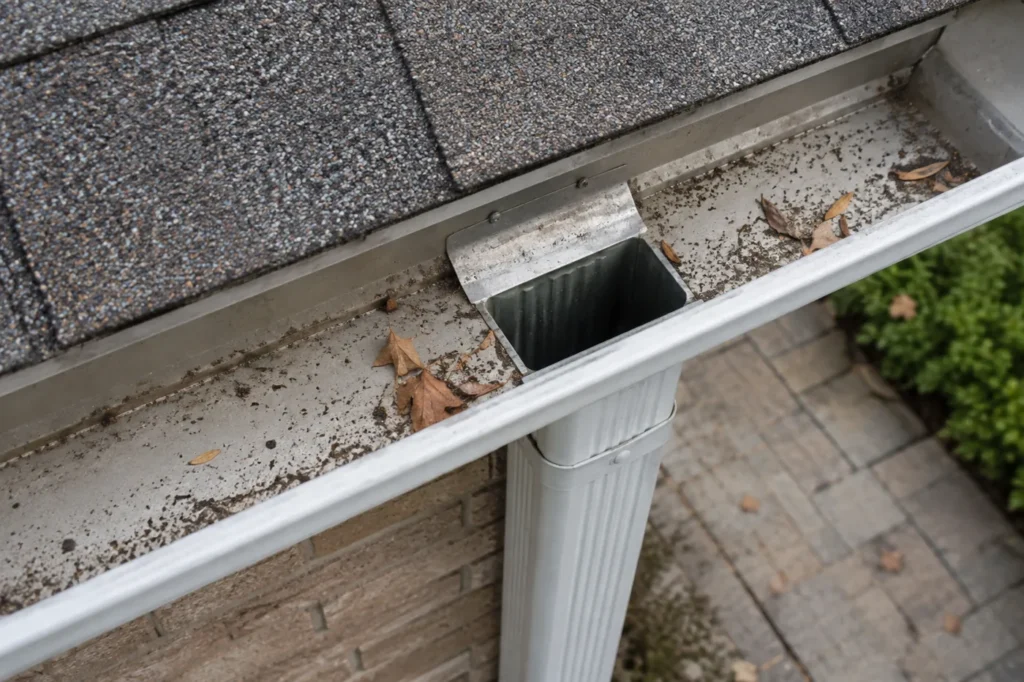
An outlet can ice over while the rest of the gutter looks open. A downspout elbow or ground-level section can freeze around packed debris. Meltwater then searches for another path, including over a gutter lip or through a loose joint. In warmer weather, the same system may work normally, so a rain-only inspection can miss the winter route. Note the positions of ice and water before the next thaw removes the evidence.
Do not heat an unknown enclosed pipe or strike it with a hard tool; that can damage aluminum, connections or nearby finishes. A recurring frozen outlet calls for review of debris, slope, downspout routing and discharge. If the downspout empties into a buried connection, its destination must be identified before changes are made.
Icicles are a symptom, not a diagnosis
Icicles hanging from a gutter can follow overflowing meltwater, but they can also relate to roof and building-envelope conditions. Heat loss, insulation, ventilation, sun, roof shape and weather may contribute to ice near the eaves. A photograph does not establish which mechanism dominates. Gutter work can address a blocked outlet, loose section or unsafe discharge; it should not be sold as a guaranteed roof ice-dam remediation service.
Look for associated evidence. Is a downspout frozen and water spilling from a specific point? Is water coming from a roof plane above the gutter? Are there interior stains? Is the problem only at a valley or across the entire edge? These details help decide whether gutter maintenance, roof evaluation or another building assessment is appropriate.
Ground discharge and pedestrian safety
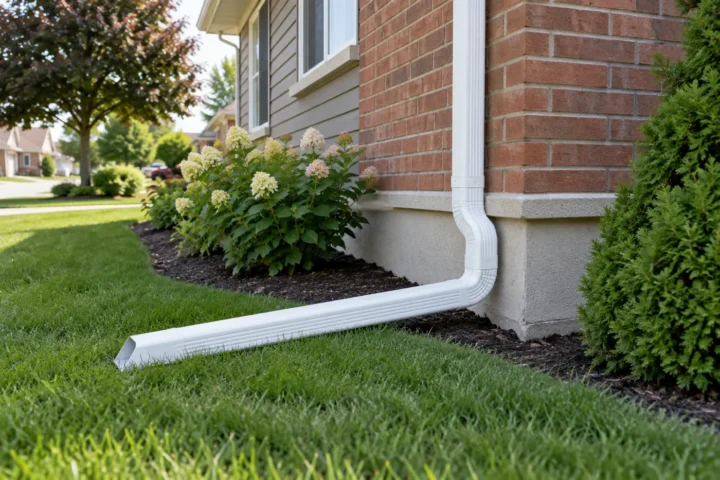
Winter meltwater released across a driveway, walkway, stairs or entrance can refreeze. A small extension change may keep water away from foot traffic, but the endpoint still needs suitable grade and respect for property boundaries. Moving a downspout beside a foundation is not a satisfactory trade. Downspout rerouting should consider the route during summer storms and winter thaws, not only a dry-day view.
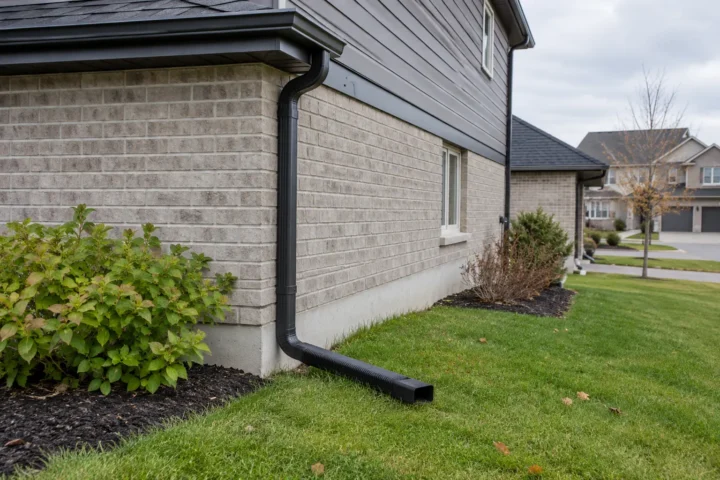
Extensions can be crushed by snow removal, disconnected during landscaping or buried by a snowbank. Check their position after plowing or a major snowfall from a safe location. A discharge route to a permeable area may be practical on one property and constrained by a narrow side yard on another. The final choice must fit the site.
Guards in snow and ice
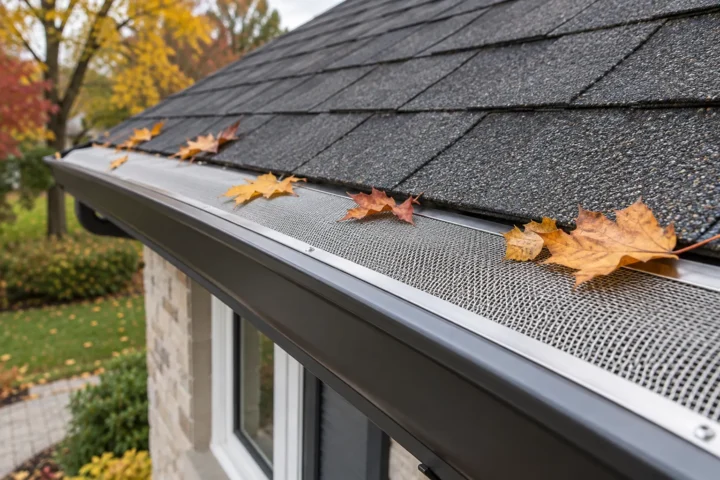
Gutter guards can reduce some debris entry but do not prevent snow, ice or surface accumulation. Snow can cover a mesh or screen, and meltwater may travel differently over a frozen surface. Fine debris left on the guard may make entry more difficult. If overflow begins after guard installation, inspect the guard's condition and fit along with outlet and downspout restrictions; do not assume the guard is the only cause.
Removal or modification should be based on the observed water path. If the channel beneath is sagging or the downspout is blocked, changing the guard alone may leave the main problem in place. Gutter guard guidance explains continuing inspection needs.
After-thaw inspection
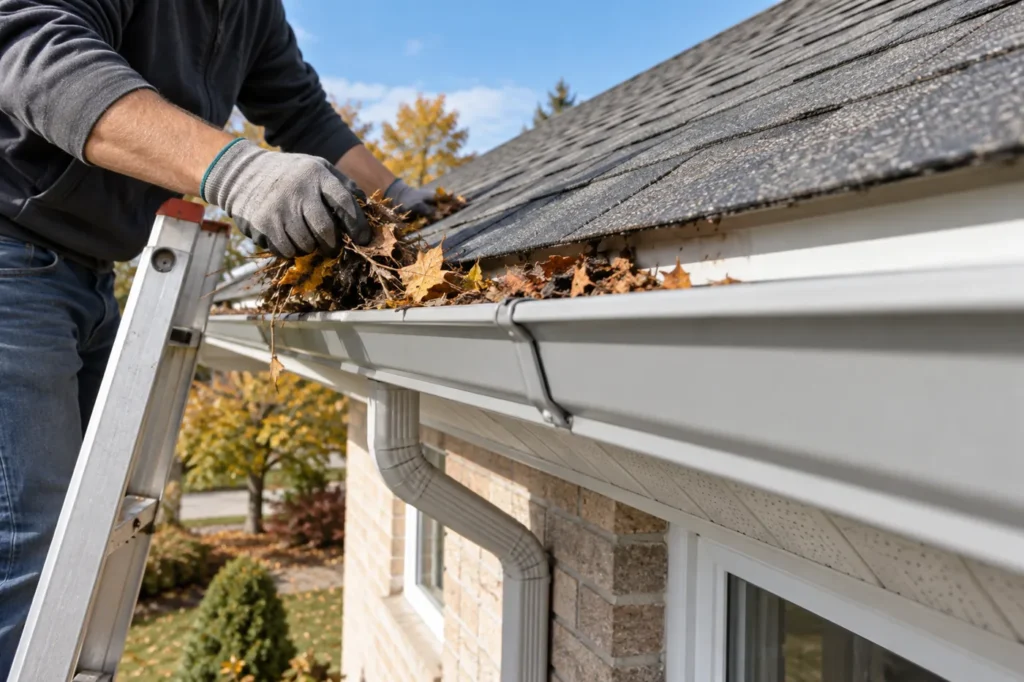
Once conditions are safe, look for distorted channels, separated corners, loose end caps, displaced downspouts and stained soffit or fascia. Check for debris that collected at outlets and whether the system drains during the next rain. Standing water in a section after the thaw suggests slope or restriction, while a disconnected ground extension can leave runoff near a basement wall.
Compare the winter evidence with earlier summer issues. One isolated frozen connection might call for maintenance or routing changes. Chronic overflow in all seasons may involve roof geometry, outlet placement and profile capacity. A replacement decision should follow the wider evidence rather than treating all winter ice as a need for new gutters.
Distinguish ground ice from roof-edge ice
Ice at the end of an extension can result from an otherwise functioning gutter sending daytime meltwater onto a cold hard surface. Ice hanging from the eave may involve a blocked outlet or conditions on the roof. These locations require different responses. Trace where the liquid water first appears rather than grouping all winter ice under one diagnosis. A ground endpoint may need rerouting even when the channel needs no replacement.
Repeated ice beside an entrance deserves attention to pedestrian safety. Mark the affected area and keep people clear while conditions are hazardous. When weather permits, photograph the full route from roof plane through downspout to ground. A winter observation paired with a spring rain check can separate a seasonal frozen restriction from a year-round slope or attachment problem.
Do not overlook snow removal effects
Shovelled or plowed snow can bury the end of an otherwise clear downspout. A ground extension can also be dislodged, crushed or aimed back toward the building. After conditions are safe, compare its position with earlier photographs and make sure meltwater still has a suitable route. Clearing a snowbank without checking where runoff then travels may simply move an icing issue to another surface.
What to include in a project request
Record the elevations affected, sun exposure, timing of daytime melt and overnight freezing, the first visible spill and where it freezes at ground level. Photograph the full roofline and downspout route without entering a hazardous area. Mention interior water separately. This supports a clear discussion of maintenance, repair, routing or replacement.
Roof runoff improvements can reduce water near a building, but they do not diagnose every source of basement water. The Milton drainage guide explains Town and Halton guidance, site conditions and when another drainage or foundation assessment may be needed.