A practical approach to roof water
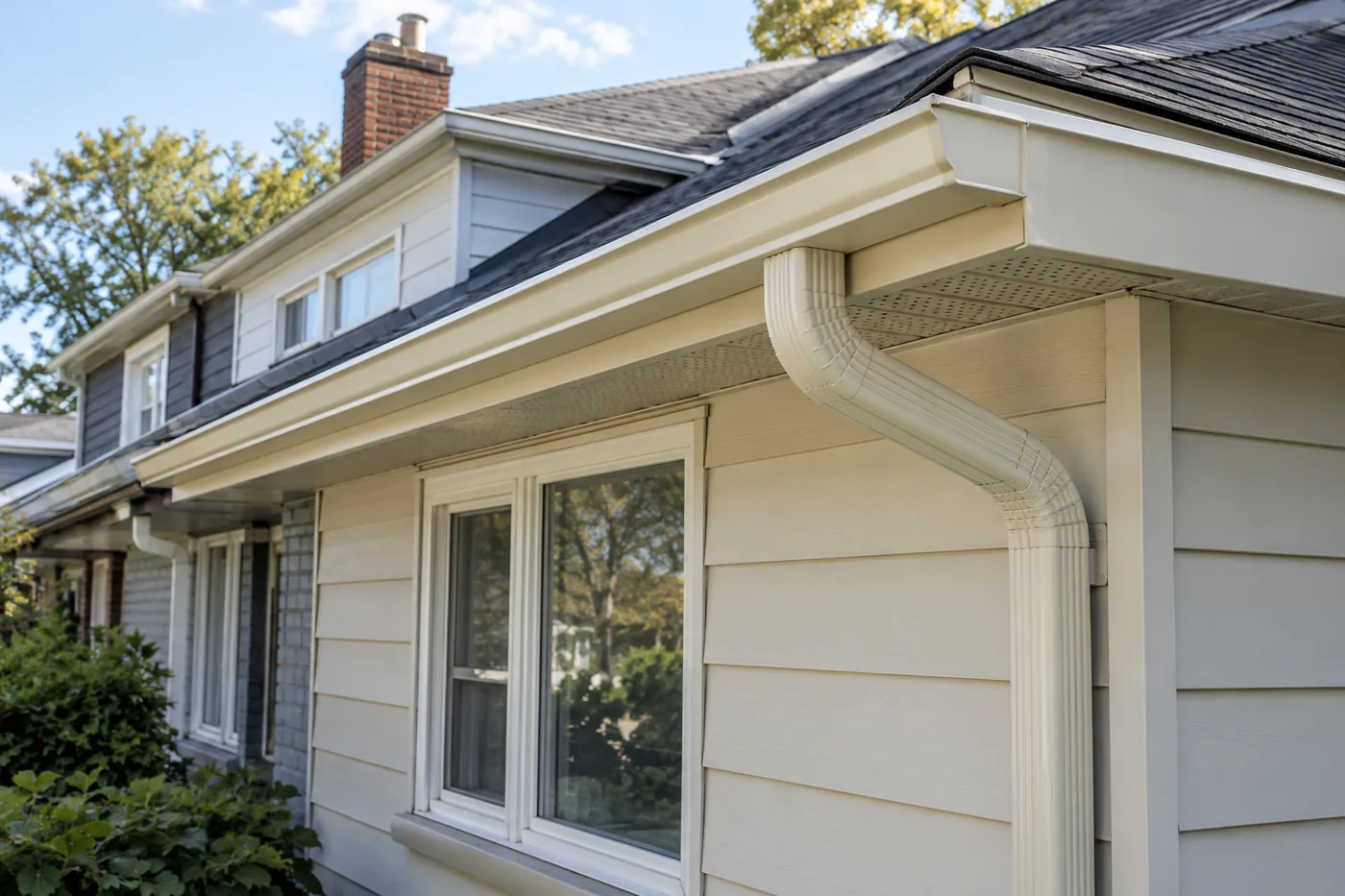
Milton Eavestroughs & Gutters focuses on the visible route roof water takes around a property. Rain leaves roof planes and valleys, enters eavestroughs, moves through outlets and downspouts, then reaches a final discharge area. A problem at any one point can make another component look defective. A clean gutter may still overflow at a restricted outlet; a newly replaced downspout may still empty too close to a basement wall. The service scope should follow the observed condition from roof edge to ground.
That approach applies to new installations, replacement, targeted repair and maintenance. It encourages a useful question before selecting a product: what part of the route is failing, and what will the proposed work change? The answer may be a corner repair, a reset run, a new outlet, downspout routing or a coordinated replacement. Not every visible symptom calls for a whole-house replacement.
Residential gutter and downspout work
Residential work can involve eavestrough installation and replacement, repair, seamless aluminum runs, outlets, downspouts, extensions and guard options. Each home presents different roof planes, valleys, garages, porches, additions and access conditions. A narrow side yard or busy entrance can make the discharge route as important as the gutter profile. The aim is to identify a workable arrangement for the specific property rather than apply one size or layout everywhere.
Seamless aluminum reduces joints along straight runs but retains corners, end caps and outlet connections. A larger profile can suit a higher-flow roof area when the downstream route supports it, but does not correct a blocked downspout or unsound fascia. The proposal should distinguish the material chosen from the reason it is suitable.
Repair before replacement when appropriate
An isolated corner, loose hanger, short damaged section or downspout connection may be repairable where adjacent material and support remain sound. Repeated leaks, extensive damage, broad sagging or an unsuitable layout can call for a larger scope. Both outcomes require understanding the cause. Sealing a moving joint without restoring attachment can repeat the problem; replacing sound runs because one end cap failed is not inherently useful.
Inspection of fascia matters because gutters depend on their attachment. An aluminum finish may conceal deteriorated backing. A new cap cannot make an unsuitable substrate secure. When support work is needed, it should be identified as its own part of the project rather than obscured within a gutter price.
Soffit, fascia and exterior finishing
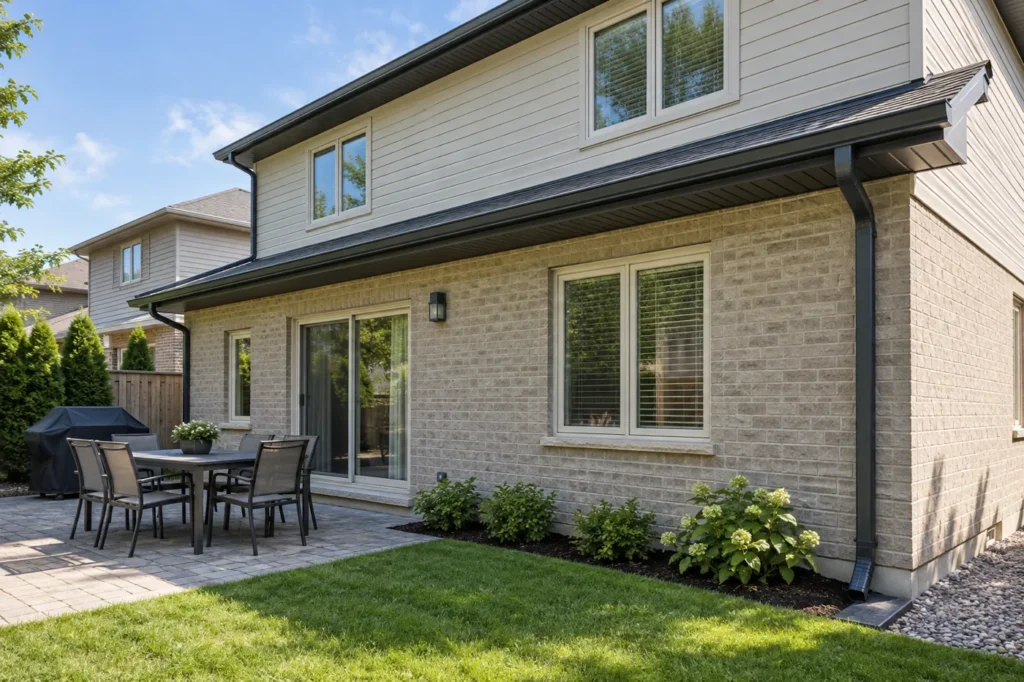
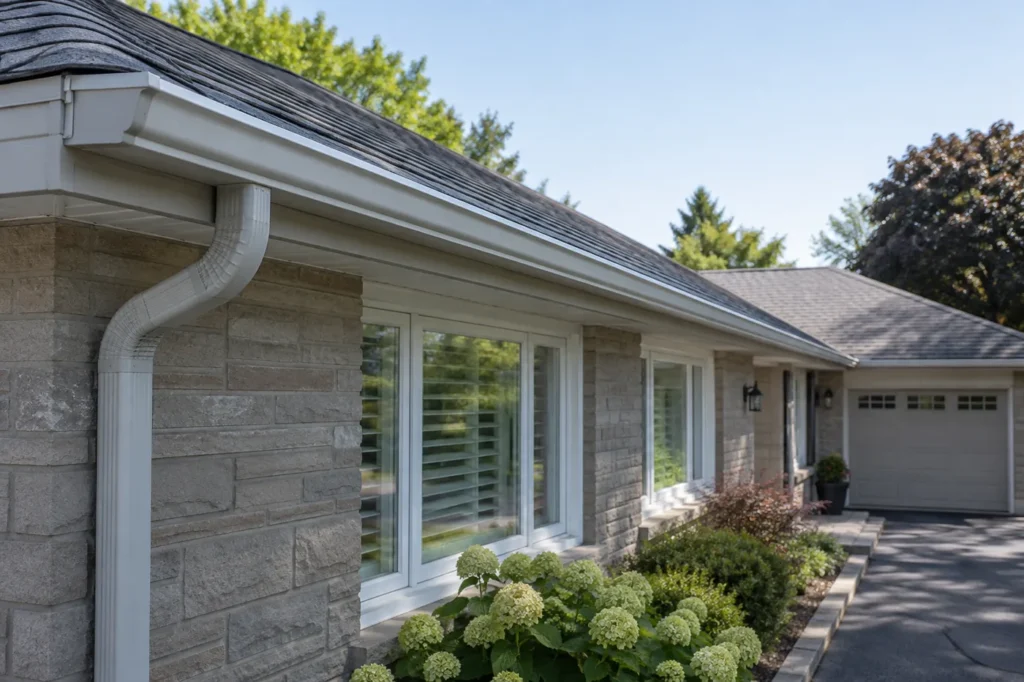
The roofline includes soffit under the eave and fascia at its outward edge, along with appropriate aluminum capping and targeted repairs. These elements contribute to the appearance and condition of the eaves and can interact with gutter attachment. Staining can be a clue to investigate, but it is not proof that the gutter caused the water. Material behind the visible finish and roof-edge details may need examination.
Vented soffit panels can be part of an attic intake arrangement, but installing panels alone does not diagnose or fix an entire ventilation system. Roof leaks, foundation conditions and specialized building-envelope concerns need their own appropriate assessment. Keeping service boundaries clear leads to a more accurate conversation about what roofline work can accomplish.
Commercial and managed properties
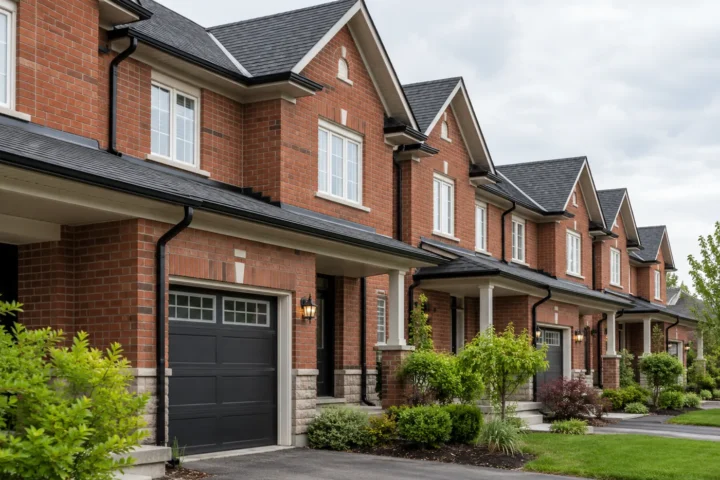
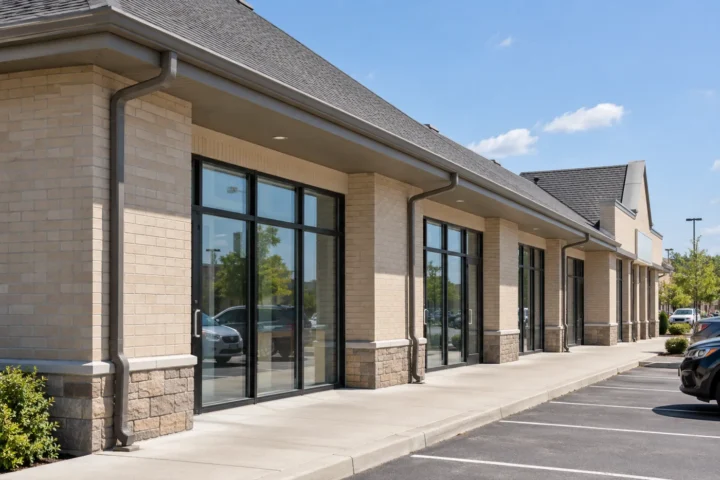
Low-rise commercial properties, plazas, offices, industrial units, townhouse complexes, condominium corporations and rental communities have different access and coordination needs from a single detached home. Long rooflines, multiple buildings, entrances, parking, loading areas and resident or tenant activity affect how work is scoped and scheduled. Commercial gutter services include installation, repair, downspouts, cleaning, roofline finishing and property-management needs where the exterior perimeter gutter system is in scope.
An internal flat-roof drainage system is a different specialty from visible perimeter eavestrough work. A request should describe the building and the actual component involved so a suitable scope can be determined. We do not assume that every water issue on a commercial roof is a gutter problem.
Milton drainage context
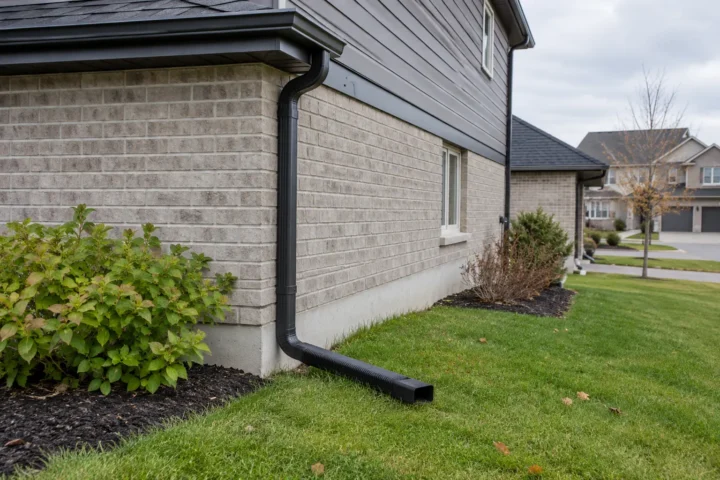
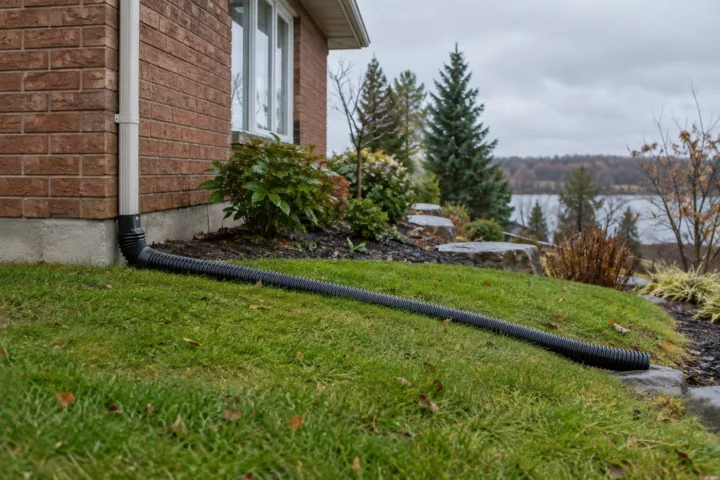
Local advice is relevant when a downspout endpoint is being planned. The Town of Milton flooding guidance recommends extending downspouts at least 2 metres (6 feet) from basement walls and grading away. Halton Region describes an ideal 3 metres from the foundation onto away-sloping ground. The wording differs, and neither figure substitutes for checking the actual grade, paths, driveway, winter ice and neighbouring land. The Milton drainage resource explains the full context.
Moving roof runoff away from a foundation can reduce one source of water near basement walls. It is not a guarantee against basement leakage. Interior water may involve grading, foundation, groundwater, window wells or sewer conditions and deserves a broader investigation where appropriate.
Decisions should be explainable
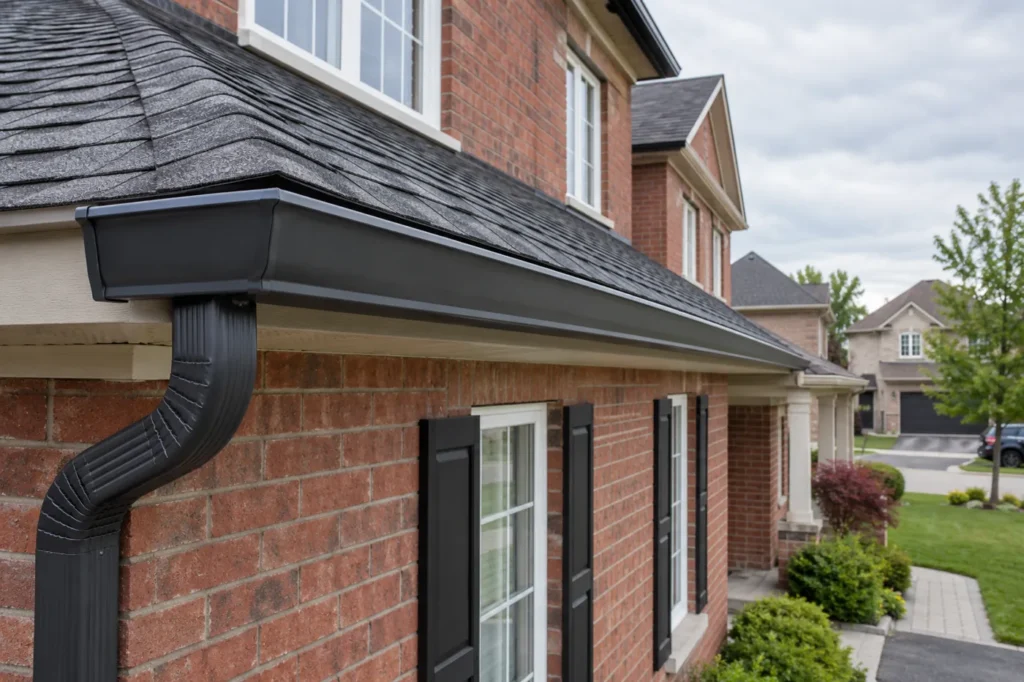
When a specific component is recommended, the reason should connect to what is visible on the property. A guard recommendation should respond to actual debris, not a generic promise. A larger profile should respond to roof catchment and flow after restrictions are checked. A repair should identify the failed joint or attachment and the condition of adjacent material. A replacement should explain why its broader scope is warranted and where the water will go afterward.
These distinctions also help owners plan maintenance. A system can perform as intended yet still need seasonal checks as trees, weather and landscaping change. The useful end result is a roofline whose water path can be followed and serviced, with service boundaries stated clearly.
What to document before requesting service
Photograph the affected roof edge and the whole elevation, along with each outlet, downspout and ground discharge. Note when the symptom occurs: ordinary rain, a heavy downpour, spring debris, autumn leaves or winter thaw. Explain whether water appears over a lip, behind the channel, through a joint, from an elbow or beside the foundation. Mention guards and previous repairs. A photograph of the destination can be more useful than another close-up of a gutter that looks clean.
For a replacement request, include the garage, porch and additions and identify difficult access around decks or landscaping. For a managed property, include building count and the elevations affected. This information helps distinguish immediate repairs from planned replacement or maintenance. Use the contact page to describe the condition and request a property-specific conversation.