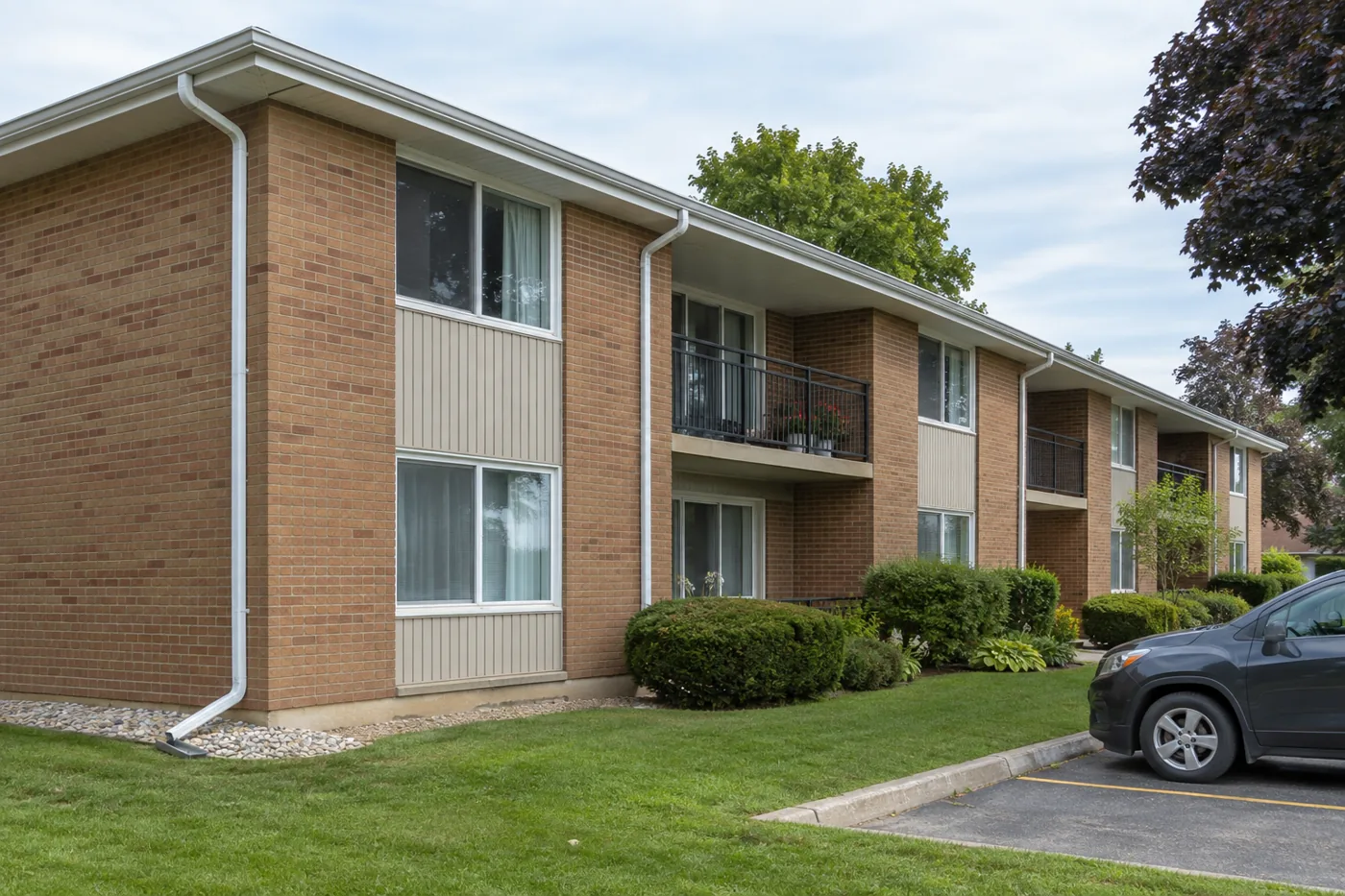
Serving Milton properties
Milton includes a range of rooflines, from detached houses and townhouses to bungalows, additions and low-rise commercial buildings. The right work depends on each building's roof planes, outlet arrangement, downspout routes and ground conditions. We focus on Milton rather than assigning a different generic solution to every neighbourhood.
A request can describe the property, affected elevations and whether the concern is new installation, repair, overflow, cleaning, guards, soffit, fascia or commercial maintenance. Photographs of the gutter and the final ground discharge help make the initial conversation specific. A property outside Milton can be described through the contact page so availability can be assessed without implying a fixed wider boundary.
Different rooflines across Milton
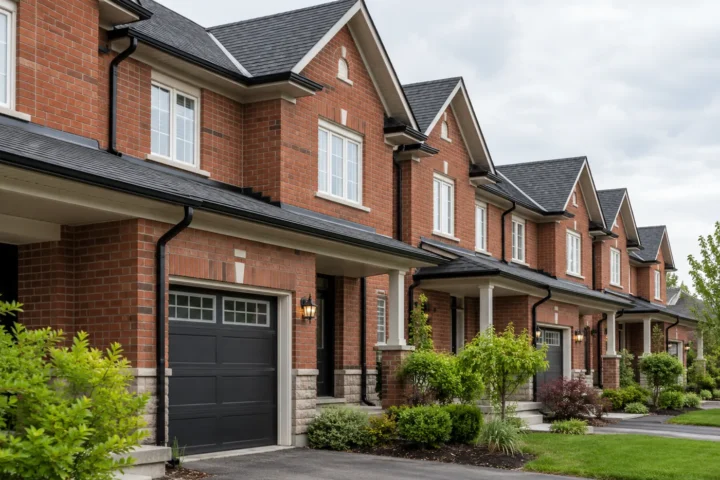
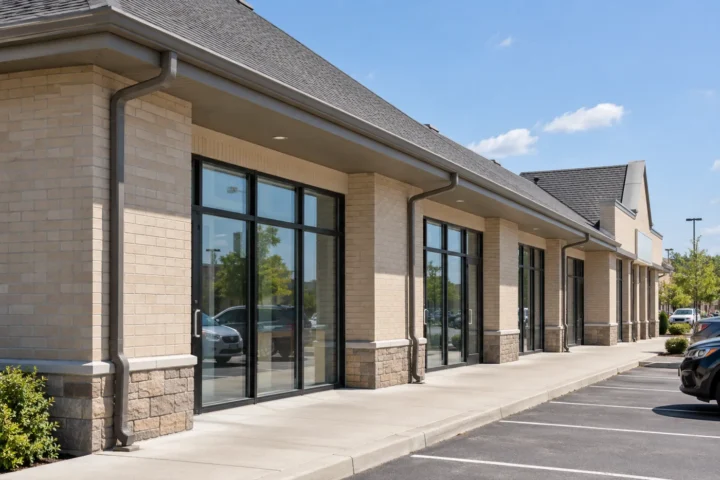
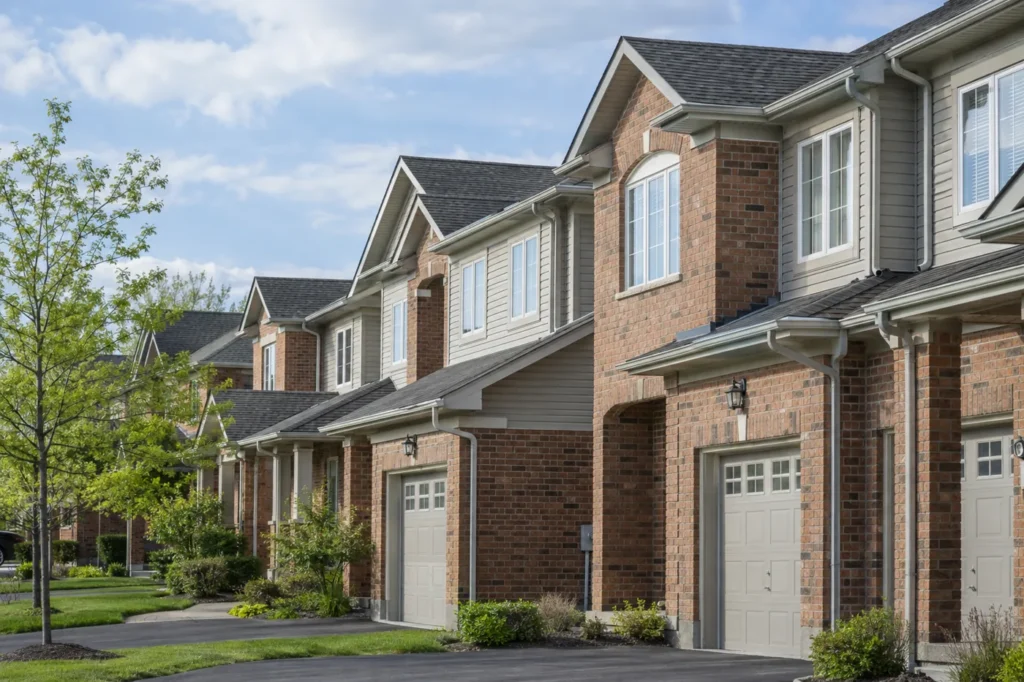
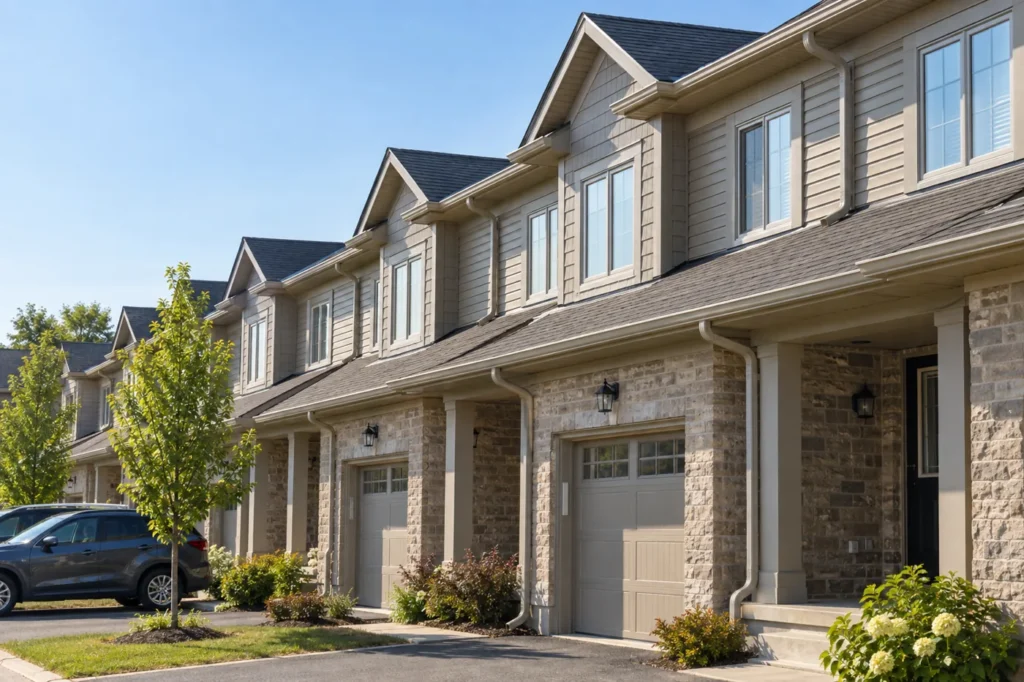
Detached homes may have broad roof planes, garage additions and several downspout routes. Townhouses can have narrow side or rear areas and shared pedestrian surfaces. Bungalows may have lower access but substantial roof catchment. A low-rise commercial building can combine long perimeter runs with entrances, parking and loading areas. These differences affect the number of outlets, access to the eaves, fascia support and where water can be discharged. No neighbourhood label on its own determines the right gutter profile or cleaning interval.
For a property with an addition or porch, show how its roof meets the original roofline. A short gutter may collect water from a much larger upper plane. For a managed site, identify the specific building and elevation and note whether residents or vehicles need access coordination. This helps define a real scope instead of treating every building as the same type of request.
Roofline and drainage conditions
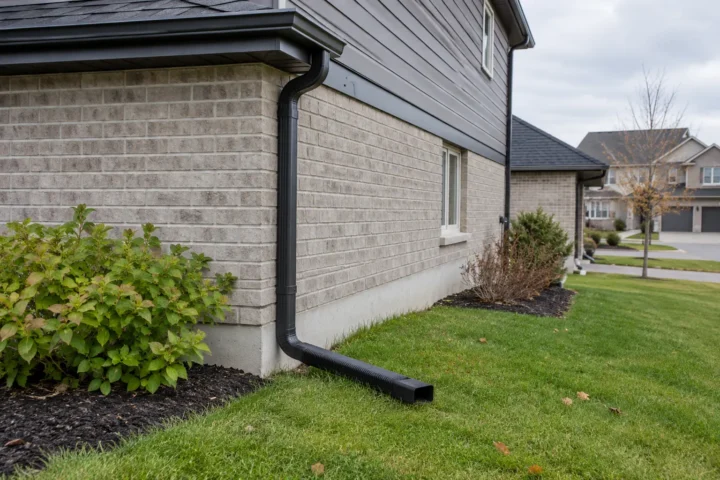
A corner leak may need a targeted repair, while repeated sagging along several runs warrants an attachment and support assessment. A downspout issue can involve an outlet at roof level, a damaged elbow, a vertical section or an unsuitable ground endpoint. The roof-water path should be traced before choosing a service. The residential services hub and commercial services hub provide the available scopes.
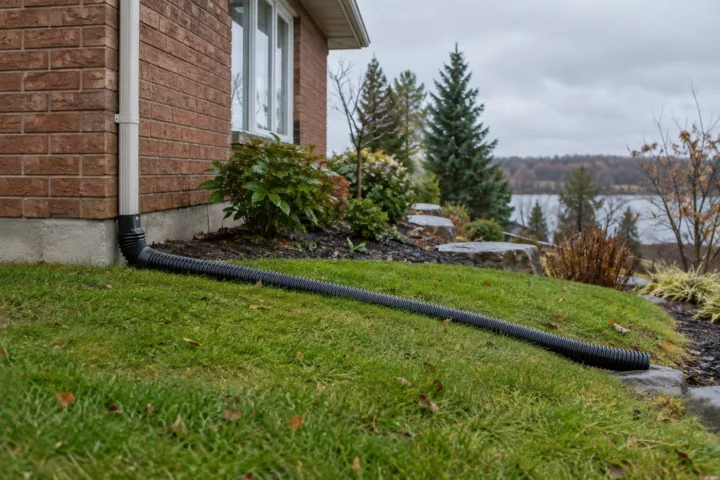
Milton's flooding guidance recommends extending downspouts away from basement walls. The site-specific route still has to account for grade, walkways, driveways, winter ice and adjacent land. Read the Milton drainage guide when the concern involves foundation-area water or moving a discharge point.
Details that make a Milton request useful
Explain whether water appears after ordinary rain, a short intense storm, autumn debris or winter thaw. Include the first visible spill point and the ground location where water collects. If the property has mature trees, gutter guards, a downspout entering underground or prior repairs, mention them. Photographs taken from a safe position can show roof geometry and the complete route better than a tight image of one wet corner.
If interior water is present, say so separately. Improving eavestroughs and downspouts can reduce roof runoff near a building, but foundation, grading, groundwater or sewer conditions may need their own investigation. A clear description helps identify what visible roofline work can address and what falls outside that scope.
Residential work within the service area
The residential scope includes a new or replacement eavestrough arrangement, localized gutter repairs, seamless aluminum runs, damaged or poorly routed downspouts, guards, cleaning, inspections and appropriate soffit, fascia or capping work. A leaking corner is different from water spilling along an entire elevation; a downspout disconnected at its elbow is different from an outlet that cannot pass concentrated roof flow. The first description helps decide which part of the system needs attention. It also prevents a property owner from assuming every water mark means full gutter replacement.
For a replacement request, identify whether the project includes the garage, porch, rear addition or a single side run. If matching older aluminum is important, note the current colour and which elevations are visible together. For a repair request, include how long the symptom has occurred and whether it followed a storm, impact or previous work. For cleaning, mention trees, existing guards and the last known blockage. These details make a service discussion more precise without requiring you to diagnose the cause yourself.
Commercial, condo and managed sites
Low-rise commercial and multi-residential rooflines can involve long runs, repeated building elevations and access conditions around entrances, parking, loading and resident activity. A property manager may need to separate an immediate leak from broader planned replacement or cleaning across multiple buildings. Identify the site, number of affected buildings and any access windows or areas that need protection. A request for a condominium corporation or rental community should specify who is authorized to discuss exterior changes.
Visible perimeter gutter and downspout work is distinct from specialized internal flat-roof drainage. If an issue is described only as a roof drain problem, photographs and building context are needed to determine the right scope. See commercial gutter services for the relevant categories without assuming that every commercial water complaint belongs to the eavestrough system.
Seasonal observations in Milton
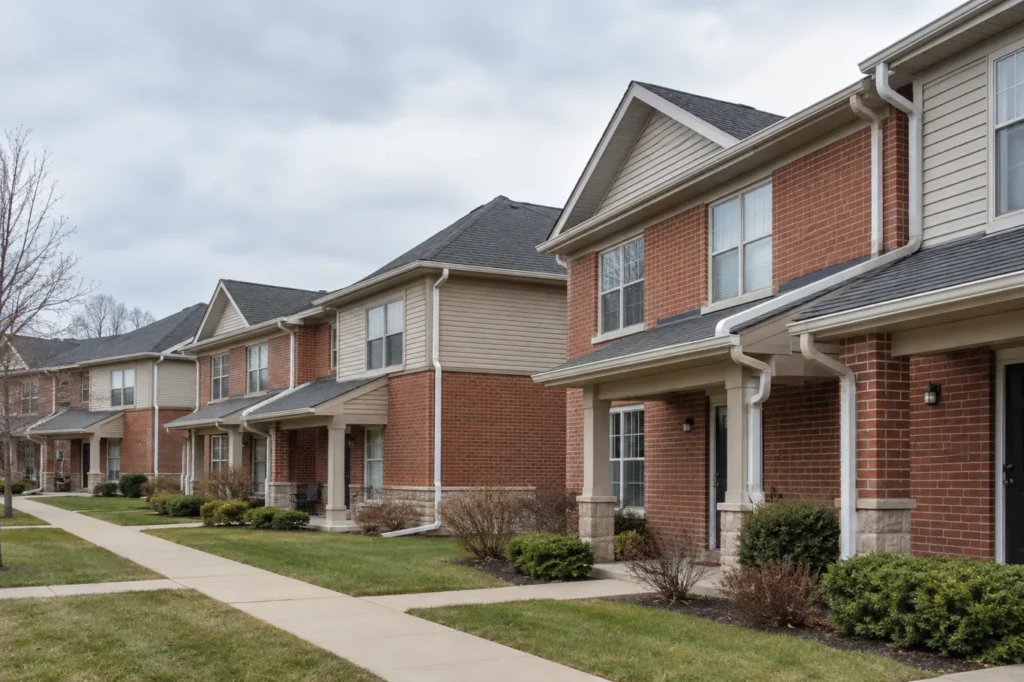
Spring seeds and blossoms, summer storms, autumn leaves and winter freeze-thaw conditions expose different weak points. A system that appears fine in light rain can overflow when a valley delivers a concentrated stream. Debris can bridge an outlet while most of the gutter looks clear. Meltwater can refreeze at a ground extension and create an icy path. Describe the season and the first failure point rather than simply reporting that the gutters are bad.
There is no universal cleaning calendar. A roof under mature trees may require attention during more than one shedding period; a roof with little vegetation can still accumulate grit near an outlet. An inspection should consider joints, hangers, slope symptoms, guards, downspouts, fascia condition and final discharge. The seasonal maintenance guide helps organize observations that are useful for a property-specific plan.
The limits of roof-edge service
Eavestrough and downspout improvements manage roof runoff. They can move one source of water away from basement walls, but they cannot guarantee a dry basement or diagnose all water entry. If a downspout is believed to connect underground, its destination should be identified before it is cut or redirected. Work that changes grading or drainage patterns may need separate municipal review. Conditions involving interior foundation, groundwater or sewer systems call for the appropriate assessment beyond visible roof-edge components.
For a first conversation, focus on what you can observe safely. A property sketch showing roof valleys, affected runs and ground endpoints can be useful, but photographs and a short description are enough to begin. Do not climb, handle a frozen roof edge or enter a hazardous area to prepare a request. The Contact page provides the request form and current contact details.