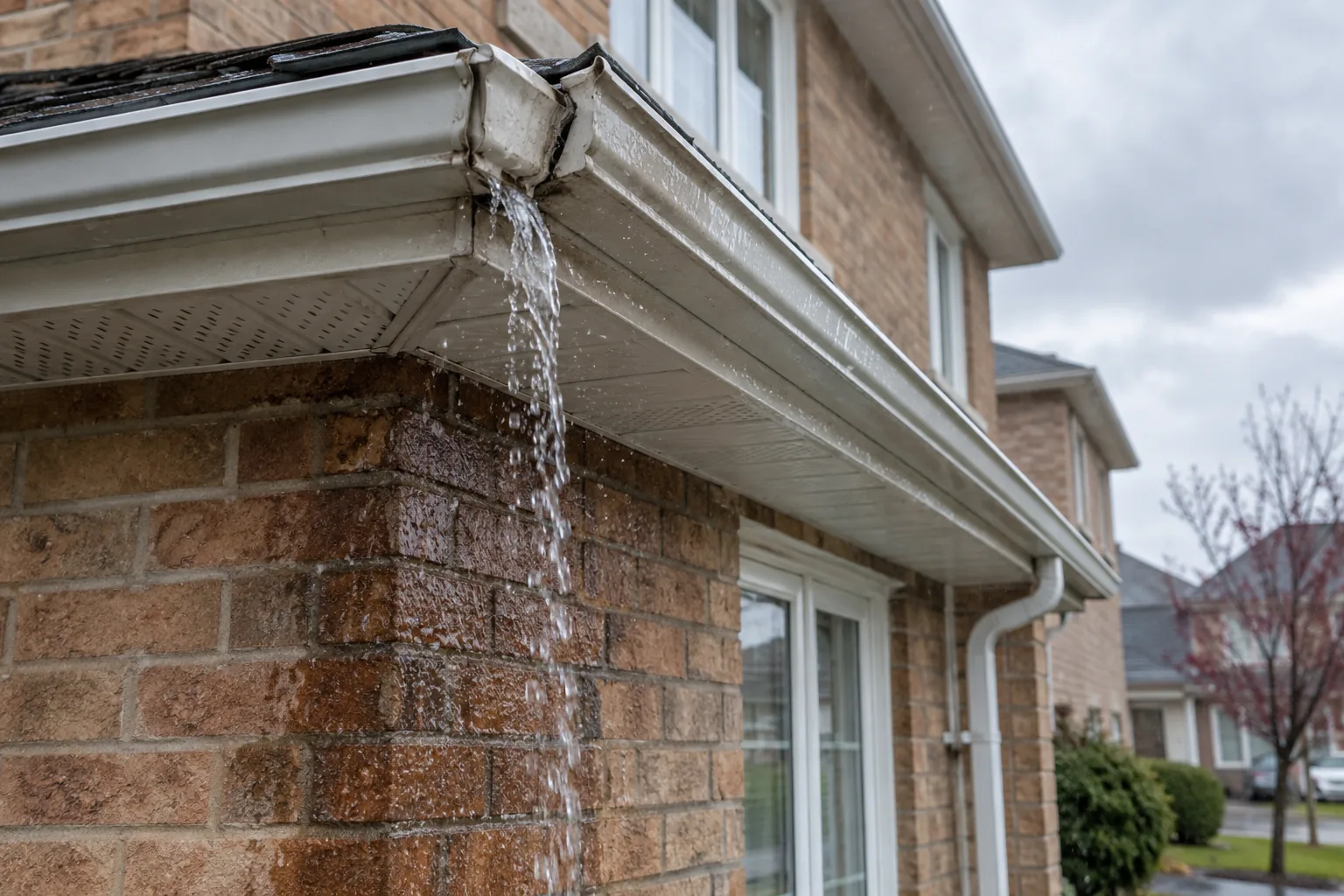
Start by locating the leak during rain
A leak is a specific escape of water through or around part of the eavestrough assembly. A drip from the underside of a mitred corner differs from a sheet of water spilling over the front lip. Watch safely from the ground during steady rain and note whether water appears at a joint, at the back edge, at an outlet, or at several points along the run. A short video can preserve the observation when conditions are dry at the time of assessment.
The amount of rain matters. A corner that drips in a light shower may have a failed joint. Water that only pours over the lip during a cloudburst can be an overflow condition instead, caused by a restricted outlet, debris, slope, valley concentration or insufficient route downstream. A gutter can both leak at a seam and overflow farther along; each observation deserves its own explanation.
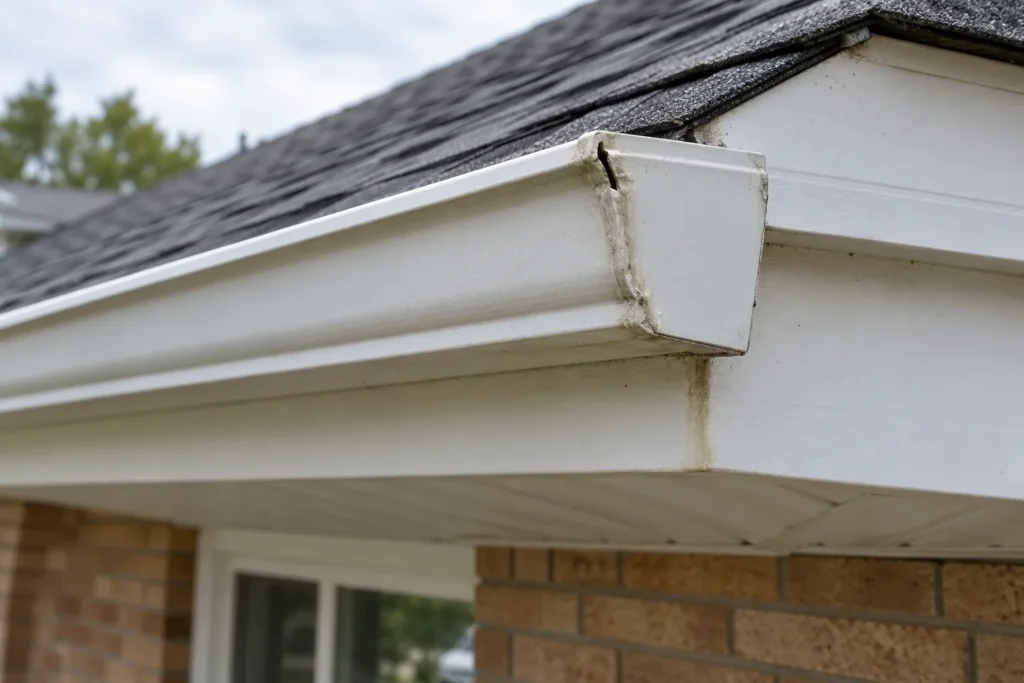
Corners, joints and end caps
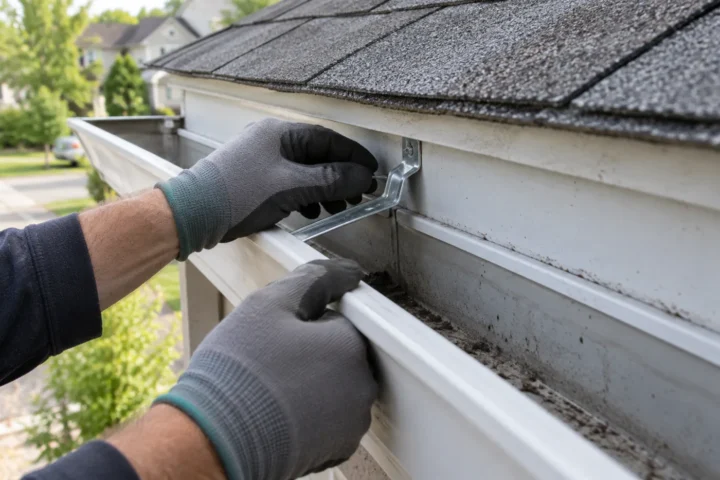
Corners change the direction of the water channel and have connections that can age, shift or open. Sealant can deteriorate, metal can flex, and fasteners may lose their hold. A visible drip at the corner should prompt a look at the corner geometry and adjacent attachment as well as the seal. Reapplying sealant over debris or a moving joint can leave the underlying cause in place.
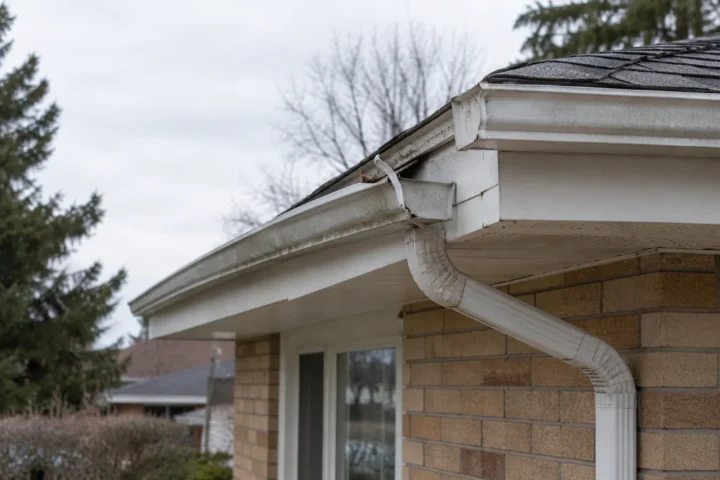
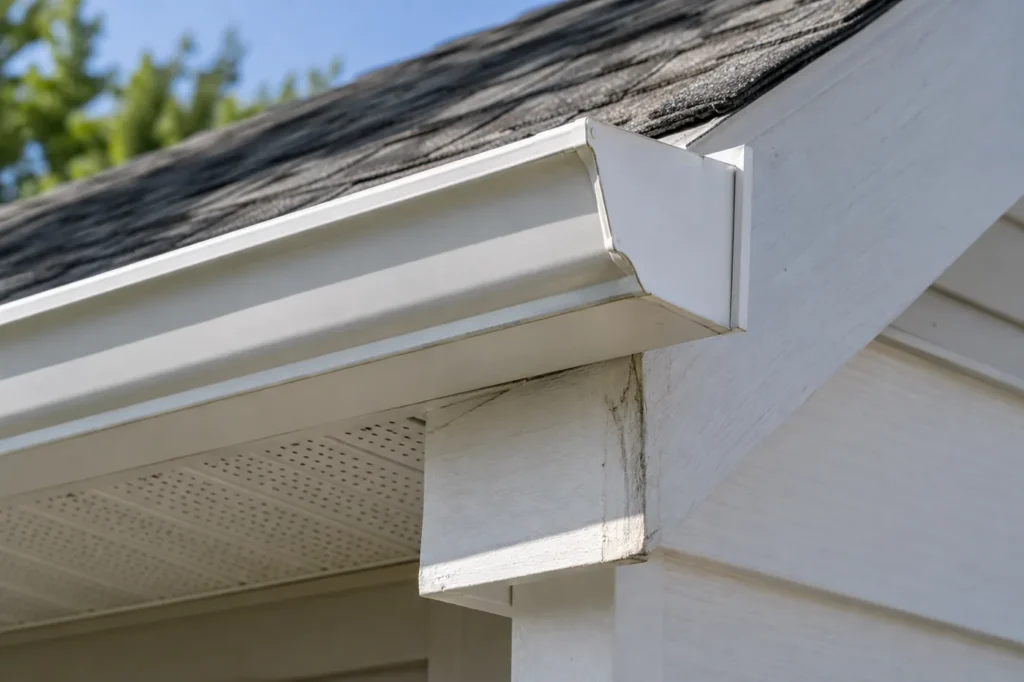
A straight run may have a splice where two pieces meet, while a field-formed seamless run generally still has corners, outlets and end caps. “Seamless” does not mean there are no possible leak points. End caps can loosen or separate from the gutter profile. The location of staining beneath an end cap may identify the source, but wind can carry droplets and make the source appear slightly away from the actual opening.
Physical damage and movement
Ladders, falling branches, ice, snow, impact from maintenance equipment, and ordinary movement at attached sections can distort metal or open a connection. A dent at the front may be cosmetic; a deformation near the bottom of the channel, outlet or hanger can affect water flow and sealing. Look for a short damaged segment versus similar problems throughout the roofline.
A loose gutter may move against the fascia when loaded with water. If the leaking joint is opening because a run is sagging or fasteners are no longer secure in sound supporting material, sealing the seam alone is unlikely to be durable. The attachment and fascia need to be evaluated together. Aluminum wrap must not be assumed to repair weakened wood beneath it.
Check the whole roof-water route
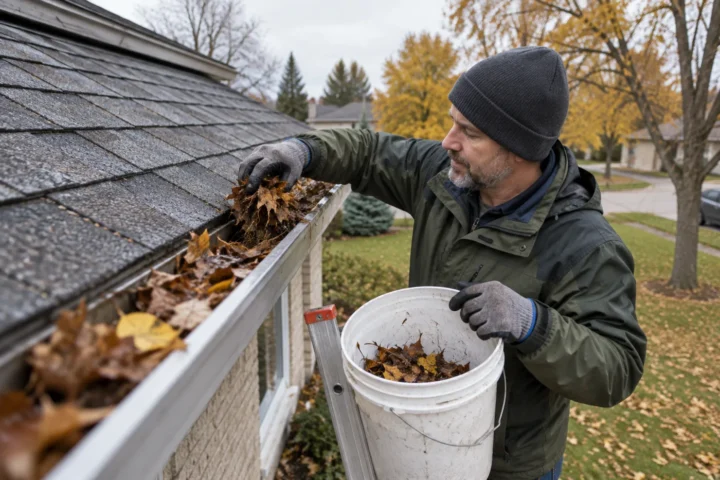
Water enters the gutter from the roof, follows its slope to an outlet, continues through the downspout and reaches a final discharge area. A clogged outlet can back water up until it spills over a corner that happens to be nearby. A blocked downspout can create a similar symptom. Distinguishing a failed seal from backup prevents an unnecessary repair that still leaves runoff against the house.
At a roof valley, concentrated flow can shoot past a channel or briefly over its front edge. At the back of a gutter, water may be arriving from an issue at the roof edge or drip-edge relationship. The water-behind-the-gutter guide explains why roof-related possibilities must be separated from a gutter seam failure. No single drip location proves the entire system is defective.
When a localized repair is reasonable
A targeted repair can be appropriate when the gutter is otherwise sound, attached securely, draining toward a functioning outlet and affected at one identifiable joint, end cap, hanger or short run. The work might involve cleaning and resealing a connection, restoring attachment, adjusting a section, or replacing an isolated damaged part. The exact scope depends on access, material condition, profile compatibility and what a close inspection reveals.
A repaired seam still operates within the rest of the system. If a downspout restriction or negative slope remains, water may continue to collect or escape elsewhere. It is useful to inspect the affected corner and the outlet during the same visit, especially when the complaint began after rain with debris or after a seasonal freeze and thaw.
When replacement deserves consideration
Multiple failing joints, widespread deformation, extensive loose attachment, recurring leaks after prior repairs, or a layout that repeatedly concentrates water where the run cannot drain are different from one leaking end cap. A replacement discussion should cover the overall condition, roof geometry, gutter profile, hangers, outlet locations, downspout routes and discharge point, rather than describing the new gutter alone.
Replacement may be limited to a run or elevation; it does not automatically require every side of the home. The repair versus replacement guide compares those choices. If the fascia or roof edge is deteriorated, that supporting condition needs a distinct scope before a newly installed gutter can perform as intended.
What to document for a Milton estimate
Describe the precise point where water emerges, the type of rain when it happens and whether the gutter is overflowing at the same time. A ground-level photo of the full run and a second photo of staining, a loose joint or the discharge area are more useful than a close-up with no context. Mention the approximate storey height and safe access conditions.
Milton properties can differ in roof geometry, tree cover, lot grading and where downspouts can discharge. If a leak sends water close to a basement wall, consider the route at ground level too. The Milton drainage guide explains how roof runoff and surface drainage relate, while keeping separate basement-water causes in view.
Compare an active leak with old staining
A dark line beneath a gutter may remain after a prior repair, particularly on porous masonry or weathered trim. Ask whether fresh water appears at that exact point during a current rain. A new drip may also travel along the underside of metal before falling some distance from the failed connection. Observing the beginning of flow helps separate an active leak from a historical mark and prevents a repair being specified for the wrong joint.
If interior water appears at the same time, record its location and whether outside runoff is visibly directed there. The correlation is useful but does not prove the entry mechanism. The roof edge, wall, grade and foundation may each need different assessments. Keeping those observations distinct makes the eavestrough scope honest and useful.
Questions to ask about the proposed repair
Ask which joint or component failed, whether it moved because of attachment, and whether the outlet and downspout remain clear. For a replacement recommendation, ask which runs actually need renewal and why a localized correction would be unsuitable. A useful description includes the metal condition, support, slope and discharge route instead of relying on age alone.
After work, observe the area again during rainfall if safe. The repaired point should no longer drip, and water should continue through the outlet and downspout. A dry weather seal that has not been seen under flow cannot by itself demonstrate that a downstream blockage or separate overflow was resolved.
Follow the result through the next rain
Once the joint or section is addressed, the relevant test is how it handles real runoff. Water should pass the formerly leaking point and reach the outlet without a new spill at another location. A corner that stays dry in a light shower might still reveal an adjacent overflow during a more intense storm. Keeping the old observation and a new photograph makes it easier to distinguish a remaining symptom from a new one.
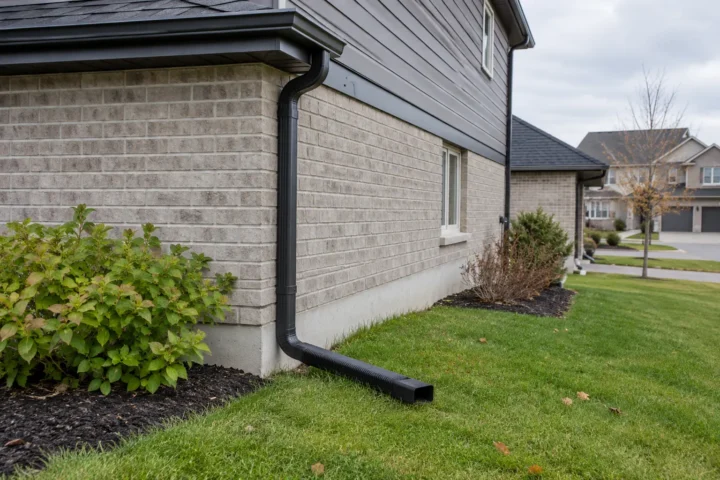
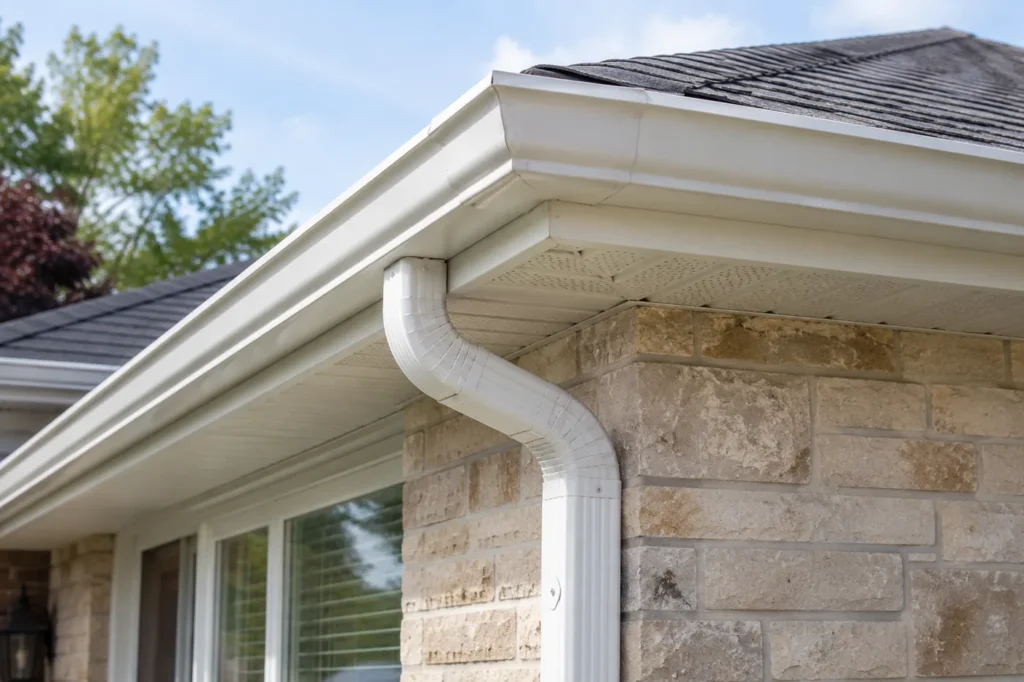
Where a repaired gutter feeds a downspout beside a wall, review the extension too. Sealing the channel changes where the water travels: instead of dripping from the joint, it now reaches the ground outlet. That destination should be appropriate for the site. If water appears inside the building despite a dry gutter, the entry path requires separate investigation rather than repeated work on a connection that is performing correctly.