Recognize the pattern of the sag
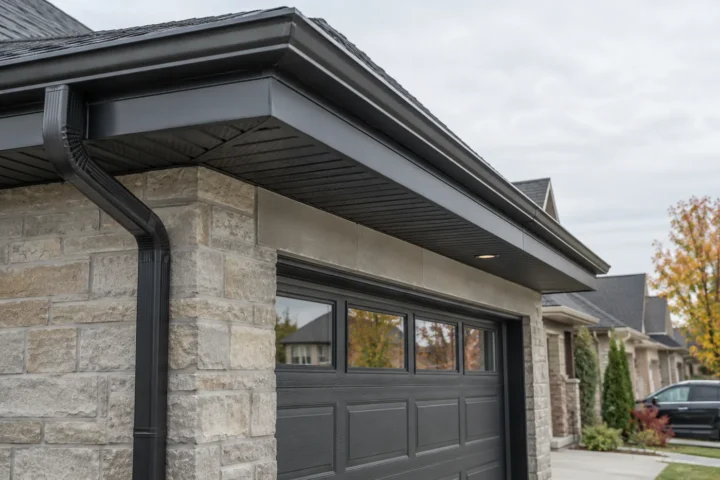
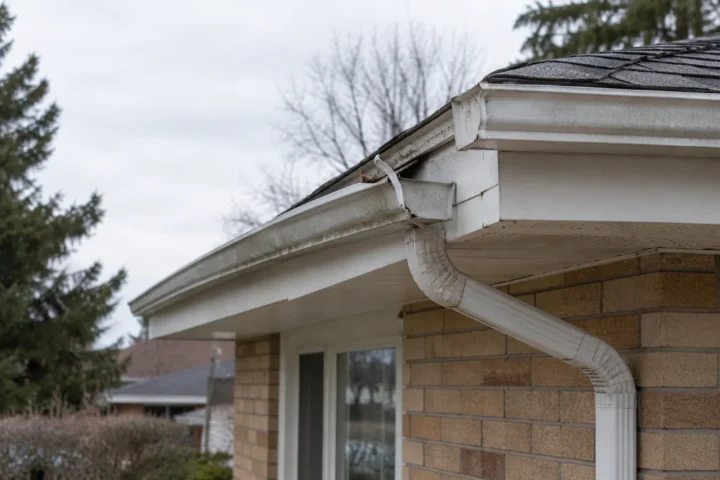
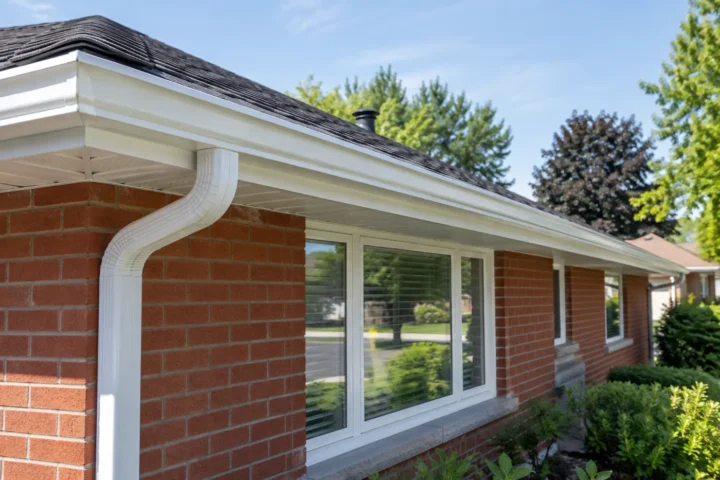
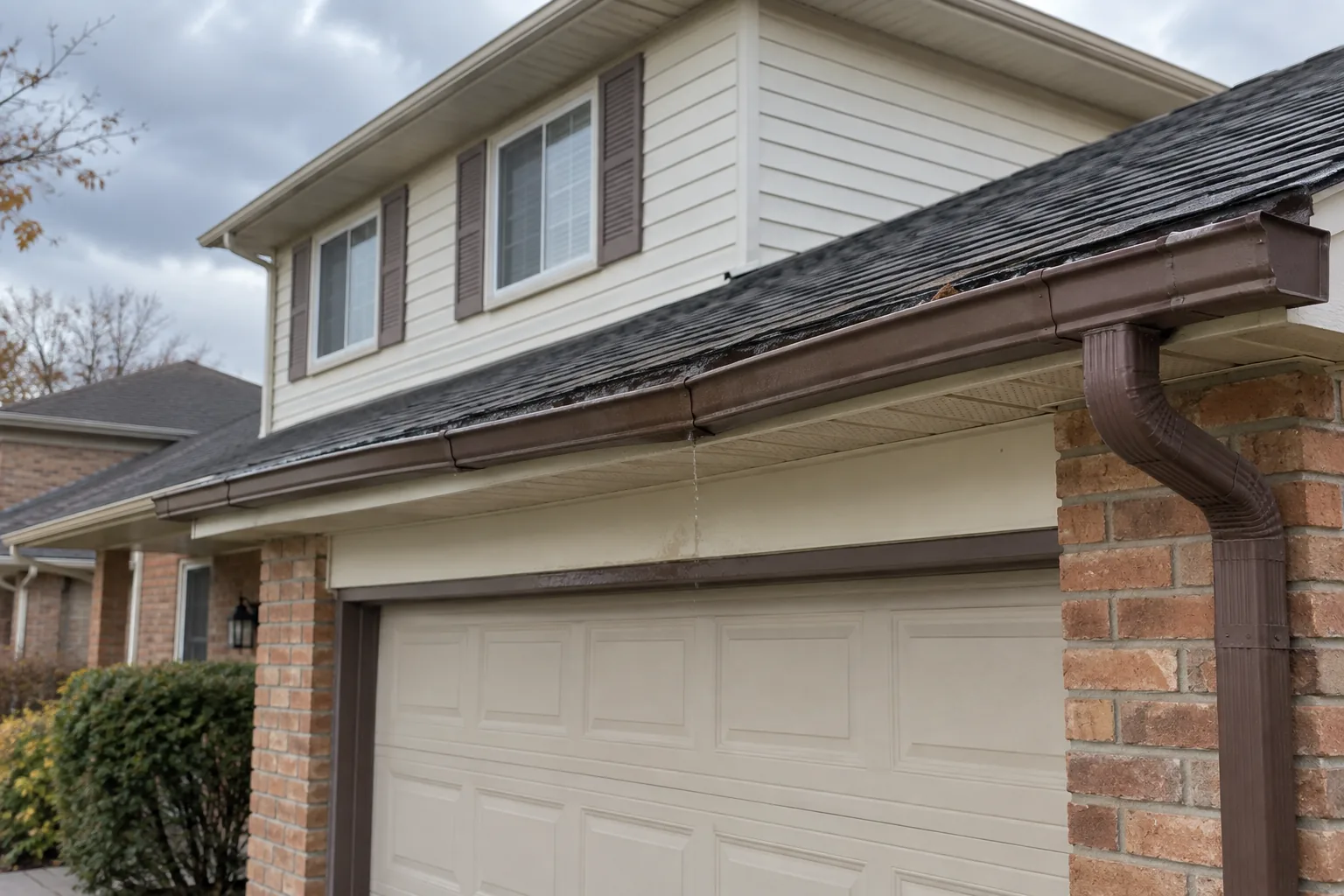
Stand back and follow the gutter line across the roof edge rather than judging a single close-up. A shallow dip in one short section has different implications from a long run that bows between multiple hangers. Note whether the front lip is also tilted outward, whether the gutter has separated from the fascia, and whether a corner or outlet has shifted. Photographs taken level with a window or roofline can help show the pattern.
A run does not need to be perfectly visually horizontal to work. It needs a planned route toward its outlets. A visible low pocket with standing water after the rest of the system has drained is more informative than appearance alone. Compare the symptom after rain, when water weight reveals movement, with a dry day when the channel may spring closer to its original position.
Hangers and attachment are one part of the diagnosis
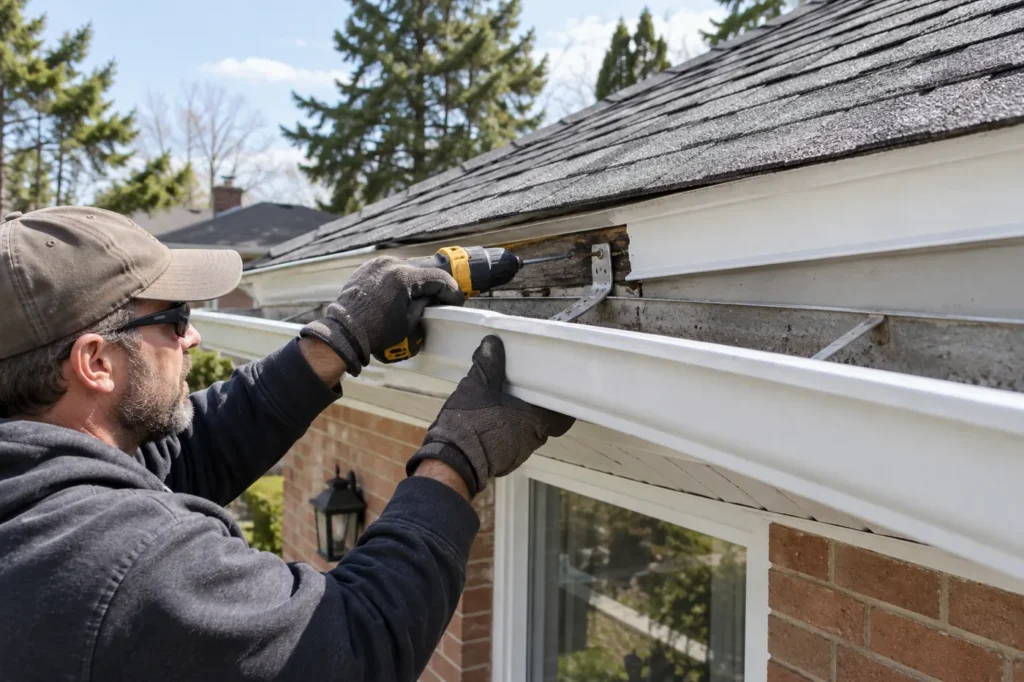
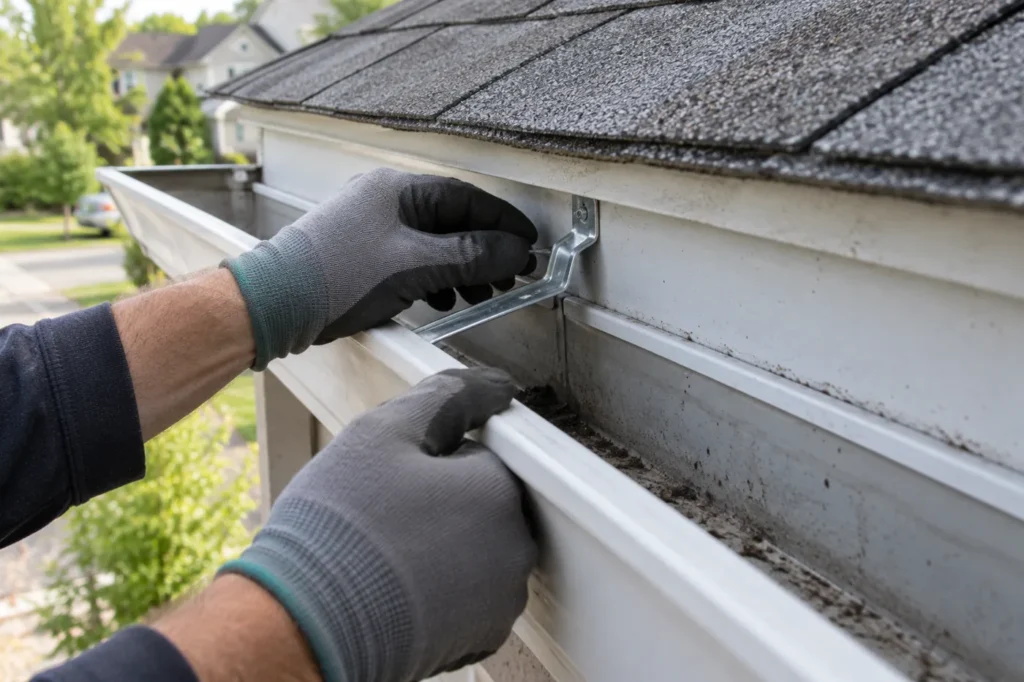
Hangers transfer the loaded gutter to the supporting roof-edge structure. A missing, loose or poorly positioned hanger can allow the channel to bow. Fasteners may no longer hold if the material behind the fascia finish is unsound. A short attachment failure might be repairable, but additional fasteners placed into deteriorated wood are not a reliable solution.
Inspect the relationship between the gutter and fascia. Aluminum fascia is a finish over a supporting assembly, not proof that the material beneath can hold the gutter. Staining, softness, movement and repeated fastener pullout may call for opening up or repairing the support. The fascia replacement page explains why a new metal face alone does not resolve structural deterioration.
Standing water can be cause and consequence
A low section retains water; retained water adds weight and can deepen the sag. Debris settles in the same place and can partially block the path to the outlet. This feedback loop is why a gutter should be checked for both attachment and drainage. Cleaning may reduce load, but cleaning alone will not restore a permanently deformed channel or correct a failing support.
An outlet positioned above the effective low point can leave water behind even if the rest of the run is clear. Misaligned slopes, long distances to a single outlet and later additions to a roofline can contribute. The standing-water guide helps distinguish a persistent pocket from a small amount of residual moisture after a storm.
Roof geometry, concentrated flow and winter loading
A valley can deliver more runoff to one area than a uniform roof edge does. If water arrives quickly at a sagging section, it may spill over the lip even though the outlet and downspout are open. The roof area, slope, valley and outlet position should be considered together. Installing a larger profile without correcting a low spot may leave the basic route broken.
Ice, snow and freeze-thaw cycles can add load or reveal an existing weak attachment. From the ground, record when the sag first appeared and whether it changes during winter. Do not climb a ladder or work near an icy roof edge to test it. A gutter contractor may address the gutter and its attachments; roof-level ice or roofing defects can require a separately qualified assessment.
Repairing a localized sag
Where one short run is sound but has lost its intended position, an assessment may support correcting hangers, fastening to sound substrate, restoring the slope and repairing a localized connection or outlet. It should also check that water travels through the downspout to a suitable discharge area. The end result is a functioning route, rather than a gutter that merely looks straighter.
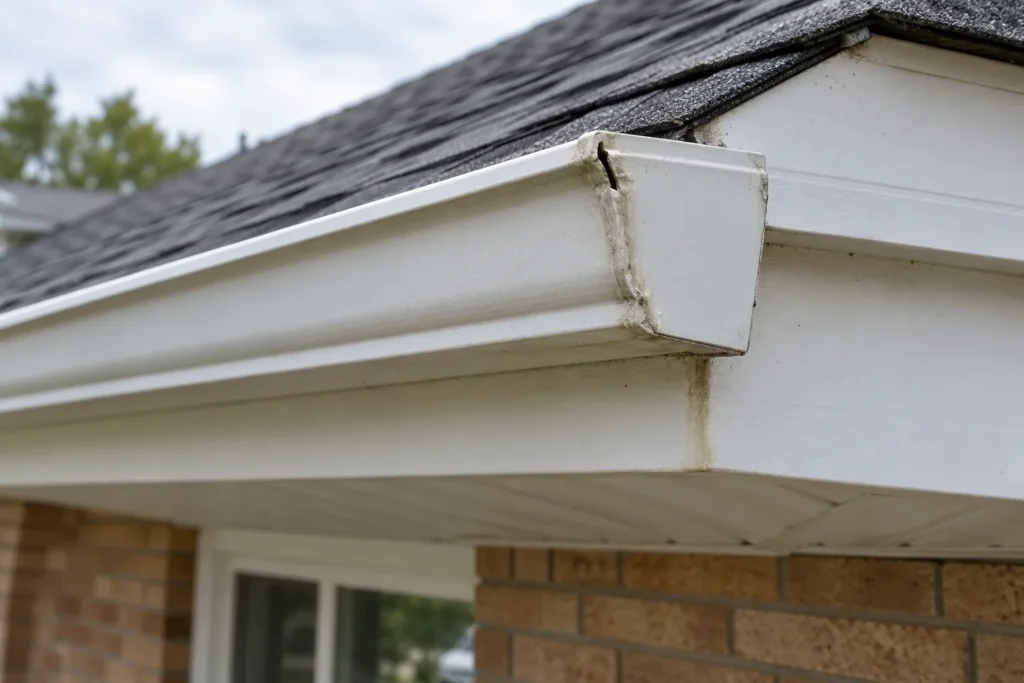
If the metal has creased or the profile is distorted, simply lifting it may not restore its shape. The affected section might need replacement. Repair should account for the colour/profile match and for any corners or outlets that would move when the run is reset. Where a gutter is actively separating, keep people away from the area beneath it and arrange inspection.
When a larger replacement scope makes sense
Several low spots, widespread loose hangers, unsuitable substrate, recurring standing water, or a channel that has permanently twisted can point toward a broader repair or replacement. The length of damaged run and condition of adjoining sections matter more than the presence of one obvious dip. A replacement plan should identify the new attachment points and outlet route before old material is removed.
Not every sagging gutter means all the eavestroughs on a house need replacing. Compare a one-elevation problem with system-wide age and previous repair history. The repair versus replacement guide outlines the tradeoffs, and installation and replacement covers roofline planning when a longer run truly needs renewal.
Information to share about a Milton roofline
Mention whether the sag is over an entrance, driveway, porch or basement wall; whether water falls from the front or remains after rain; and whether a downspout is at that end. Photos of the entire elevation and the ground-level discharge are helpful. The affected area may be difficult to access because of landscaping, fencing, an addition or the number of storeys.
Downspout location and property grading are especially important when correcting the low point changes where water will be sent. The work should avoid moving a problem from one wall to a walkway or neighbouring property. For local surface-drainage considerations, see the Milton drainage resource.
Distinguish one low span from an entire roofline issue
A dip between two hangers can be fairly local. A continuous change in height over a whole elevation may reflect the run’s installation geometry or supporting material. Look at both ends and the outlet, not merely the lowest photographed point. If the downspout is located uphill of a sag, water may never reach it until the gutter fills; if it is downhill, a blocked outlet can still make the loaded gutter bow.
An assessment should establish whether the metal retains its shape when emptied and whether the fasteners can be secured into sound material. These two questions determine whether the existing piece can be reset with a dependable result. The presence of guards, snow stops or a long roof valley can alter the load and entry pattern but does not replace inspection of the channel itself.
What a functioning correction should accomplish
The corrected run should capture runoff along the roof edge, drain toward its outlet without a persistent pocket, retain its intended position when wet, and keep downspout flow directed to an appropriate area. Straightness alone is an incomplete measure. A gutter lifted at one hanger may look better while still holding water nearby if the overall fall has not been restored.
If repair requires working on fascia, ask whether the visible aluminum covering can remain and what supporting material has been found. The finished scope should distinguish substrate preparation from the gutter hardware. This is especially relevant when several screws have already loosened in the same place.
Consider the adjacent roof-edge finish
A sag can leave water marks along fascia and may hide a loose soffit edge nearby. These signs call for inspection, not an assumption that every marked panel is damaged. If support has failed behind aluminum fascia, a quote should explain how that material will be evaluated and restored before the gutter is reattached. The work can then be sequenced so the metal finish, hangers and downspout connection meet a sound assembly.
At a long run, changing the slope may alter how much water reaches each outlet. Confirm that the receiving downspout and its discharge area remain suitable, particularly over walks or near the foundation. An isolated dip can be corrected without redesigning the whole house, but an adjustment should never send the collected runoff to a new low point at ground level.