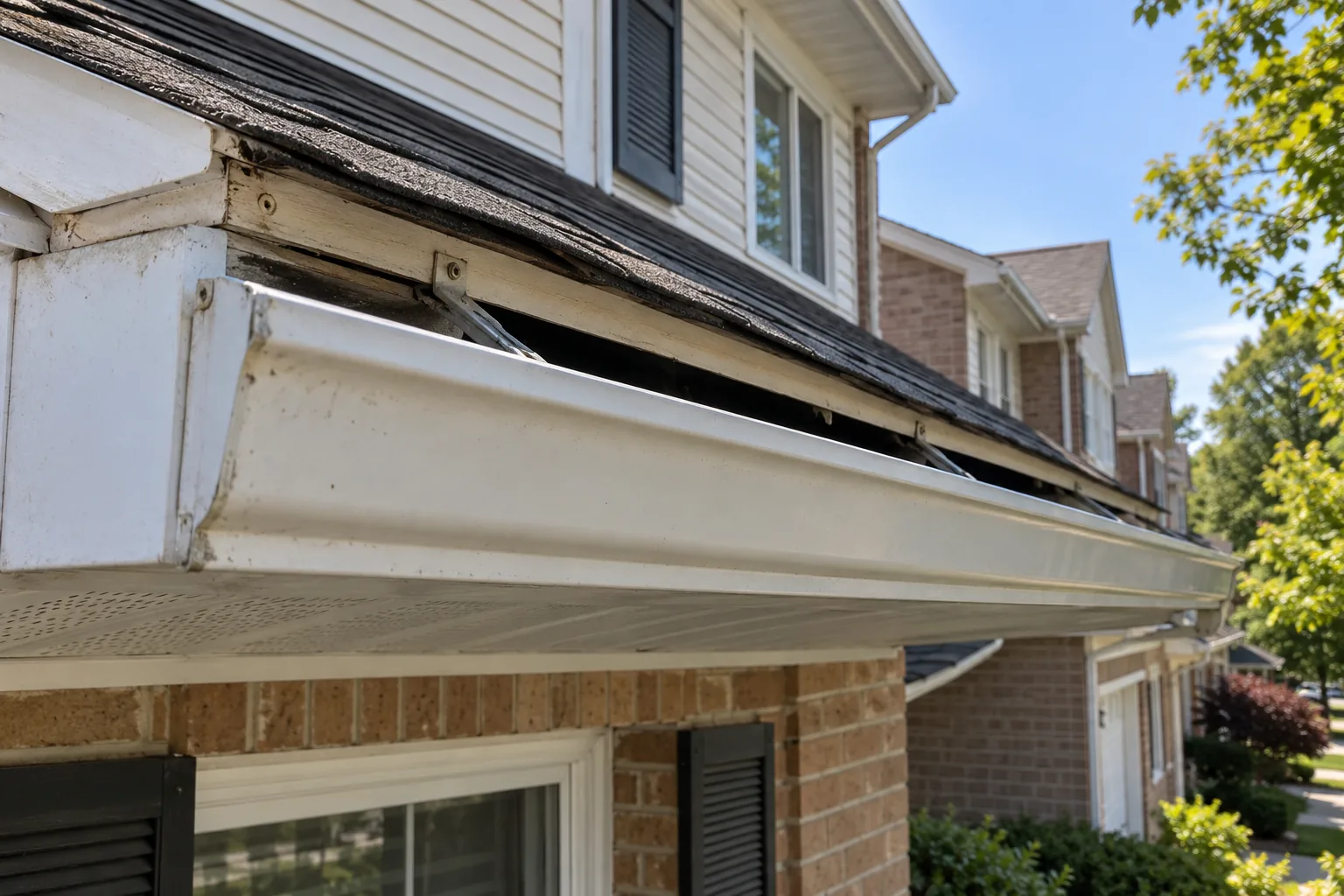
What separation looks like
A gutter can pull away at one hanger, across several feet, near a corner or beside a downspout. From the ground, look for a visible gap at the back of the channel, a front lip leaning outward, loose fasteners or a section that moves during rain. The gap may be uneven: a corner stays tight while the middle opens, or one end drops near the outlet. Record the extent without touching a section that may be unstable.
Water can also run behind a gutter whose attachment still appears close to the roof edge. The distinction matters. A separated run can leave a large opening; a roof-edge or flashing relationship can send water behind an otherwise attached run. The water-behind-the-gutter page describes that separate investigation.
Fasteners, hangers and supporting material
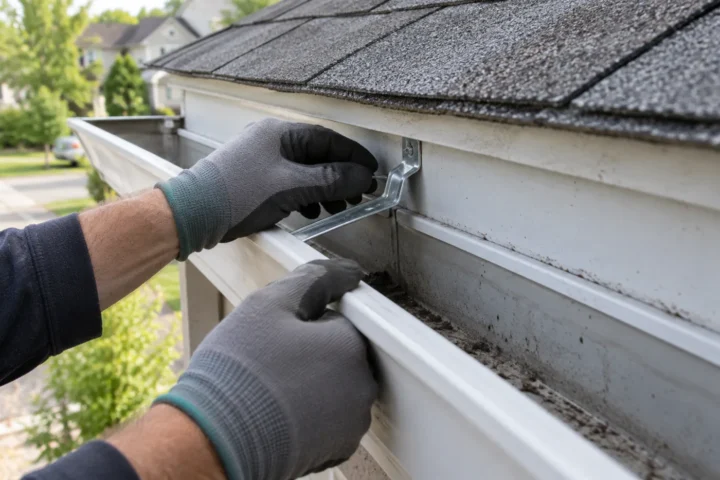
Hangers and screws must hold the channel and the weight of water, debris and seasonal conditions. A fastener that backs out of sound material differs from one that no longer grips because the underlying fascia board is deteriorated. The apparent aluminum fascia face does not reveal whether the supporting wood behind it remains solid. Repeatedly driving longer screws into a failing board may hide the visible gap without providing dependable support.
Spacing and placement also affect load distribution. A long span with a weak connection can bow outward between secure points. The outlet and downspout place additional relationships on a run, particularly if a damaged downspout pulls on the outlet. A repair should inspect adjacent hangers and the substrate, not only the most obvious loose screw.
Water, debris and ice loads
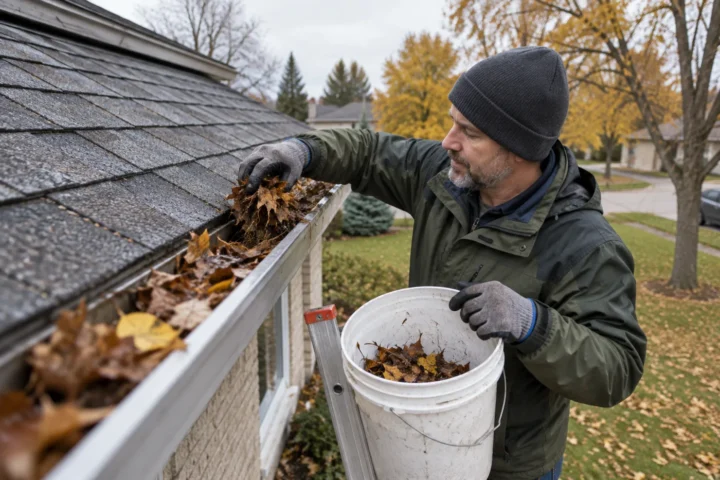
A restricted outlet or downspout can keep water in the gutter until the extra weight strains attachment. Leaves, seeds and roofing grit can collect in a low section and compound that load. Clearing a restriction may be necessary, but it will not automatically reattach a gutter or repair a failed supporting board. Both the load and the reason it escaped need attention.
Winter conditions can expose vulnerabilities. Ice in the channel or a frozen downspout can add stress; snow movement at a roof edge may also disturb a section. If the separation appeared after a freeze-thaw period, document that timing. Do not attempt to pull the gutter back into place from a ladder in icy conditions. Roof or ice-dam issues beyond the gutter assembly require their own assessment.
Why fascia condition changes the scope
The fascia area is the mounting context for many gutter installations. Peeling finish, staining or soft substrate may reflect moisture exposure, but the source could be overflow, roof-edge water, an old leak or another condition. The visible finish should be examined rather than assumed to prove the cause. Where supporting material is unsuitable, it must be addressed before attaching a repaired or replacement gutter.
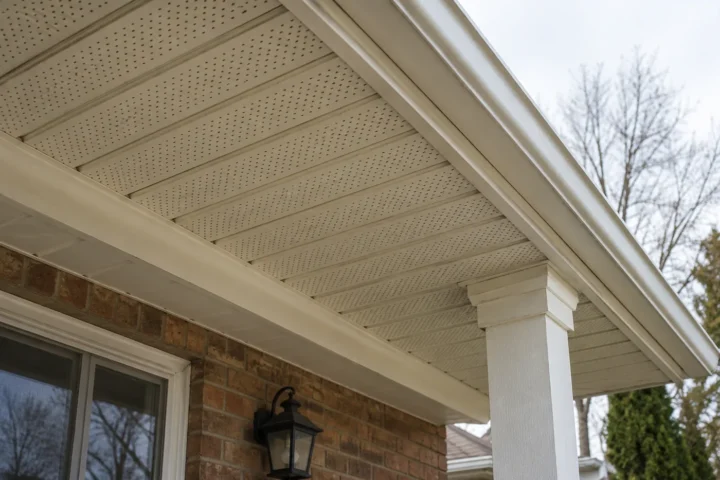
Aluminum fascia covers and protects a prepared surface; it does not transform unsound wood into a secure base. A localized fascia repair may be possible where damage is limited. Wider deterioration can require a more extensive scope. See soffit and fascia repair and fascia installation and replacement for how those scopes differ.
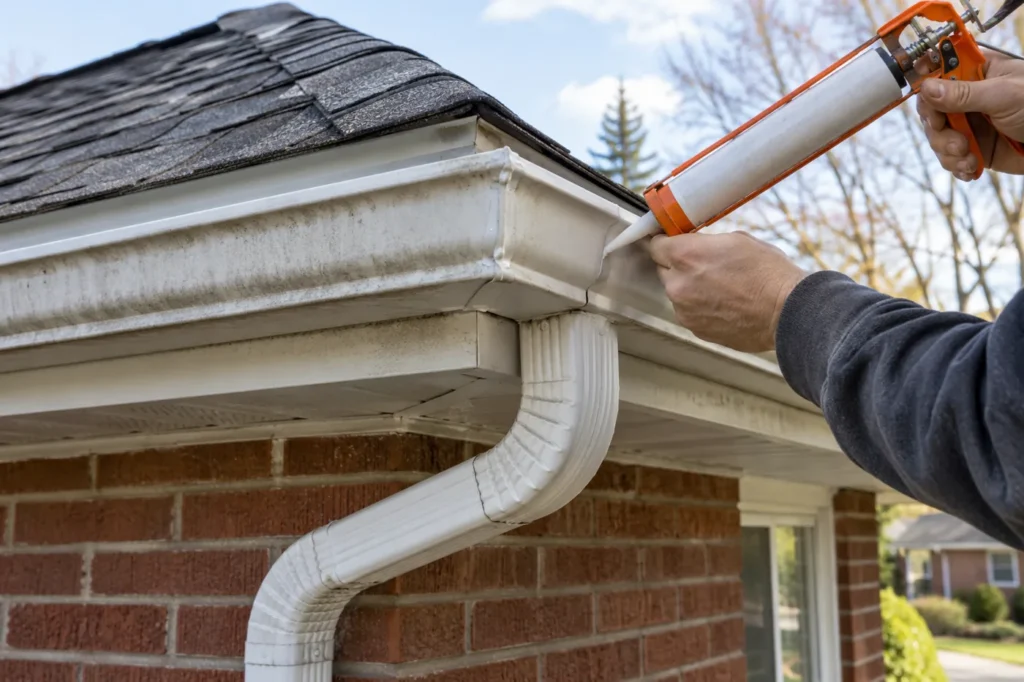
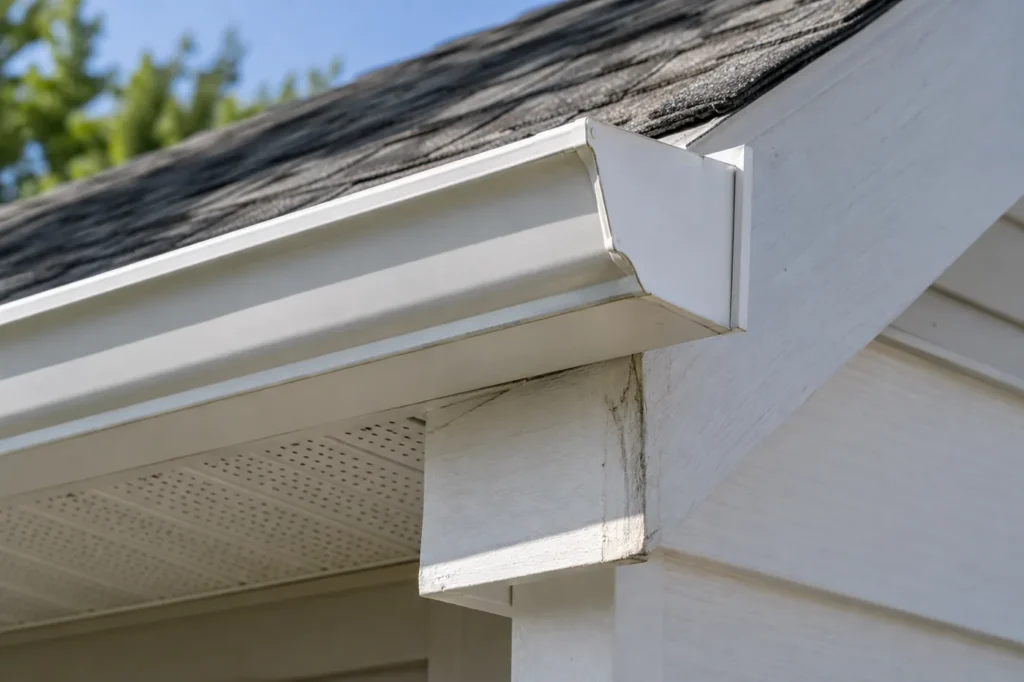
The route from roof edge to discharge
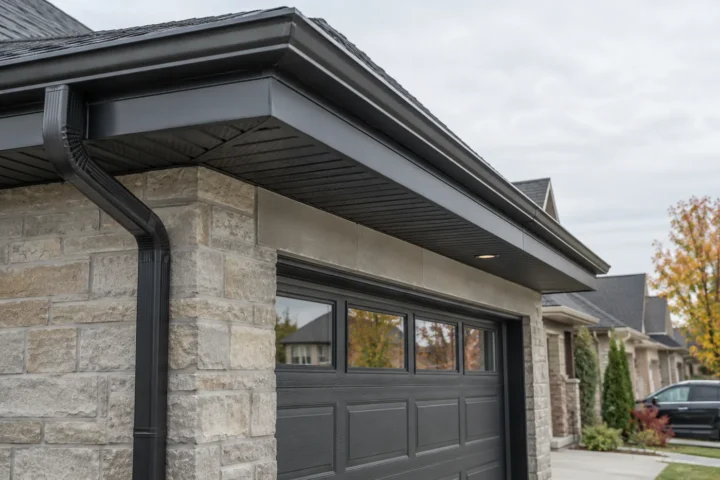
When the gutter pulls away, roof runoff may fall between the channel and wall, splash on a walkway or collect close to a foundation. Even a sound new attachment cannot do its job if water backs up behind a clogged outlet. Inspect the slope to the outlet, the outlet opening, elbows and vertical downspout, then consider where water leaves the extension at grade.
An extension placed into a low area can move the visible problem without resolving surface drainage. Milton’s flood guidance and Halton’s regional advice both emphasize carrying roof runoff away from basement walls and onto suitable away-sloping ground. The local drainage guide explains their distinct recommendations; a gutter repair does not guarantee a solution to all basement-water sources.
Targeted repair or replacement
If the metal is sound, the separation is limited, the substrate is suitable and slope can be restored, reattachment and hanger correction may be a reasonable repair. Any loose outlet connection or damaged short section can be scoped at the same time. Confirm that water follows the intended route after the work rather than judging success by the disappearance of the gap alone.
Replacement becomes more plausible when the channel is bent, multiple attachment points have failed, the run cannot hold its slope or repairs have repeatedly loosened. It may involve one elevation rather than the entire house. A quote should distinguish gutter work from necessary fascia preparation and downspout adjustments so the cause of the failure is visible in the scope.
What to share before an assessment
Tell us whether the section is above an entrance, occupied area or vehicle, when you first noticed it and whether the gap changes during rain. Ground-level images of the entire run, close context around the loose area and the downspout location are useful. Avoid standing underneath a visibly loose section during wind or heavy rain.
Mention prior repairs, visible rot or staining, gutter guards, tree cover and where water lands. These details help distinguish attachment failure from an overloaded drainage route. The related sagging gutter guide focuses on low spots and slope, while gutter repair explains possible localized work.
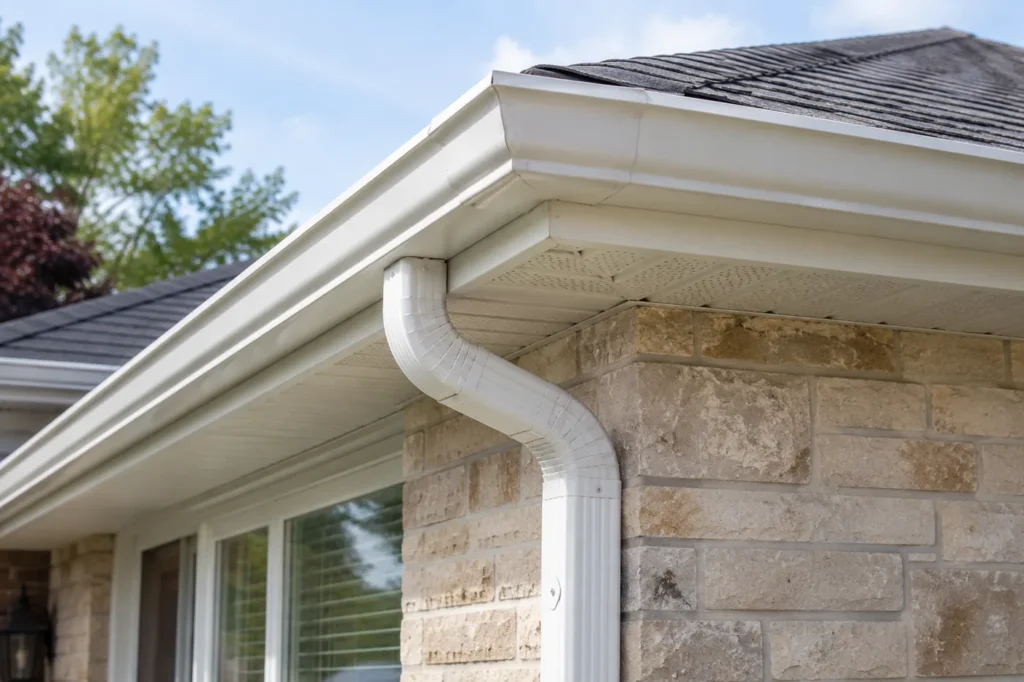
Consider the location beneath a loose section
A separating run above a front entrance, porch, parking space or public walkway warrants prompt attention because its position affects people below. Avoid placing a ladder against the loose gutter or attempting to push it back while it holds water. If a detached section has dropped, keep the immediate area clear until it can be examined and made secure. The first goal is to assess attachment and support safely, then restore drainage.
Where the gap is above a garden bed, note whether water has been eroding soil or splashing toward the foundation. Repairing attachment should be paired with checking the downspout exit. Otherwise water captured again at roof level may still be delivered to a poor destination on the same side of the house.
Look beyond the visibly loose hanger
An isolated hanger is often the easiest point to see, but neighbouring attachments may have begun to move under the same load. Inspect the length of the run, gutter profile, corners and the downspout connection. A new fastener at the visible gap can shift stress to the next weak point if the support or drainage route is not understood.
If previous reattachments have failed, share when they were done and whether the same holes were reused. Repeated failure is a reason to reassess the underlying material and the water or ice load rather than promising another identical fastening attempt.
Why the repair should include a flow check
A loose gutter may have spent months depositing runoff behind the fascia. Once securely attached again, it will capture more water and deliver that volume to the downspout. Check the outlet and lower route rather than treating the new fasteners as the entire solution. A blocked downspout could refill the channel and recreate the load that helped reveal the separation.
Photographs after a repair should show the line of attachment, the condition of the adjoining corners and a clear discharge route. Where the gutter was very loose, consider what happened to the soffit and fascia it contacted. Visible staining may call for a separate assessment, while sound panels should not be replaced merely because they sit next to the repaired gutter.