Where debris collects in the roof-water path
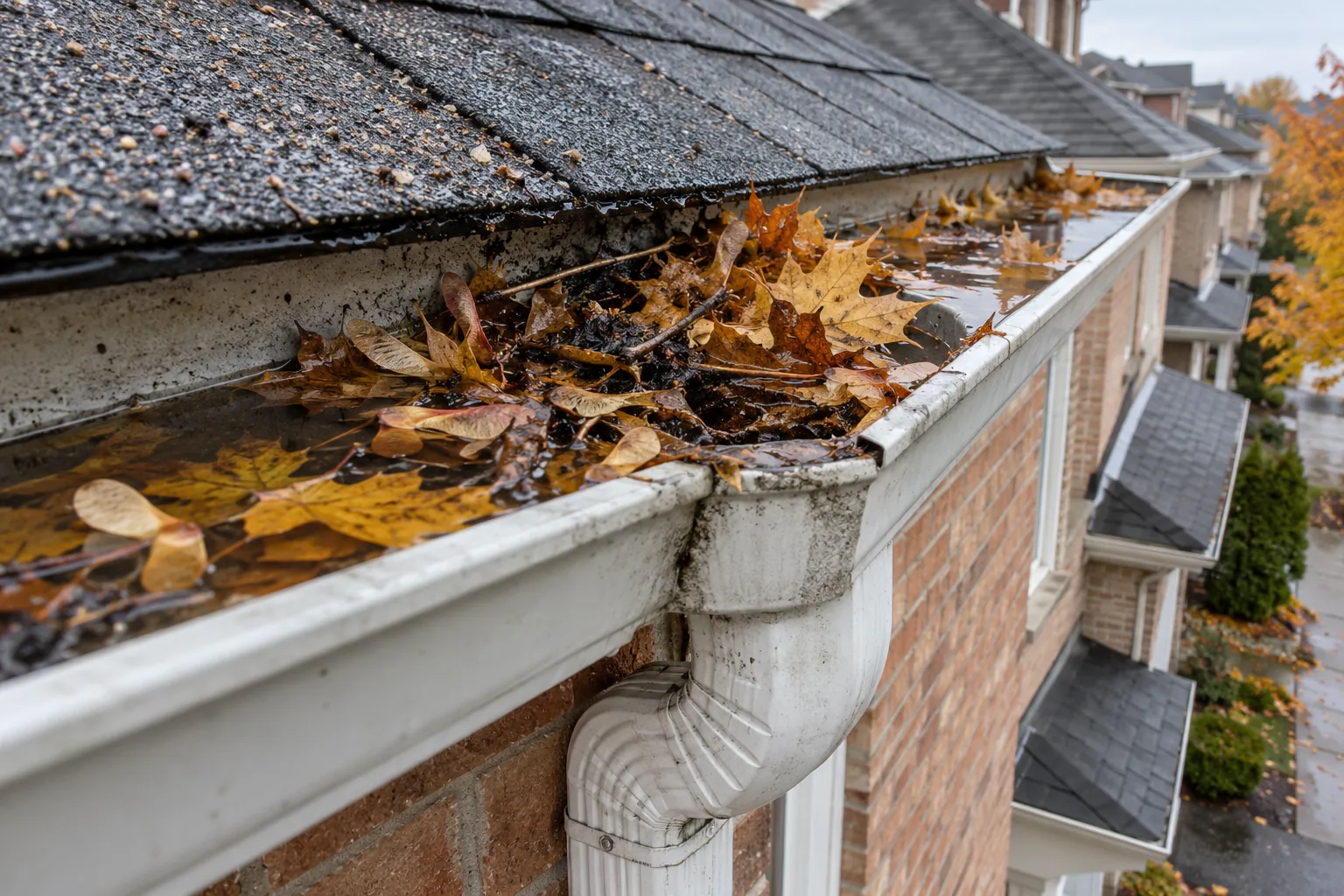
Roof runoff carries leaves, needles, seed clusters, blossoms, roofing grit and fine organic material into the channel. Material can collect at a low point, behind a guard, around a corner or where a roof valley delivers concentrated water. The outlet opening often catches larger pieces. Once an obstruction reduces flow, smaller material can settle against it and make the restriction more severe.
The route continues below the gutter. Elbows turn the downspout around the roof edge and toward the wall; those turns can hold compacted debris. A lower extension can also be crushed, buried in leaves or obstructed at its discharge. Checking only the top of the gutter leaves several possible bottlenecks unexplored.
Signs of a gutter-channel blockage
Water spilling over one section in moderate rain, plants emerging from a channel, or visible debris above the front lip are strong reasons to examine the gutter. A damp stripe on siding or splash on the ground can help locate where water escapes, but it cannot identify the blockage by itself. Overflow at a valley may be concentrated flow rather than debris, and water behind the gutter can have a roof-edge cause.
Where a low pocket holds water after rain, debris may be both a cause and a result. Clear material can reveal a sag or slope reversal that remains. The standing-water page separates those possibilities. Seasonal timing is useful: seed and blossom drop, autumn leaves and storms can each change what reaches the roofline.
Signs the outlet or downspout is restricted
A gutter filling near its outlet while little water exits at ground level points toward a restriction downstream. The absence of obvious leaves across the horizontal run does not clear the outlet or elbows. At some homes, the lower extension is behind landscaping or crosses a walkway, so its exit is easy to overlook. Observe the flow during rain from safe ground level and note where it should emerge.
A downspout connection that leaks at an elbow can also signal water backing up, although the connection itself may need repair. Avoid assuming that a splash at the downspout means it is completely blocked. Compare water arriving at the gutter, passing into the outlet and leaving the extension. This sequence narrows which component needs cleaning or replacement.
Gutter guards and tree cover
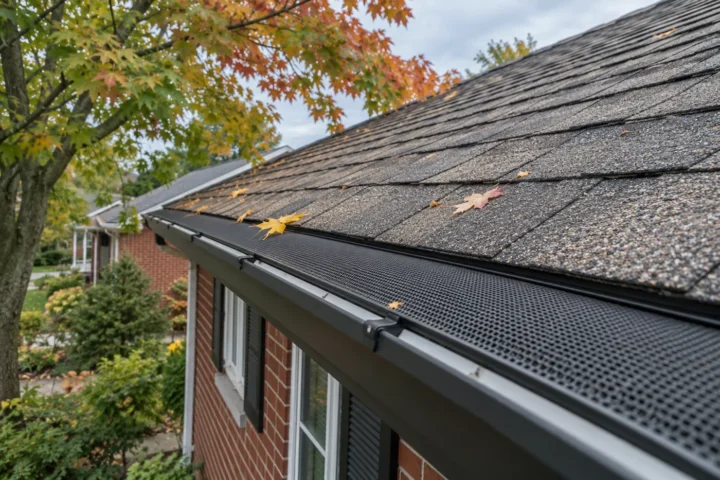
Guards can reduce the entry of some leaf types, yet seeds, fine grit and small debris may still collect beneath them. A mat of leaves on top may cause rain to cross the guard rather than enter the gutter, especially at a valley. Guard type and condition matter. It may be necessary to access sections of the guard to inspect the gutter and outlet; a permanently maintenance-free system is not a realistic assumption.
The useful cleaning interval depends on nearby trees, roof geometry, past blockage, guard condition and storm exposure. A heavily treed Milton lot can behave differently from an open roofline. Base a maintenance plan on observed buildup instead of a universal calendar rule. The gutter guard guide compares protection and ongoing inspection.


What a complete clearing scope considers
Removing debris from the channel is one part. The outlet should be assessed, along with the downspout, its turns and the visible discharge opening. Material needs to be managed safely without scattering it across an entrance, garden or neighbouring property. Access, number of storeys, guards, roofline shape and the position of the downspout affect the work.
After clearing, the route should be checked for remaining restrictions and obvious defects. If the channel still holds a deep pool, has loose hangers or overflows at a valley, cleaning alone has not answered the whole complaint. The eavestrough cleaning service covers the cleaning scope, while maintenance and inspection focuses on condition beyond debris removal.
When a blockage is a symptom of another issue
Debris repeatedly gathering in exactly the same short stretch may point to an unintended low point. A downspout repeatedly plugging at a sharp turn may call for reviewing its route and condition. A damaged outlet can trap material. These possibilities are assessed after clearing enough material to see the underlying assembly; the fact that a clog returned does not automatically mean the gutter profile is too small.
If water has been falling beside a basement wall, consider the final discharge as well. The Town of Milton recommends extending downspouts away from basement walls in its flood guidance. Redirecting roof runoff may help one route, but basement water can involve grading, foundation or plumbing causes outside gutter cleaning. See the local drainage guide.
Safe observations to share
Tell us whether the gutter spills during light or heavy rain, whether water exits the downspout, where trees overhang the roofline and whether guards are fitted. A photo of the full roof edge, the outlet area from a safe viewpoint, and the lower discharge can show more than a close-up of leaves. Mention any recent roof work or storm debris.
Do not climb onto a wet roof or reach into an elevated downspout during a storm. A clogged system can release a large volume when opened. If water crosses an entrance, electrical equipment or an icy walkway, avoid the area while arranging an appropriate assessment. The goal is to identify and clear the actual restriction and then decide whether a separate repair is needed.
Why the same obstruction may return
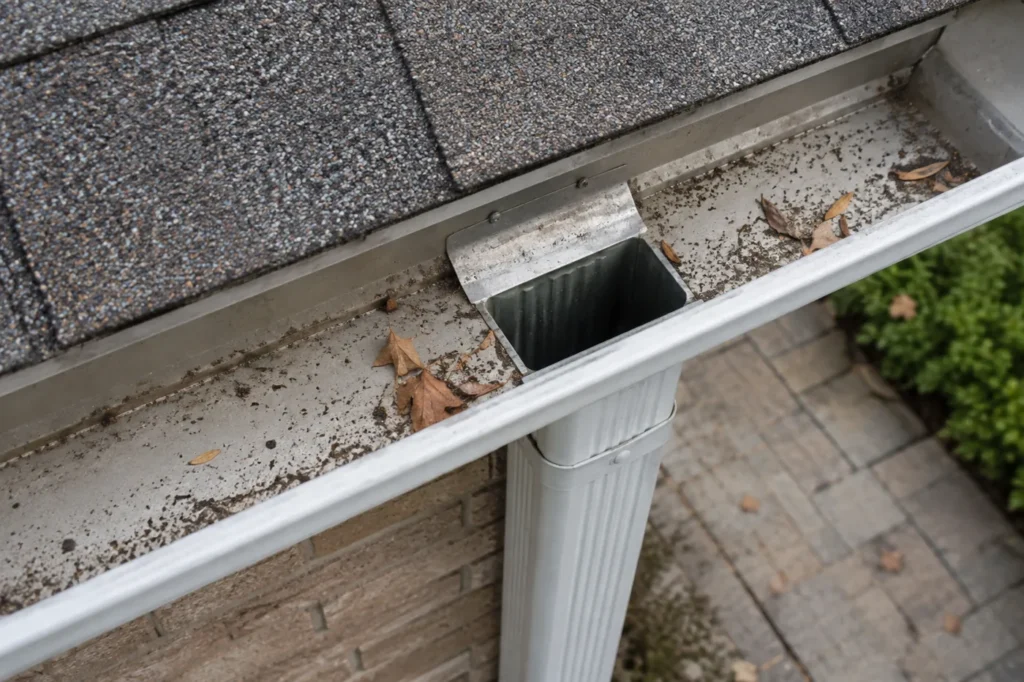
Repeated plugging after a thorough clearing can reflect a nearby tree’s seed or leaf drop, a roof valley that funnels debris to one outlet, a low spot where material settles, or a damaged elbow that catches it. The pattern helps choose between improved maintenance, guard evaluation, an outlet/route adjustment and repair to the gutter profile. Changing only the cleaning date cannot correct a sharp low pocket.
Inspecting after significant leaf drop and following storms is more useful than assuming all Milton properties need service on exactly the same calendar day. A home with little overhead vegetation may have a different accumulation pattern from one beneath mature trees. Guard systems still need inspection at the entry surface and outlet.
Check the final exit as carefully as the inlet
A loose extension may pour water at the foundation even after every upper blockage is cleared. A lower elbow that has been crushed by snow clearing can make water back up the vertical downspout. Note whether the exit remains open, supported and directed to suitable ground. The discharge guide addresses the surface route after water leaves the pipe.
If a downspout enters an underground line, do not assume its destination. The physical connection and any restriction may require investigation before a cleaning or rerouting plan can be stated. Avoid treating an unseen pipe as proof of a particular sewer connection.
A clean route can still need repair
After a blockage is removed, rain may expose a leaking end cap, a sagging section or a disconnected downspout that was hidden by the original overflow. The cleaning scope should report observable defects and distinguish them from the material just cleared. A separate repair recommendation should identify the damaged connection or support and explain why it affects the route.
A property with repeated tree debris can benefit from an inspection schedule matched to the actual accumulation pattern. It may be useful to check after seed drop, after autumn leaves and following a severe storm rather than assuming one fixed interval. Where a guard is proposed, discuss which debris it may intercept and how the outlet beneath it will remain accessible for future checks.