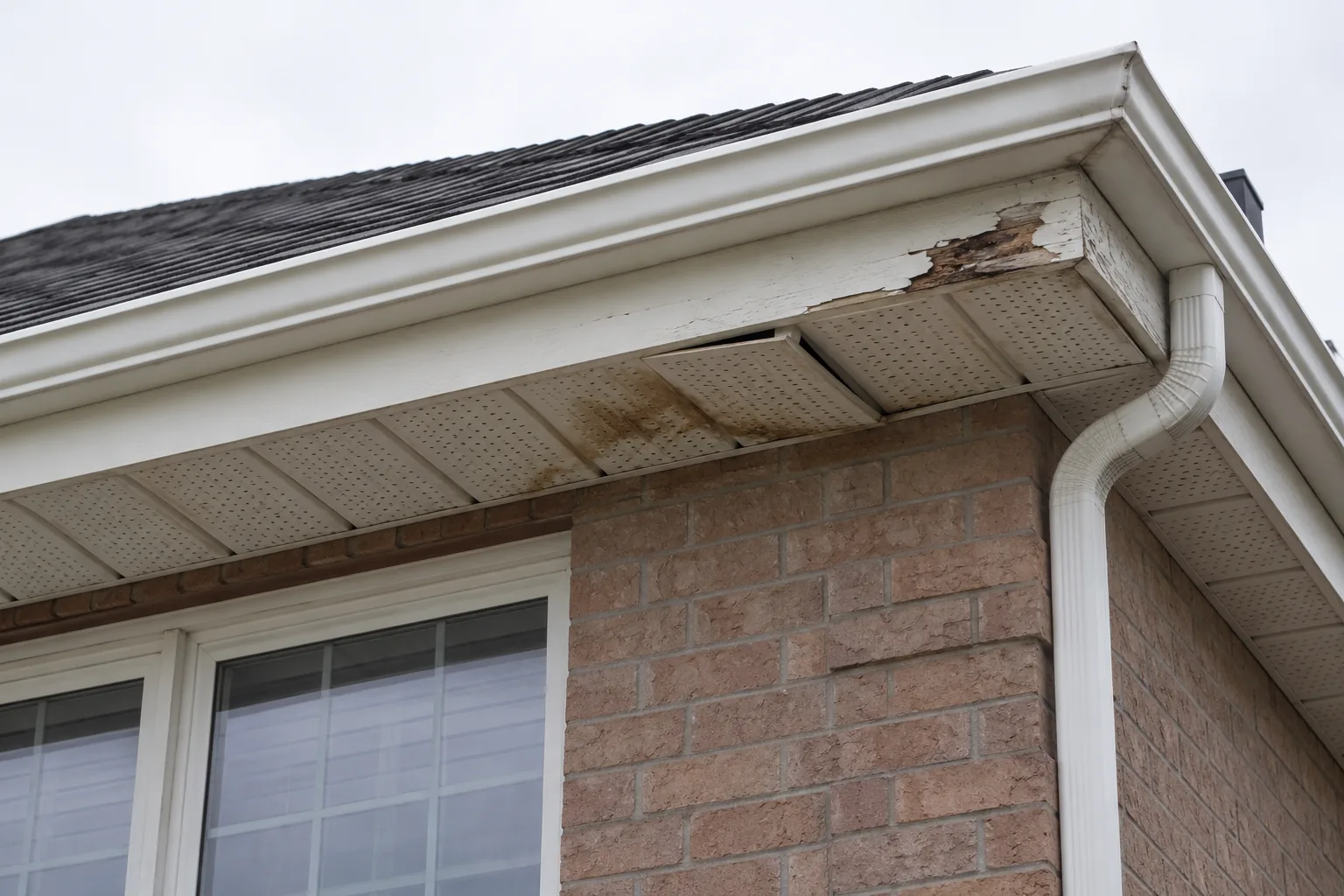
Understand which component is affected
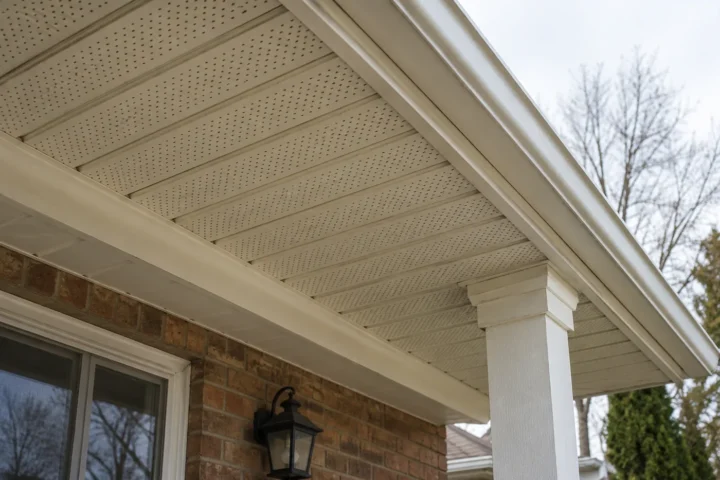
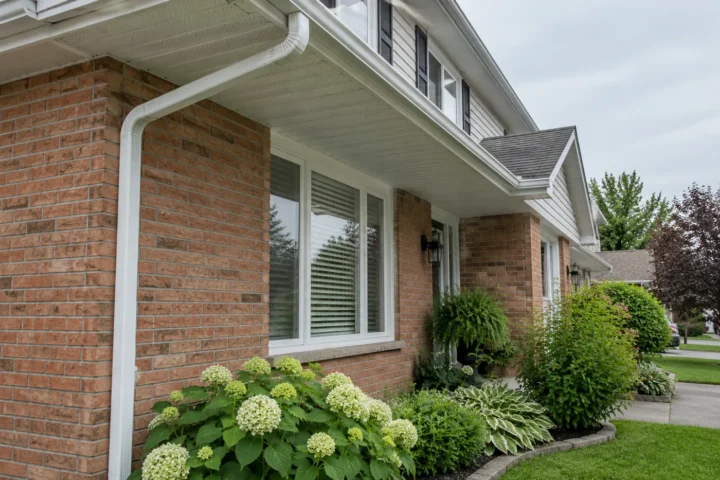
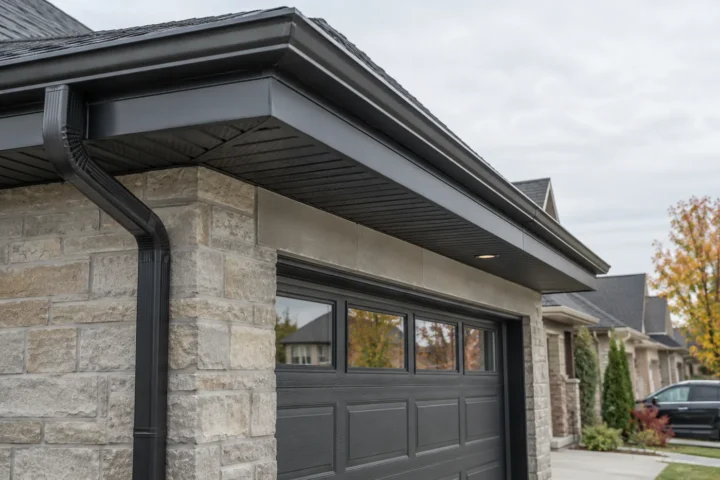
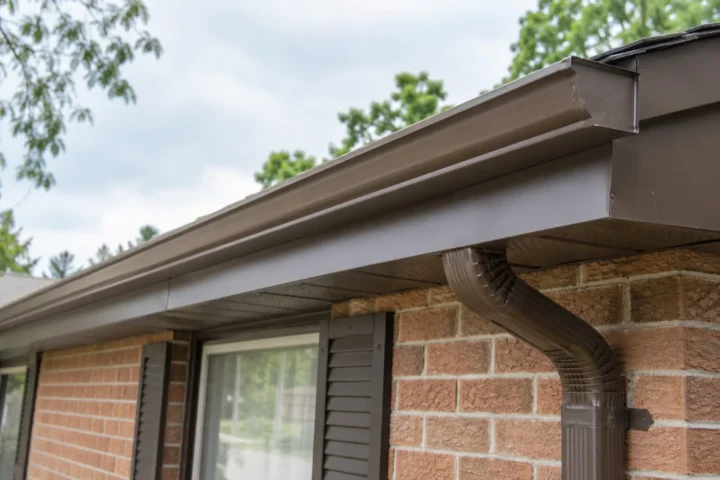
Fascia finishes the roof-edge face and commonly forms part of the gutter mounting area. Soffit closes the underside of an overhang; some soffit arrangements contribute to an attic ventilation pathway. A stain under an overhang and a bent fascia cover beside a gutter can have very different causes and repair scopes. Identify the component and the exact location before describing the problem as one combined failure.
Take a wide photo of the roof edge and a closer photo of the affected section from safe ground level. Note whether the material is merely discoloured, physically bent, loose, missing or soft beneath a finish. A gutter can be sound while soffit has impact damage; a loose gutter can also cause water to reach fascia. Both conditions should be evaluated on their own evidence.
Staining does not prove a gutter leak
Water from a clogged or overflowing gutter may wet fascia and soffit. A leaking corner can drip onto one spot, and water behind a misplaced gutter can travel down the back of the channel. But roof covering, flashing, ice-related roof conditions or other openings can also deliver water to the same visible surface. Some stains remain long after an old issue is resolved.
Watch during rain to see whether water first appears at a joint, over a full gutter, behind its back edge or higher in the roof assembly. If the source is clearly above the gutter, roof assessment may be needed. The water-behind-the-gutter guide explains why sealing a gutter cannot be promised to resolve a separate flashing or roofing problem.
Loose, missing and impact-damaged material
Wind, branch contact, maintenance work, fastener failure and ordinary wear can loosen individual soffit panels or fascia sections. An exposed gap may admit weather or wildlife depending on its position and construction. Do not pull at a hanging panel or climb under a damaged roof edge to test it. Record the affected length and whether adjoining pieces have shifted.
A small damaged portion may be repaired with compatible material and secure attachment, provided the substrate is suitable. Wider deterioration, incompatible older profiles or extensive displacement may make replacement of a run more practical. Colour and finish matching should be discussed honestly where existing material has weathered.
Supporting substrate behind aluminum
Aluminum fascia and capping cover an underlying structure. A neat new cover does not make rotten or structurally unsuitable wood sound, and gutter fasteners need dependable support. If stains accompany loose attachment, recurring pullout or soft material, the supporting condition should be assessed before it is covered again.
The extent cannot always be established from a ground-level photo. A repair scope may change once accessible trim is examined. The fascia replacement page explains the relationship between finish and support. The pulling-away gutter page addresses how weak support affects the eavestrough.
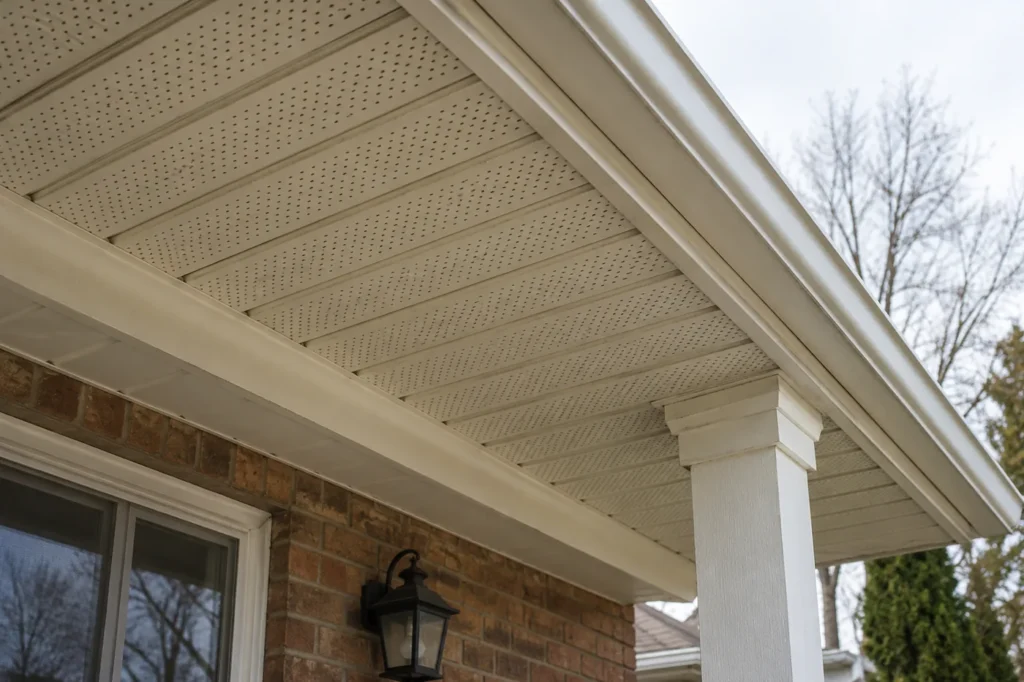
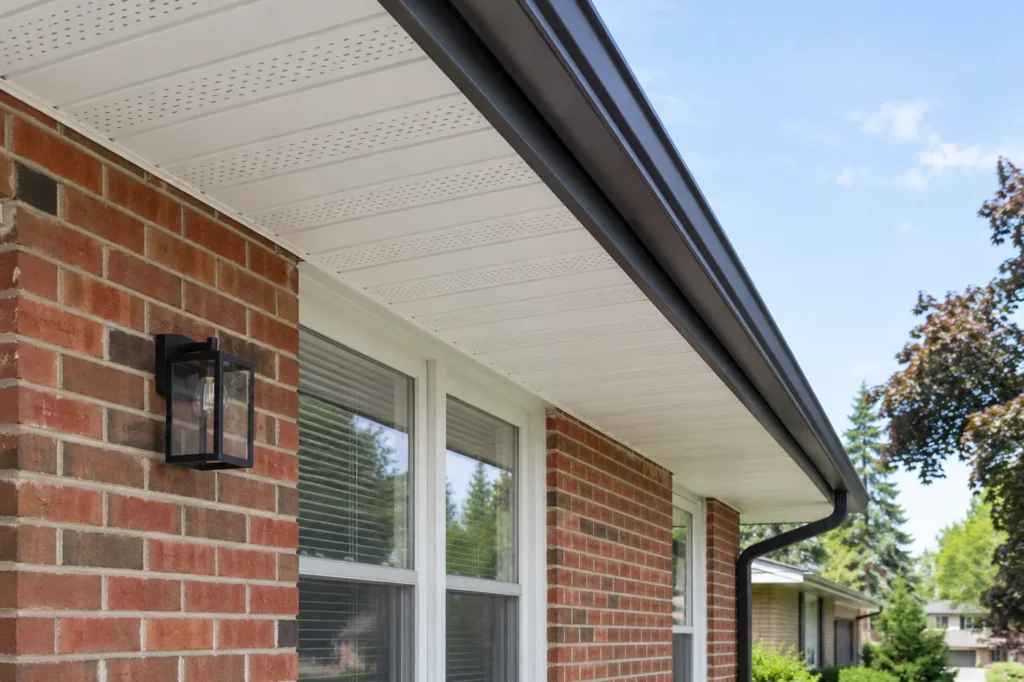
Soffit and ventilation relationship
A vented soffit can be one part of a roof ventilation design. Damaged or blocked vents may matter, but swapping a solid panel for a vented one does not automatically fix attic ventilation. Air intake, the roof assembly and other conditions have to be understood in context. Avoid assuming every soffit stain is condensation or every vent issue is caused by an eavestrough.
If a repair involves vented panels, maintain a suitable arrangement rather than simply matching the appearance of neighbouring pieces. An attic or roofing concern may require a separate evaluation. The soffit and fascia guide describes what each part does without treating the roofline as a single interchangeable finish.
Repair versus replacement scope
Localized panel replacement, refastening or a small fascia repair can make sense when the adjacent material and substrate remain sound. Broad deterioration, repeated loose sections, extensive colour mismatch, or gutter attachment failure can justify a larger replacement conversation. The choice should consider the cause, not only the visible appearance. Covering active water entry with fresh metal leaves the underlying route unresolved.
Where overflow is the source, cleaning or correcting the gutter route should be included; where a roof detail is the source, that detail needs appropriate attention. Soffit and fascia repair focuses on targeted work, while soffit, fascia and capping pages distinguish more extensive scopes.
What happens at the gutter connection
A gutter attached to the affected fascia should be assessed for movement, slope, leaks and the condition of its fasteners. Work on fascia may require temporarily addressing the gutter so the substrate can be reached. Afterward the roof-water path still needs to carry runoff to the outlet, downspout and final discharge rather than depositing water onto a repaired surface.
If the stained area is above a basement wall or entrance, note where any escaped water reaches the ground. Managing roof runoff is one piece of surface drainage, not a guarantee against every basement-water cause. The Milton drainage resource connects the roof edge to the discharge area.
Details to include with an enquiry
Tell us when the stain or loose section first appeared, whether it worsens during rain, and whether any gutter is overflowing or separating nearby. Share photos of the full elevation and close context, the material type if known, and any prior repair. Mention if the roofline is above a porch, walkway or a difficult-to-access area.
An assessment should explain which material is damaged, whether the source is known, what supporting material can be seen, and which related gutter or roof issue may need separate work. This prevents a cosmetic cover from being mistaken for an investigation of moisture and attachment.
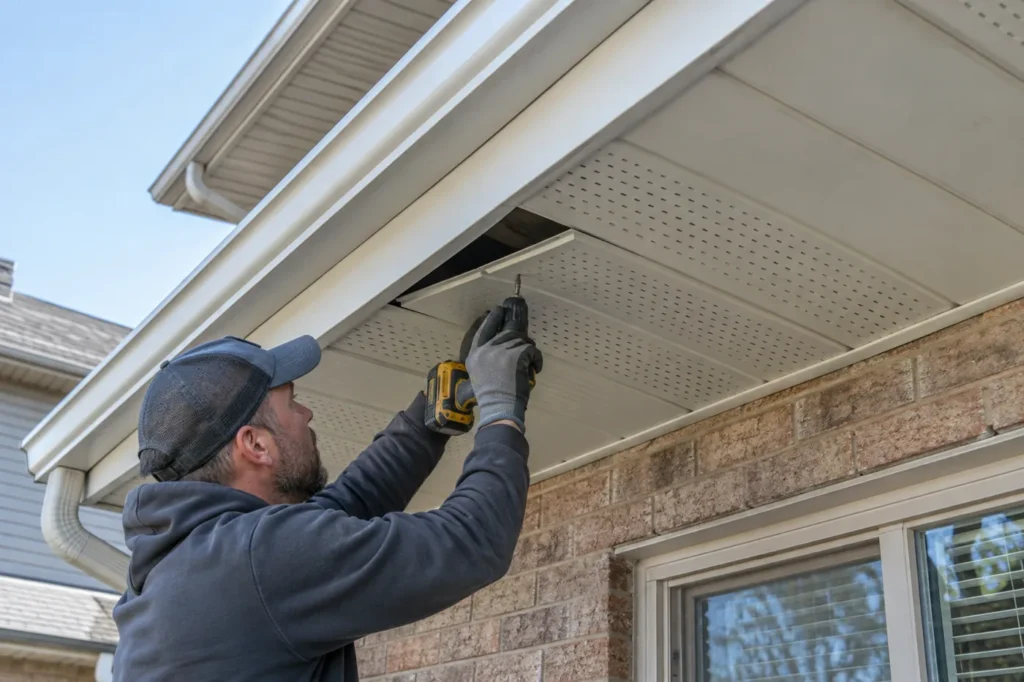
Separate cosmetic marks from active deterioration
Aluminum may hold a stain or scuff while remaining securely attached. A displaced panel, fastener pullout, soft support or water actively tracking behind a finish has different significance. Inspect when the area is dry and, if safely possible, observe during rain to distinguish an old mark from current moisture. Neither a fresh coat of finish nor a new cover is a substitute for tracing active water.
Where a damaged panel is near an eavestrough outlet, check whether the outlet connection leaks or backs up. Where damage appears farther from any gutter, consider roof edge, impact and the broader overhang. Treat each clue as part of the diagnosis, rather than attributing all roofline damage to one trade automatically.
What a clear repair scope should describe
Ask which panels or trim lengths are to be repaired, whether the existing finish can be matched, and what supporting material will be checked. If gutter removal or reattachment is involved, confirm how the channel’s slope and outlet connection will be maintained. If an active roof source remains uncertain, that uncertainty should be recorded and assessed before a cosmetic enclosure hides it.
The result should restore secure material and address the known source of water. A dry, straight roofline finish is useful, but the next rain also needs a functioning path through the gutter, downspout and final discharge.
Review the repaired roof edge as a system
After replacing a panel or fascia length, confirm that adjacent pieces remain secure, vents are unobstructed where they form part of the design and the gutter has not been left out of position. If gutter work accompanied the finish repair, its slope, outlet connection and downspout discharge should still function. A neat panel line is only one part of a successful roof-edge repair.
New material may look different from weathered aluminum nearby even when the profile and colour family are appropriate. Discuss the extent of visible matching before choosing a small repair versus a longer replacement run. That aesthetic decision should follow, rather than obscure, the more important questions about active water, substrate and secure attachment.